
A baseball scorecard is a compact record of how a game unfolded. These baseball scoresheet templates give you space for lineups, innings, batting results and notes without drawing a fresh grid before every game.
The collection contains 26 layouts in different formats. Choose one that has enough room for the game you expect to record and that uses notation you can maintain comfortably. A fan learning to keep score may prefer more writing space than an experienced scorer using a familiar compact system.
Keep personal scorekeeping separate from an official competition record. If you are responsible for an official record, use the relevant competition instructions and approved process. A downloadable sheet can help organize observations, but it does not decide a scoring judgment for you.
What to keep beside your scorecard
- The confirmed lineup and a place to note substitutions.
- A pencil or other suitable way to make clear corrections.
- A consistent legend for any notation you are learning.
- The applicable instructions if the record has an official competition purpose.
26 downloadable examples and previews
Use the preview to compare the layout, then choose the download button for the actual file. Extract ZIP packages before opening them. Check the file format and contents before editing; a preview is not itself an editable document. Keep a blank original and save completed versions with clear filenames.
What is a Baseball Scoresheet?
Using a printable baseball scoresheet template is the best and the cheapest way of recording the scores of a baseball match. The baseball scoresheet records all the important details of a game like the statistics of both sides and every player’s total at-bats, hits, runs, etc. at the end of the game. If you happen to be a fan of the baseball game, you must be interested in keeping the scores of a match. If so, the printable baseball scoresheet templates available here on this page will come in handy for you.
Official Baseball Scoresheet Templates
Proper Baseball Scoresheet Template
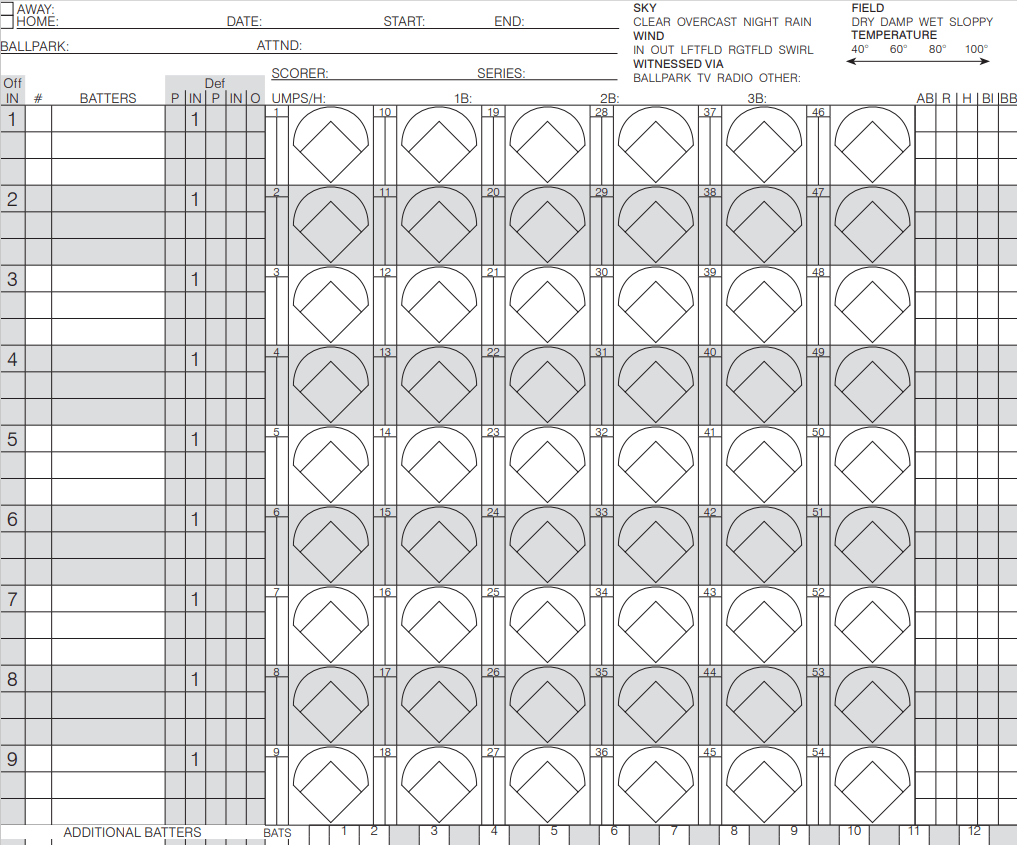
File Size: 79 KB
Free Printable Baseball Scorecard Template
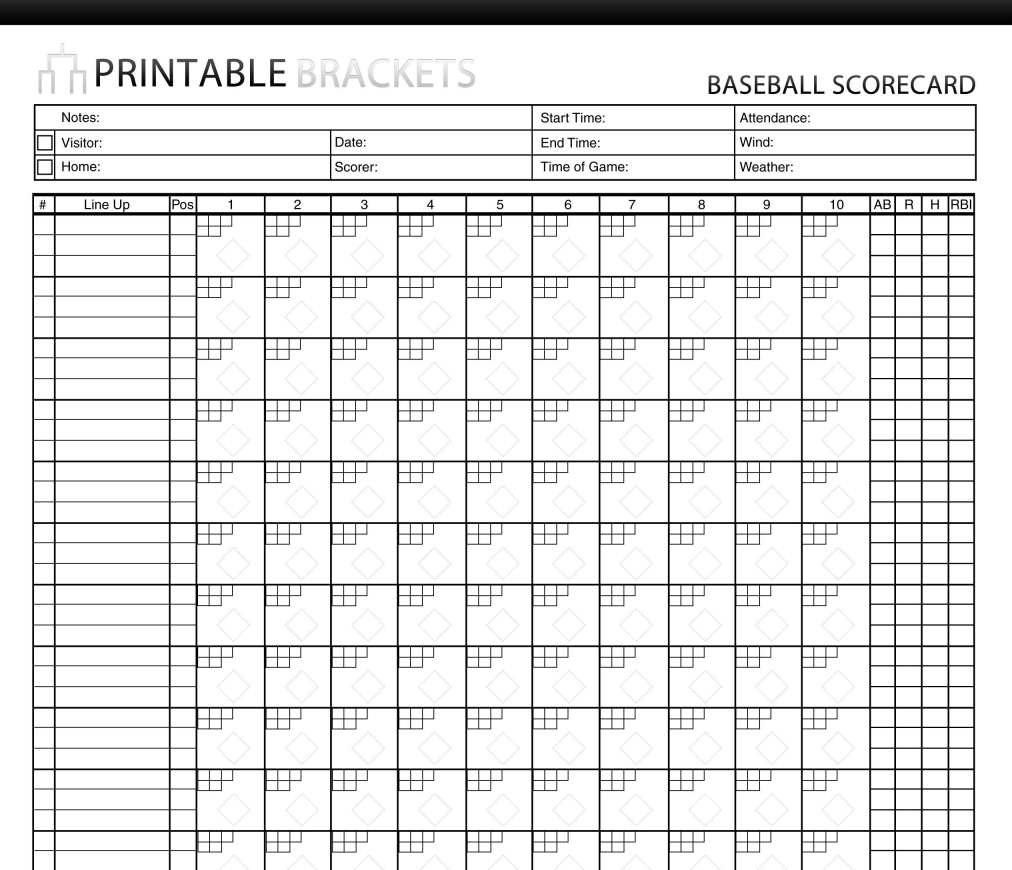
File Size: 282 KB
Superstar Baseball Scoresheet Template
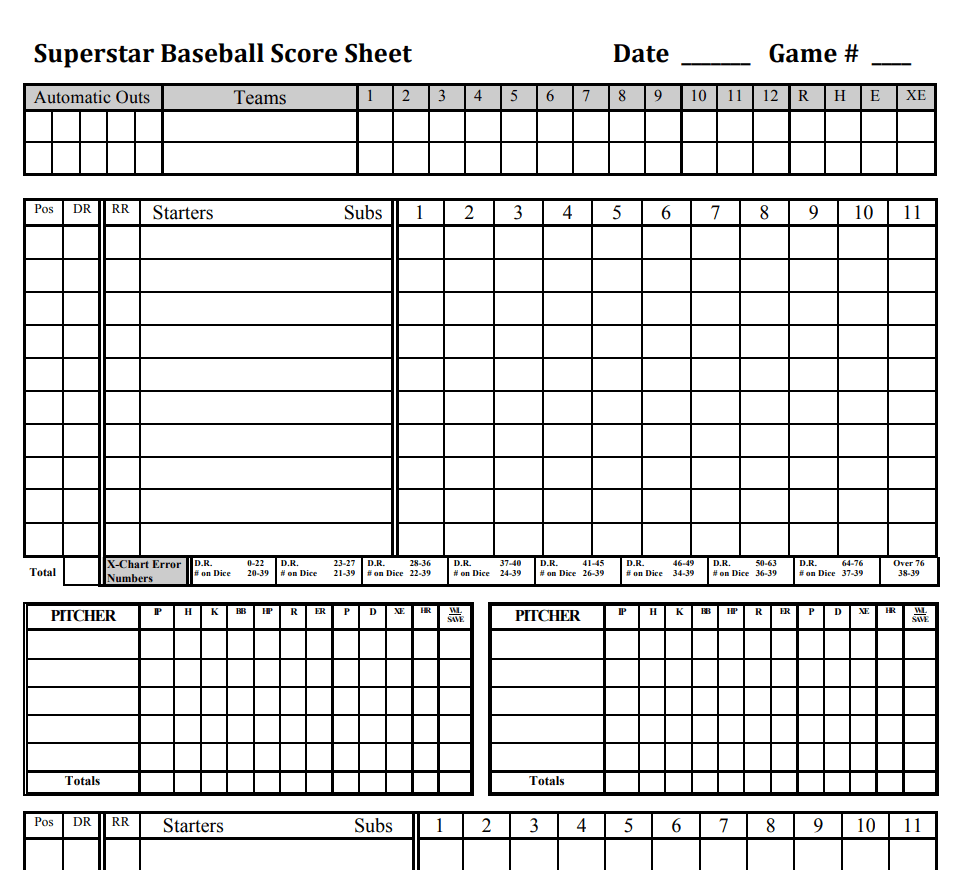
File Size: 107 KB
Baseball Scoresheet Template in MS EXCEL
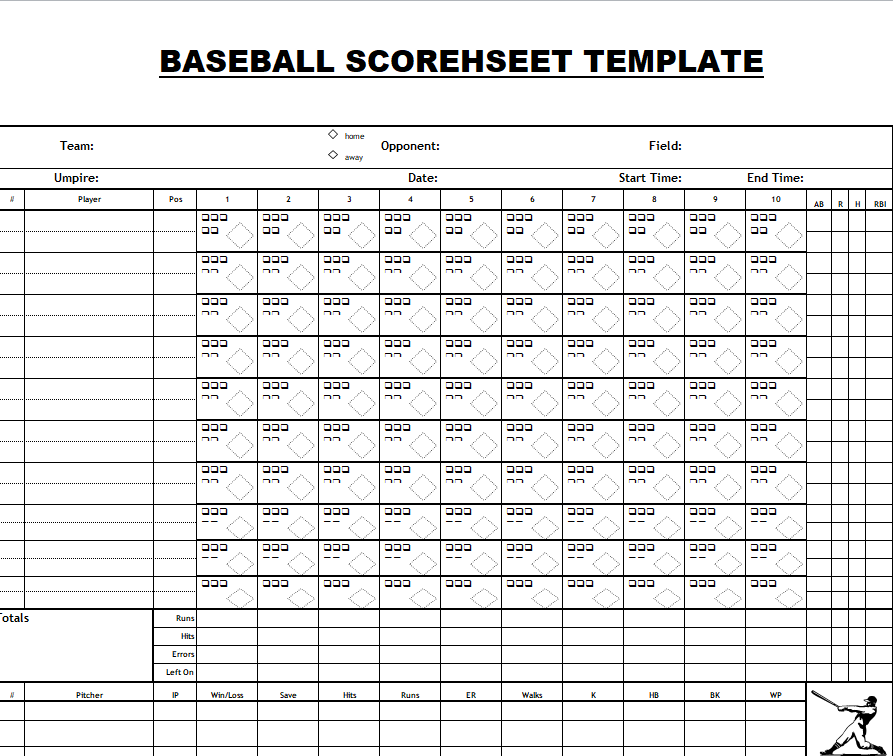
File Size: 18 KB
Sample Baseball Scoresheet Template
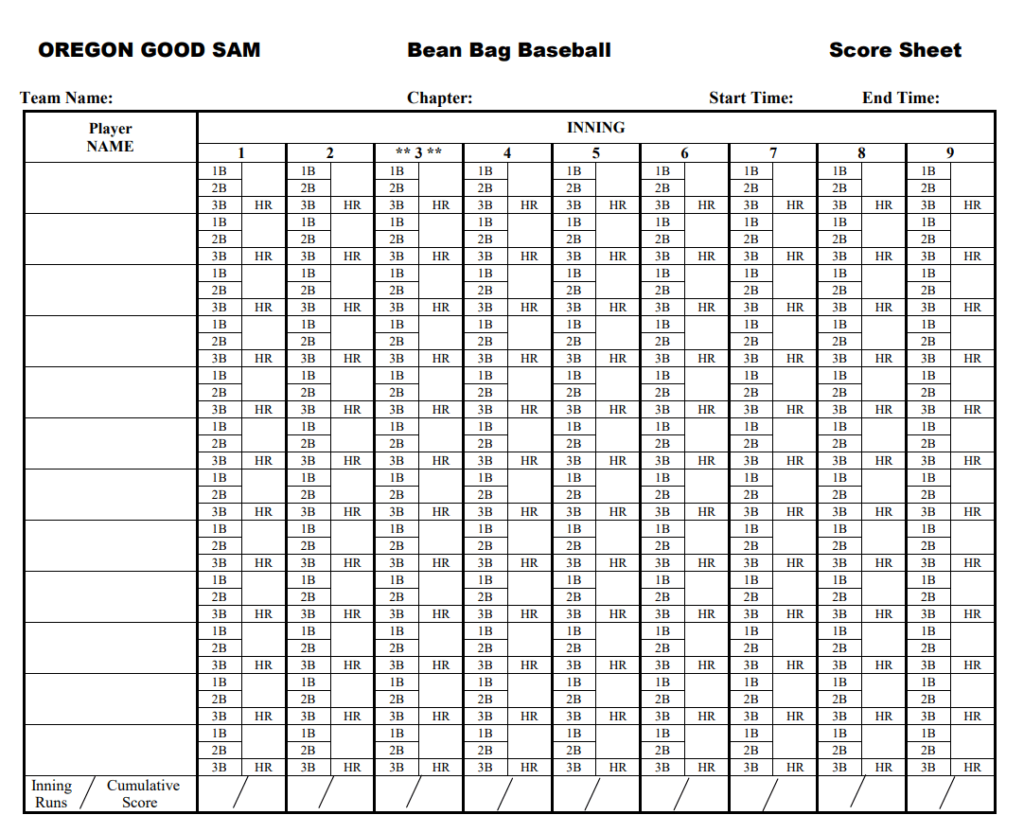
File Size: 59 KB
Youth Baseball Scorecard Template PDF
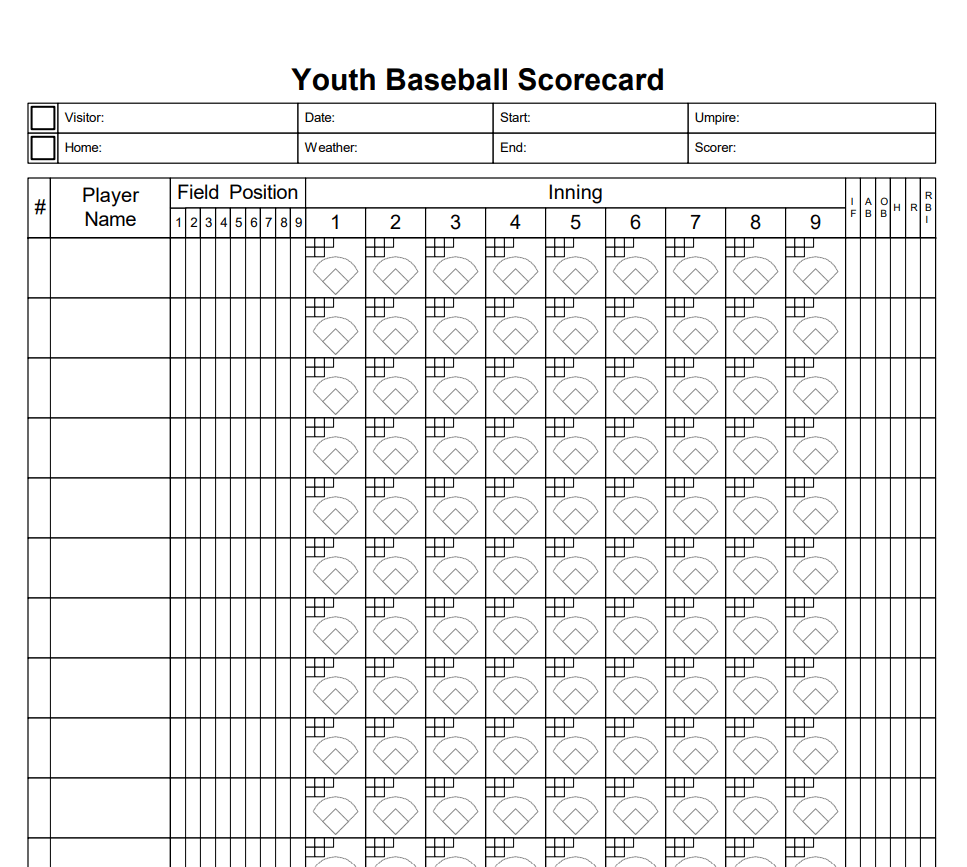
File Size: 173 KB
Basic Baseball Scoresheet Template
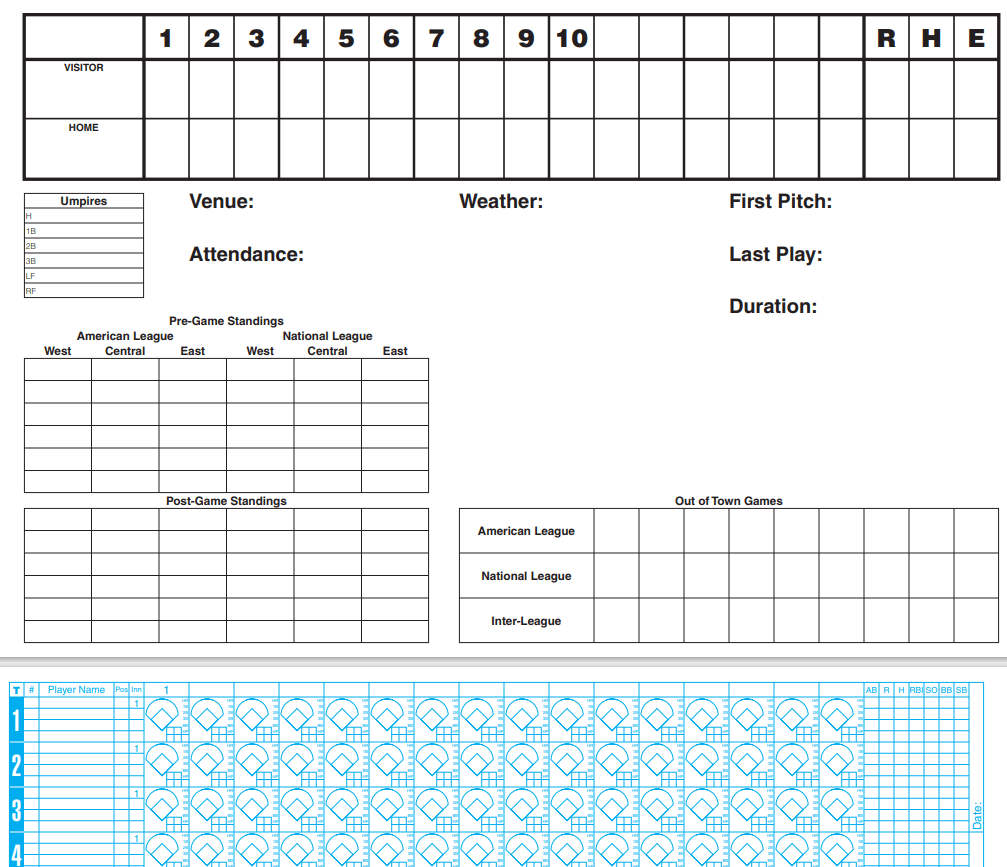
File Size: 444 KB
Baseball Scoresheet Example in XLSX Format
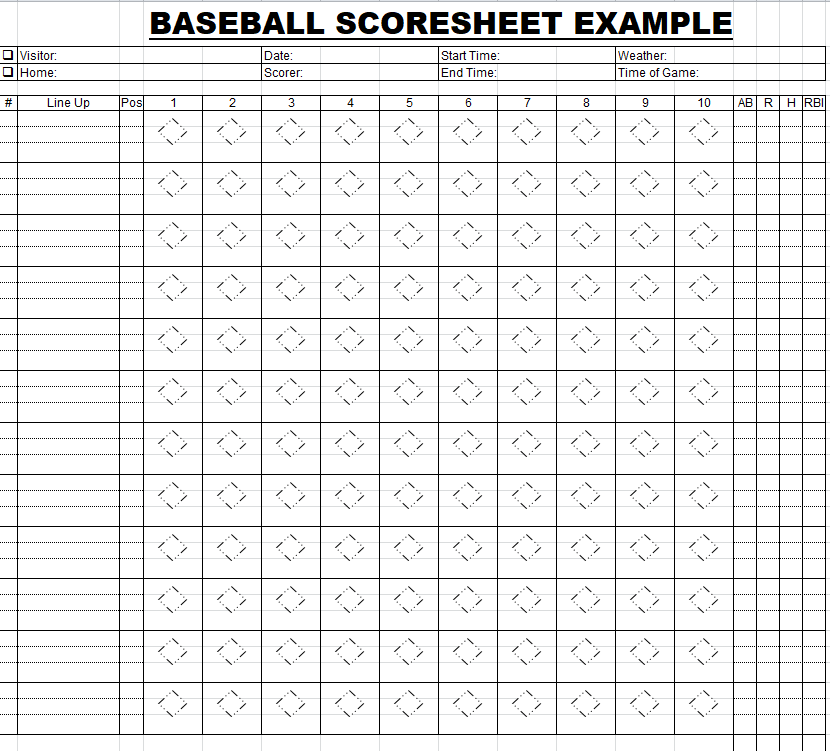
File Size: 125 KB
Baseball Scorecard Template for Children
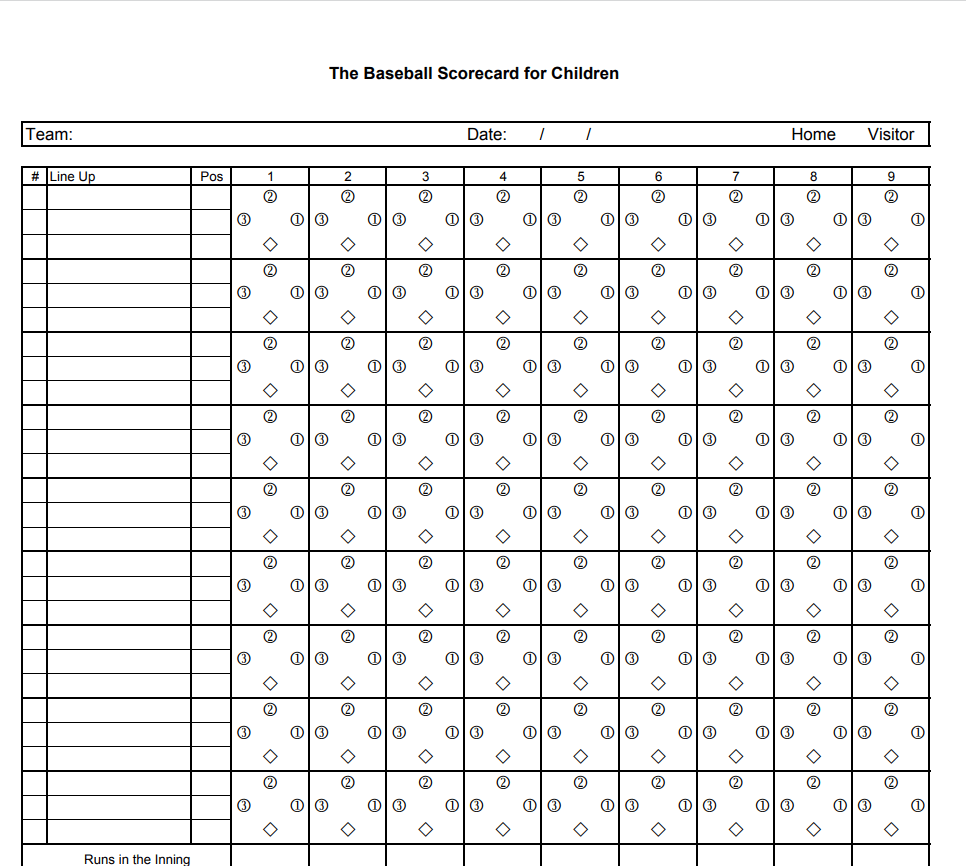
File Size: 40 KB
Baseball Scorecard Example PDF
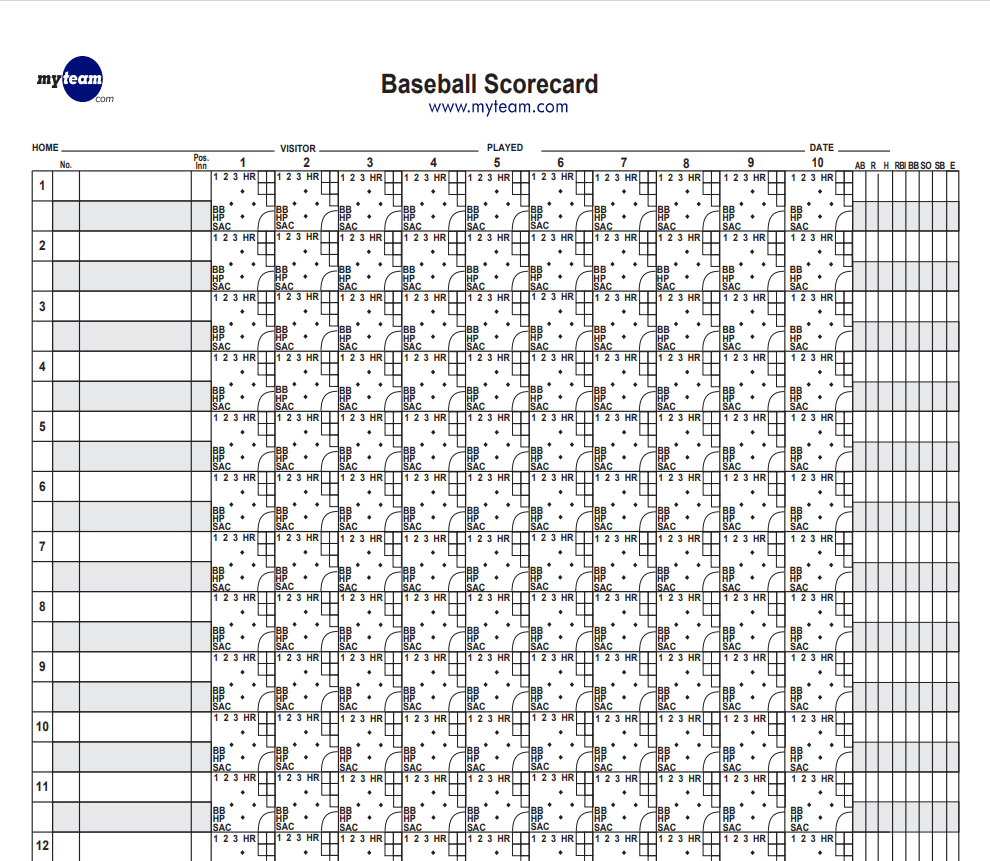
File Size: 64 KB
Editable Baseball Scoresheet Template in MS WORD
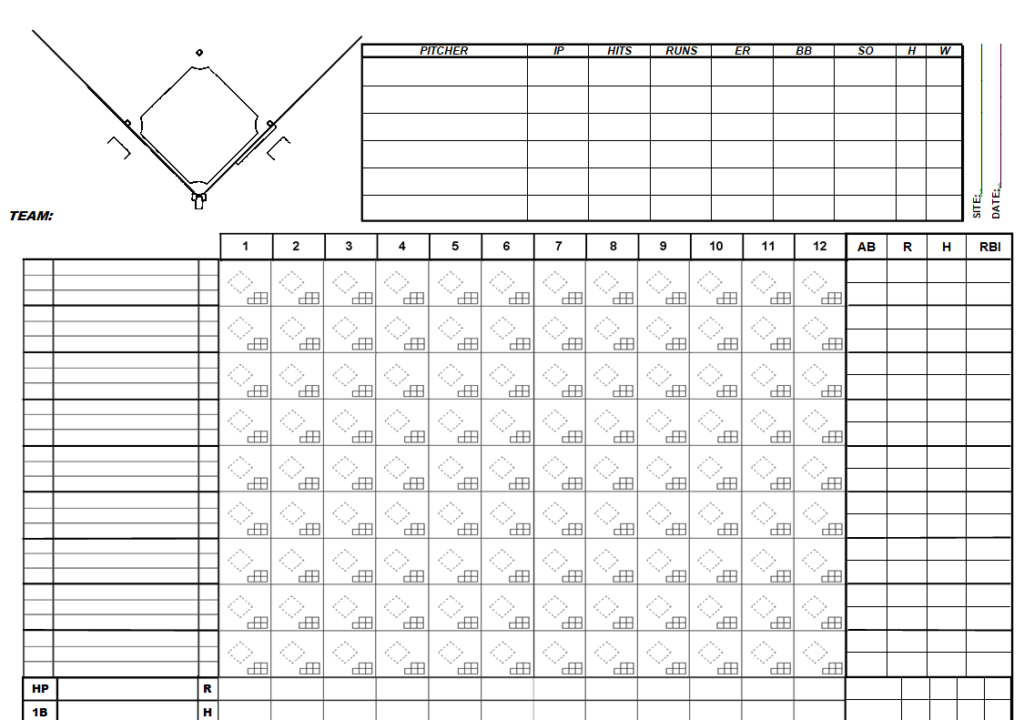
File Size: 25 KB
Detailed Baseball Scorecard PDF Template
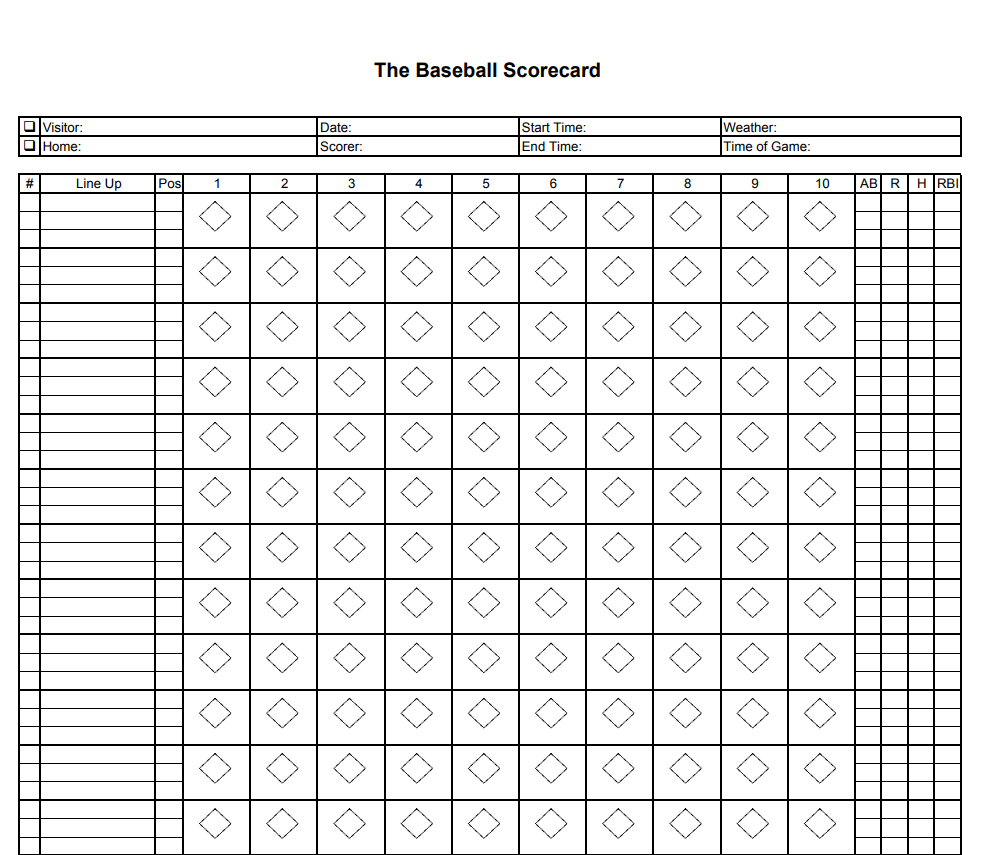
File Size: 40 KB
Baseball Game Scoresheet Template
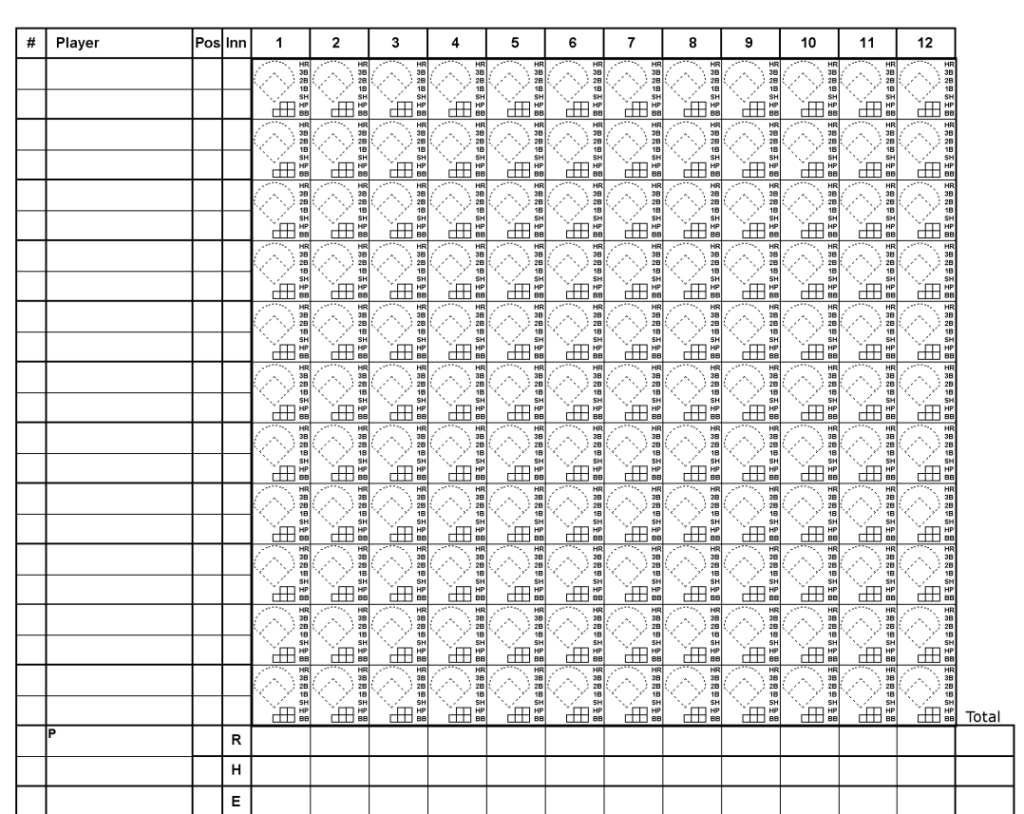
File Size: 101 KB
Baseball Player Positions
For those who don’t know the baseball game very much, it is important to know about the positions of different players in a baseball game. Each team has a total of nine players. One team bats at a time, which is called the offensive side while the other team fields at the same time, known as the defensive side.
In this section, we have explained some basic positions of players in a baseball game so one can easily understand the basics of a game. These positions are:
- Pitcher: The pitcher is the player who starts the game by throwing the ball to the batter to hit. A pitcher plays the most vital role in the winning or losing of a team. The pitcher is usually positioned at the pitcher’s mound which is almost 60.6 ft from the home plate. The pitcher may also play the role of a starting pitcher, middle reliever, setup man, or closer, depending upon the type of the match.
- Catcher: A catcher is positioned behind the home plate and the batter. The catcher also plays a vital role for a team as he forms a combination with the pitcher. A catcher’s role is to receive the pitches made by the pitcher, keep in mind the batter’s weaknesses, and guide the pitcher to throw the ball in the right place.
- First Baseman: The first baseman is the infielder located near the first-base bag and is responsible for defending the area. His actual role is to receive the throws from other infielders and to prevent the batter from reaching the first base.
- Second Baseman: The second baseman is another infielder located near the right side of the second base. The second baseman’s role is to cover the second base from the possible stolen base attempts from the offensive team, cover the first base from plays like bunts, act as a pivot on double plays, and cut off the balls hit into the right field. In the absence of base runners, the second baseman is allowed to stand 8 to 10 ft from the base and around a third of the way between the first and the second base. However, in the presence of a runner on the first base, the second baseman is allowed to move a few steps towards the second base and the home plate.
- Third Baseman: Most balls fall on the third base, also known as the ‘hot corner’ and the infielder covering the third base is known as the third baseman. The third baseman stands closer to the batter as compared to the second baseman and shortstop. For this reason, he must require great focus, quick reflexes, and must have a strong arm to quickly throw the ball at the first base. The third baseman guards the third base by catching the ball, throws the ball to the second base to start the double play, and covers bunts hit down the third baseline.
- Shortstop: The shortstop is one of the vital infielders positioned between the second and the third base. It covers more area than the third baseman and can make longer throws than the second baseman. The shortstop is often considered the captain of the other infielders as he gives instructions to them about what to do and how to position themselves properly. Some of his other responsibilities include covering the second base on double plays, stolen base attempts, and pickoff attempts. Shortstop also plays as a cutoff player at the third base and is responsible for all pop-ups on the left side of the field.
- Left Fielder: A defensive outfielder who plays on the left side of the field and is commonly positioned behind or between the shortstop and the third base. The left fielder is responsible for catching fly balls, running down hits to the outfield, and returning the ball to the infield.
- Center Fielder: The center fielder is another defensive outfielder who is also considered the captain of the other outfielders. Usually positioned between the left and right fielders and roughly behind the second base, the center fielder instructs the other outfielders on what to do and how to position themselves properly. The center outfielder has a more tough job as compared to the other two outfielders as he covers a large area to guard.
- Right Fielder: The last of the outfielders is the right fielder who is usually positioned between the first and second baseman. Just like the other outfielders, the right fielder can also change his position depending upon the tendency of hitting by the opposition team. His major responsibility is to prevent the runners from moving from the first base to the third on a hit.
Handy Baseball Scoresheet Templates
Personal Baseball Scoresheet Template
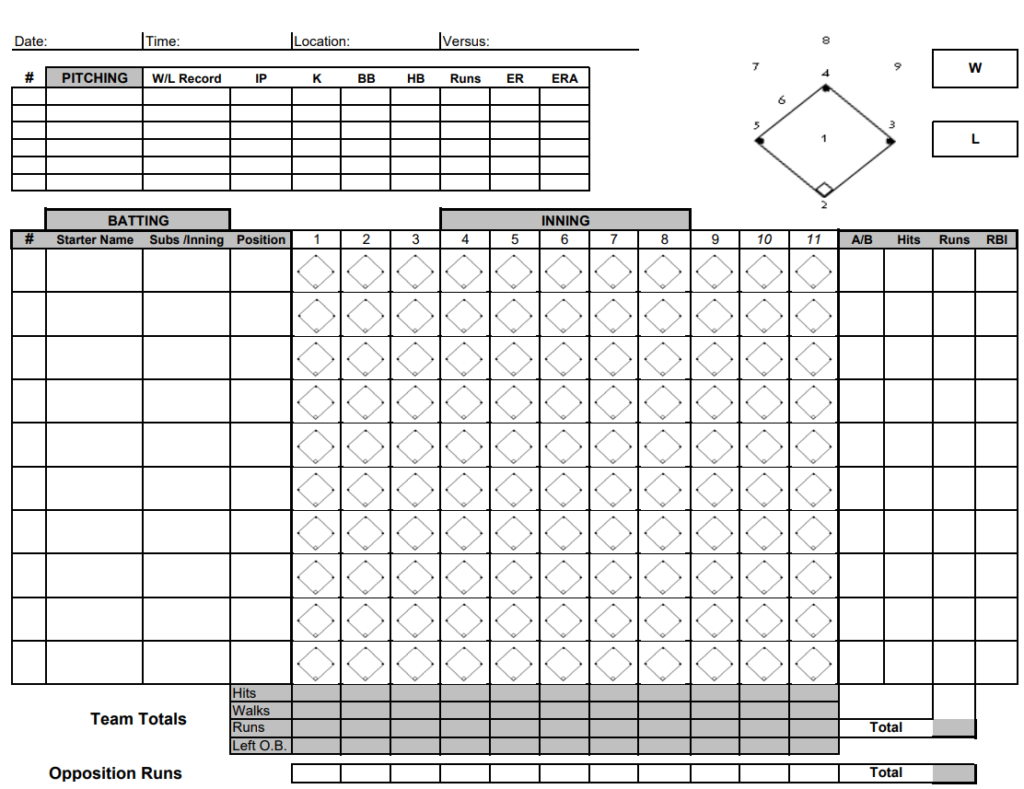
File Size: 222 KB
Baseball Scorecard Sample Excel
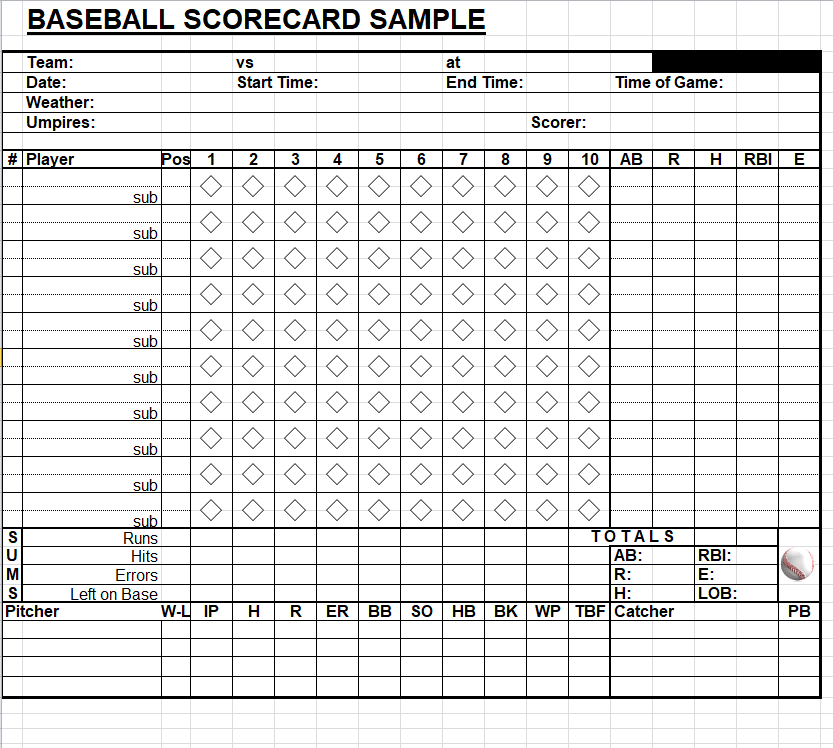
File Size: 17 KB
Official Baseball Scoresheet Template in PDF
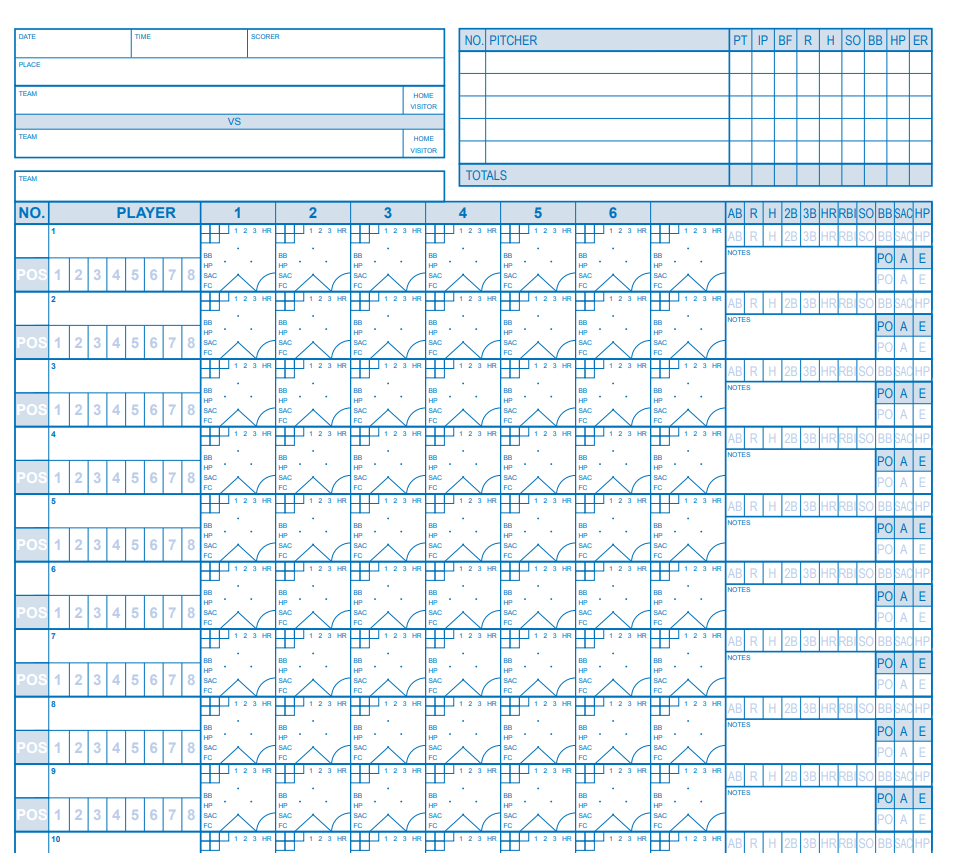
File Size: 670 KB
Baseball Tryout Scoresheet Template
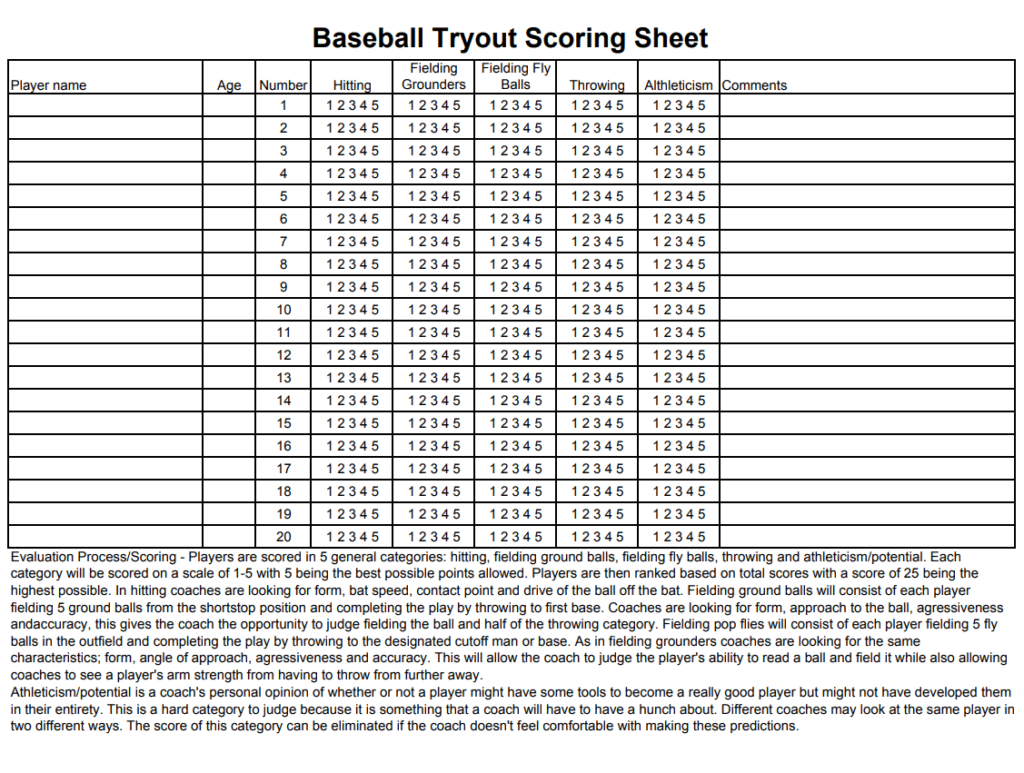
File Size: 38 KB
School Baseball Match Scoresheet Template
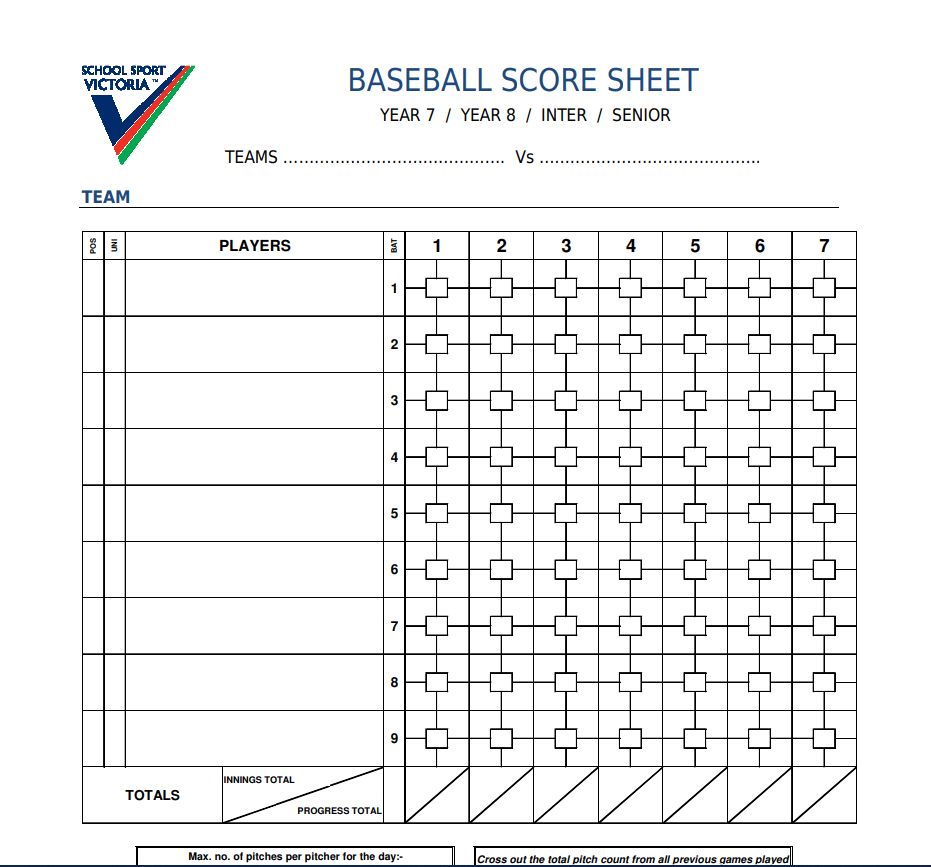
File Size: 132 KB
Blank Baseball Scorecard Template in PDF
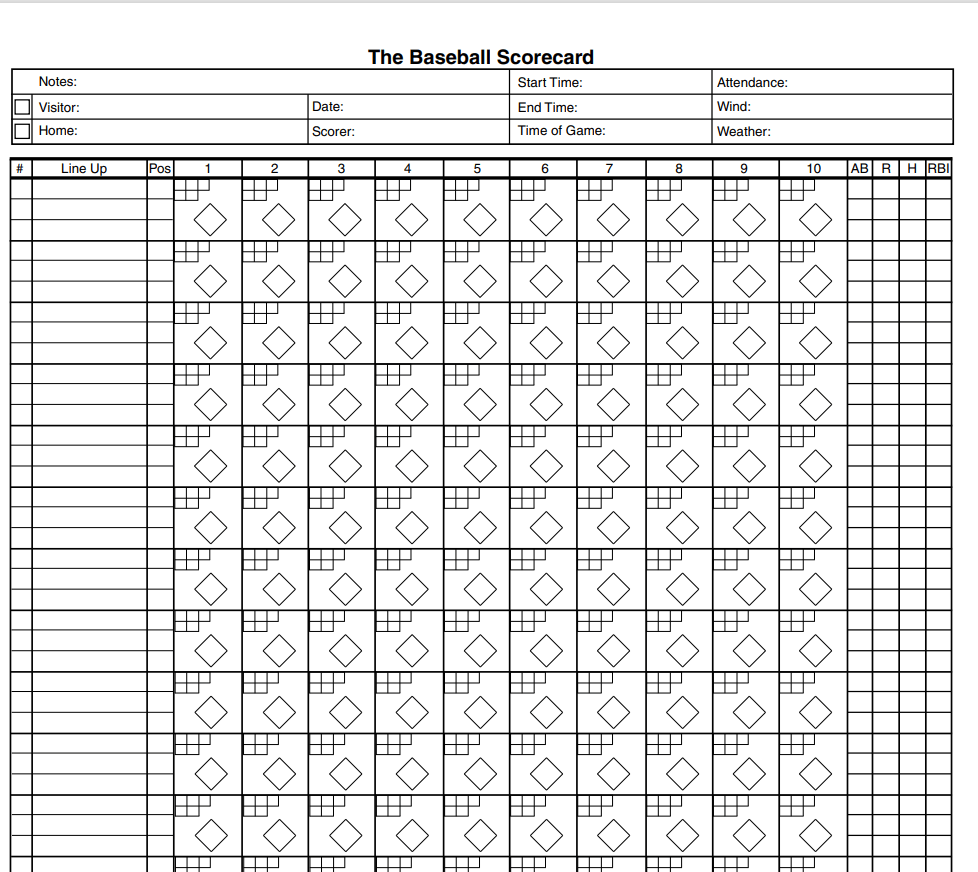
File Size: 42 KB
Baseball Game Scoresheet Excel Template
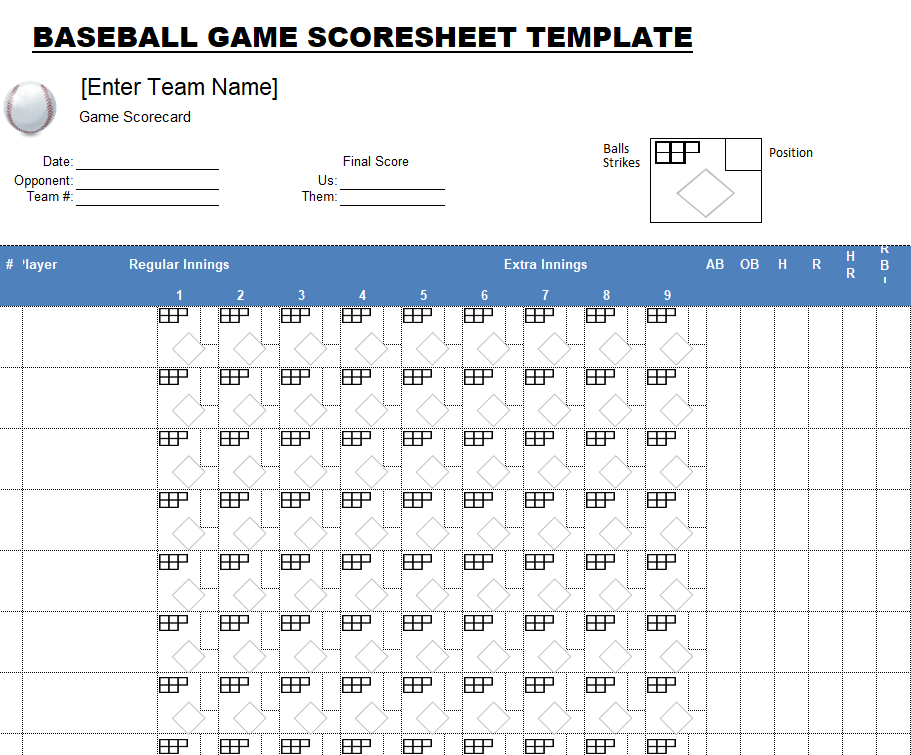
File Size: 255 KB
Basic Baseball Scoresheet Format
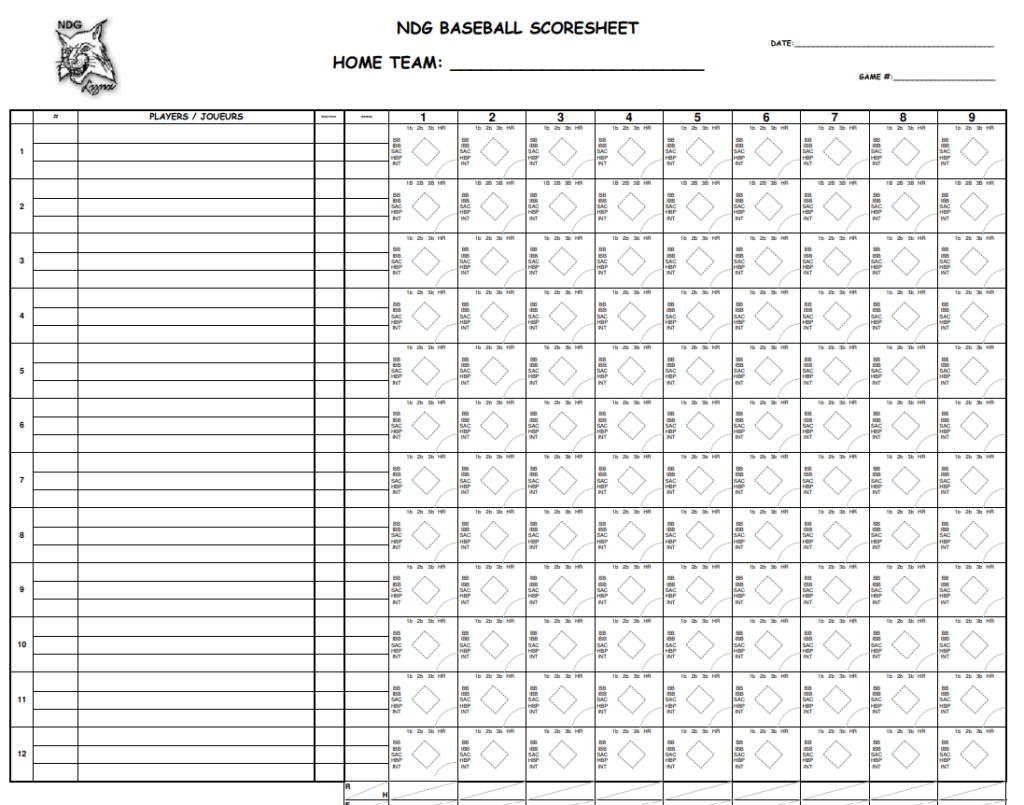
File Size: 46 KB
Baseball League Match Scoresheet Sample
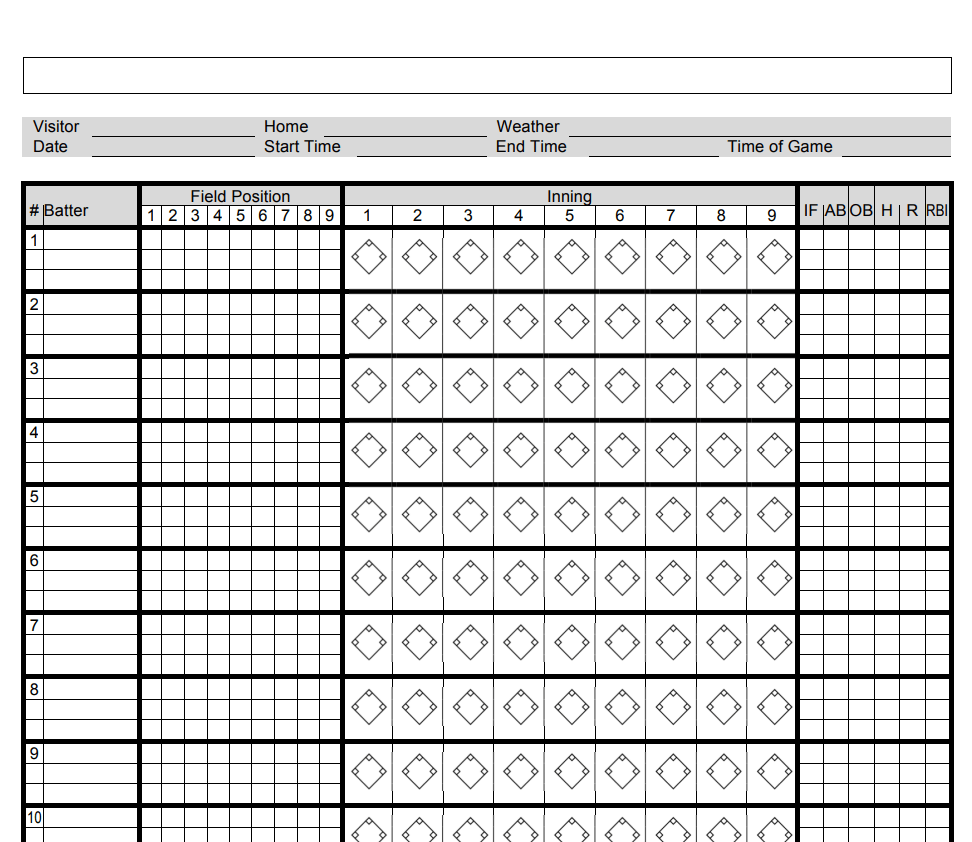
File Size: 163 KB
Baseball Tournament Scoresheet Template
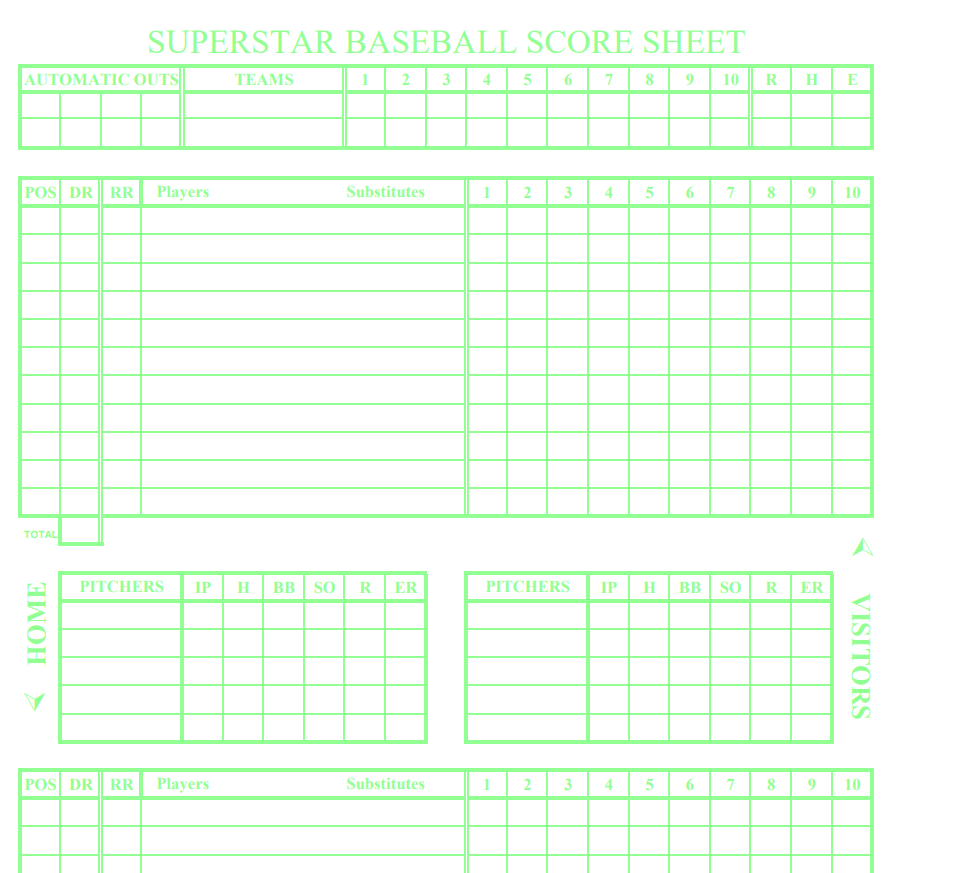
File Size: 14 KB
Baseball Match Scorecard Template in EXCEL
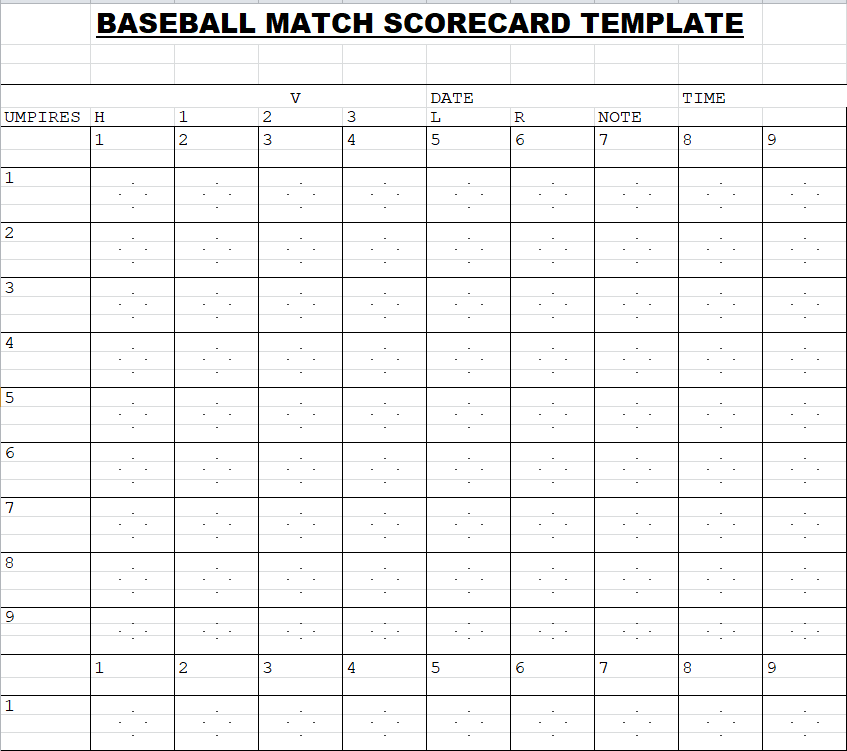
File Size: 15 KB
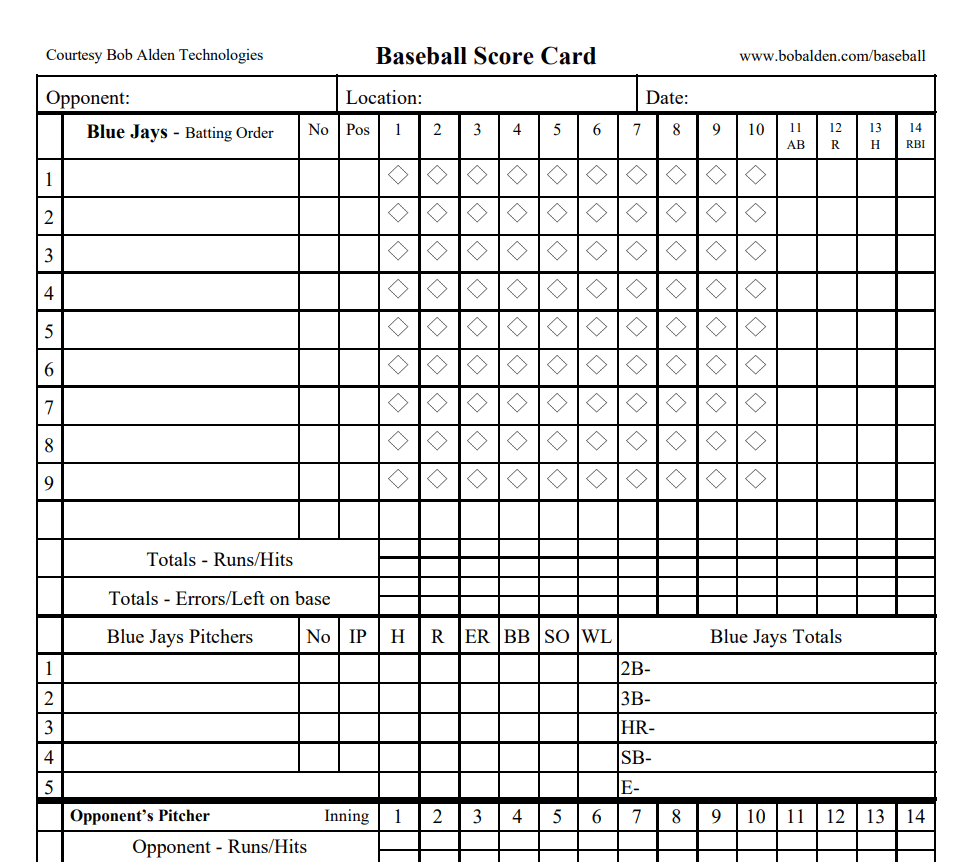
Local Baseball Match Scorecard Sample
File Size: 29 KB
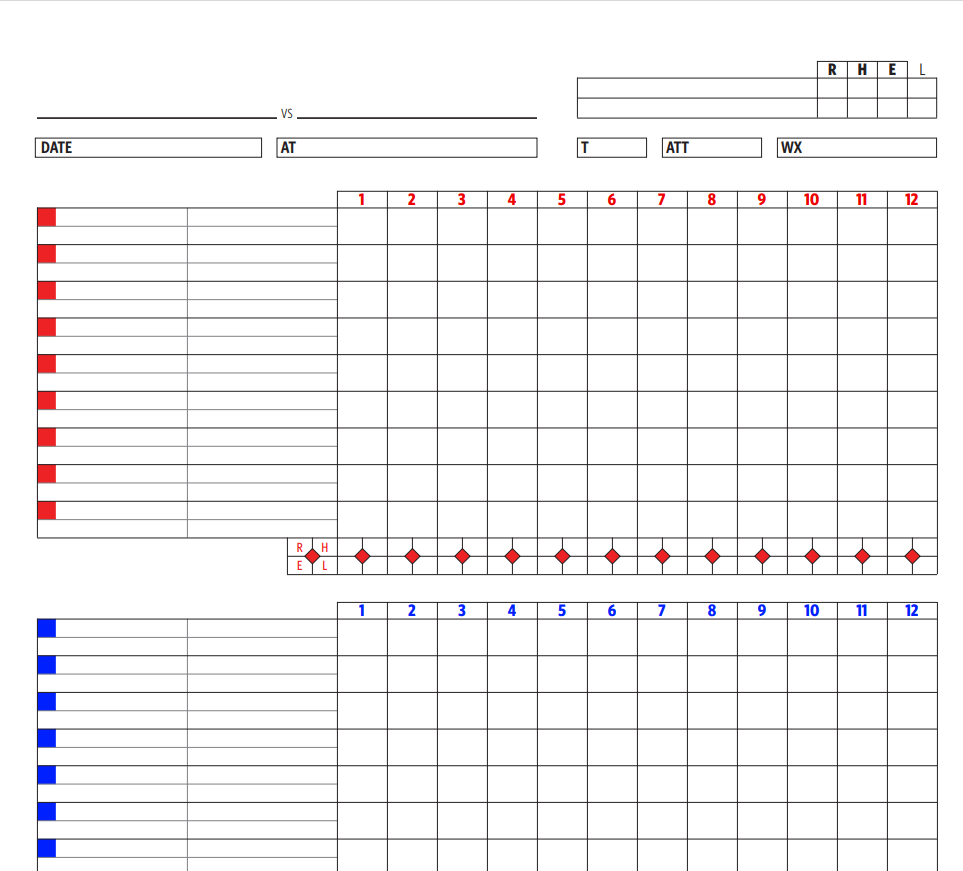
Baseball Scoresheet PDF Format
File Size: 26 KB
Basic Tips for Creating a Baseball Scoresheet
Using the pre-formatted and printable baseball scoresheet templates available here on this page will save a lot of your time and effort. You don’t have to draw the outline or format of a baseball scoresheet from the scratch. However, if you want to know how to make or create your own baseball scoresheet, then make sure to follow the given basic tips for creating a proper baseball scoresheet:
- Start your baseball scoresheet by creating an area for the batting lineup on the left side of the sheet. On the right side, create an area for the position of the batters. At the top of the sheet, list 1-9 above each column as the total number of innings within the game. At the bottom of the sheet, add the column for the pitchers. Keep in mind that the scores of only one team can be recorded on a single baseball scoresheet.
- Make sure to write down some general information related to the game like the names of both the teams, members, umpires, and the date of the game. In case you don’t know the name of a particular player, you can also use his jersey number.
- Add the small boxes, squares, or bubbles to your scoresheet and as the game progresses, record the score by filling out those boxes or squares. You can fill the box or square or put a line or a number to record a strike or score.
- Every time a player scores, shade the entire diamond area of your scoresheet. However, if the player screws up during his turn, mark the scoresheet with an ‘E’ indicating an error. This error occurs when a player makes a mistake and the opposing player reaches safely to the base as a penalty. You should note the fielder’s choice ‘FC’ in your scoresheet whenever a base runner reaches a base wherein the other base runner was called out. This is to explain the base runner’s advancement.
- To record an out, mention the position numbers of the player who caught the ball and to whom the ball was thrown, respectively. Write the out number (1, 2, 3) in the box where the out occurred, circle it, and make sure to separate the players with a dash.
- Score the walk by encircling the BB (Base on Box) in the relevant box. This is used when the pitcher throws four pitches out of the strike zone and all of the four got missed by the hitter.
- To score a hit, make sure to circle the correct hit whether it be a triple hit, double hit, single hit, or a home run hit.
- To score a strikeout, mark a K in the scoring box when the player struck out by swinging the bat. To score a strikeout when the umpire called the second strike without the batter swinging, write a KC in the scoring box.
- Make sure to color the entire box of the player when he scored a run. Also, allocate an RBI (Runs Batted In) to the player who batted in the runner.
- To indicate the runner advancing to the next base, a PB (Passed Ball) is put on the line.
- A wild pitch (WP) is also recorded or scored in the same way as the PB.
- To track the pitcher’s information, use hash marks.
- You can also add some remarks or comments to indicate your analysis of the game.
Set up the lineup before play begins
Record the teams, date and other useful game details. Enter the batting order carefully and keep a way to identify substitutions. Use enough information to distinguish players with similar names or numbers. If the template has separate sides or pages for each team, label them clearly before the game starts. A small setup error can make later entries difficult to interpret. Keep room for changes rather than assuming the first lineup will remain unchanged for the whole game.
Choose notation you can read consistently
A scorecard is useful only if the marks mean something to you later. Use a consistent system for recording plate appearances, runner movement, outs and inning boundaries. Add a small legend if the sheet will be shared with another person. Do not introduce a new symbol halfway through a game without noting what it means. When learning, practice with a short sequence before attempting to record every detail at live speed. For formal scoring conventions and judgments, consult the applicable competition rules or official scorer guidance rather than relying only on a template description.
Record the sequence, not only the final score
A scoreboard total does not explain which players reached base, which runners advanced or how an inning ended. Keep the sequence visible in the appropriate batting-order and inning cells. Mark an uncertainty while the play is fresh instead of inventing a confident entry later. Where you are keeping a personal record, a brief note can preserve the observation until you can reconcile it. If the record has an official purpose, follow the required correction and confirmation process.
Check the card at natural breaks
Between innings or after the game, review the entries you can reconcile without losing track of current play. Compare inning totals and the final score with the information available to you, and identify anything unresolved. Keep substitutions and notes connected to the right part of the game. A clear correction is easier to understand than several unexplained overwrites. If you are recording more than a personal keepsake, confirm the required submission format and who is responsible for approval before treating the sheet as final.
Practice with one short inning
Imagine a short practice sequence with three batters. Before recording any result, confirm which team is batting and where the inning begins on the sheet. Enter each result in batting order and record any runner movement using the same notation throughout. When the inning ends, mark the boundary clearly so the next entry is not mistaken for part of the same sequence. Compare your record with a plain-language description of what happened. The purpose of the exercise is to find whether the layout and your symbols are understandable, not to memorize an elaborate system from a screenshot alone.
Related templates
Organize the event timetable separately from the game record. event itinerary templates.
Coordinate volunteers or participants before the event. sign-up sheet templates.
Keep any team fundraising orders in their own record. fundraiser order forms.
For an official introduction, see MLB’s guide to keeping score.
Frequently asked questions
Can a beginner use these scorecards?
Yes, if the layout is understandable and has enough room. Practice a short sequence first and use a consistent notation system that you can read later.
Do I need a separate record for each team?
Use a layout that clearly distinguishes the two batting orders and their innings. Some templates provide separate pages or sides; inspect the actual file.
Does the template decide whether a play is a hit or an error?
No. A sheet records a scoring decision or observation. Official judgments require the relevant rules and authorized process.
Can I use an Excel scoresheet on a phone?
Check the actual workbook and the device workflow before relying on it during play. A printed page may be more practical for some situations; a preview does not establish mobile usability.
What if I miss a play?
Mark the gap and seek reliable clarification when appropriate. Keep an uncertainty visible rather than guessing, and follow the required correction process for an official record.
