
A graduation speech feels personal when the audience recognizes the moments and people behind it. Valedictorian speech examples can help you find a shape for those memories, but your own class should supply the details. A borrowed story rarely carries the same meaning as one you can tell honestly.
The downloadable examples below offer different approaches to opening, thanking people and looking ahead. Read a few for structure, then close the file while you choose what your own graduating class would recognize. The aim is a speech that sounds natural when you say it aloud.
This guide starts with material selection, then moves through a workable outline, acknowledgments, humor and rehearsal. It also includes an illustrative opening to show how a small concrete moment can lead into a shared idea without inventing personal experience.
Choose one idea that can hold the speech together
Begin with a sentence describing what you want classmates to take away. It might concern learning to ask for help, making room for one another or finding confidence through practice. Choose an idea supported by your actual school experience.
A single thread helps you decide which memories belong and which can be left for another occasion. Avoid trying to summarize every subject, activity and achievement in one address. A short speech can acknowledge the breadth of the class without becoming an inventory.
When drafting, return to the central idea whenever a paragraph feels detached. Ask how that passage helps the audience understand or feel the point you are making.
Select memories the audience can recognize
Look for a few specific moments that reveal something about the class. A shared challenge, an ordinary routine or a small act of support can be more effective than a claim that your year was uniquely extraordinary. Check names, dates and details before including them.
Where a story concerns another person, consider whether they would be comfortable hearing it told publicly. Avoid making one friendship group stand in for the whole class. The speech can be personal while still giving listeners different ways to recognize themselves in it.
If a memory needs a long explanation before anyone understands why it matters, another example may work better.
Use a clear outline and let transitions do their job
A practical outline is an opening moment, the meaning you draw from it, one or two supporting memories, acknowledgments and a short look ahead. The order can change to suit your material.
Write transitions that explain the connection rather than announcing “now I will talk about” each section. If a paragraph repeats an idea without adding a new detail, shorten or remove it. Keep the language close to the way you speak in a formal setting.
A sentence that looks impressive on the page may be difficult to deliver. Use the outline to give the speech direction while leaving room for your own phrasing and natural pauses.
15 downloadable templates and previews
Compare the previews for layout and available fields, then use the download button for the actual file. Check the package contents before editing, because the collection includes different layouts and file types.
Extract ZIP packages first, keep a blank original and save your working copy with a clear name. A preview image is a reference for the layout rather than the editable document.
Online Valedictorian Speech Example
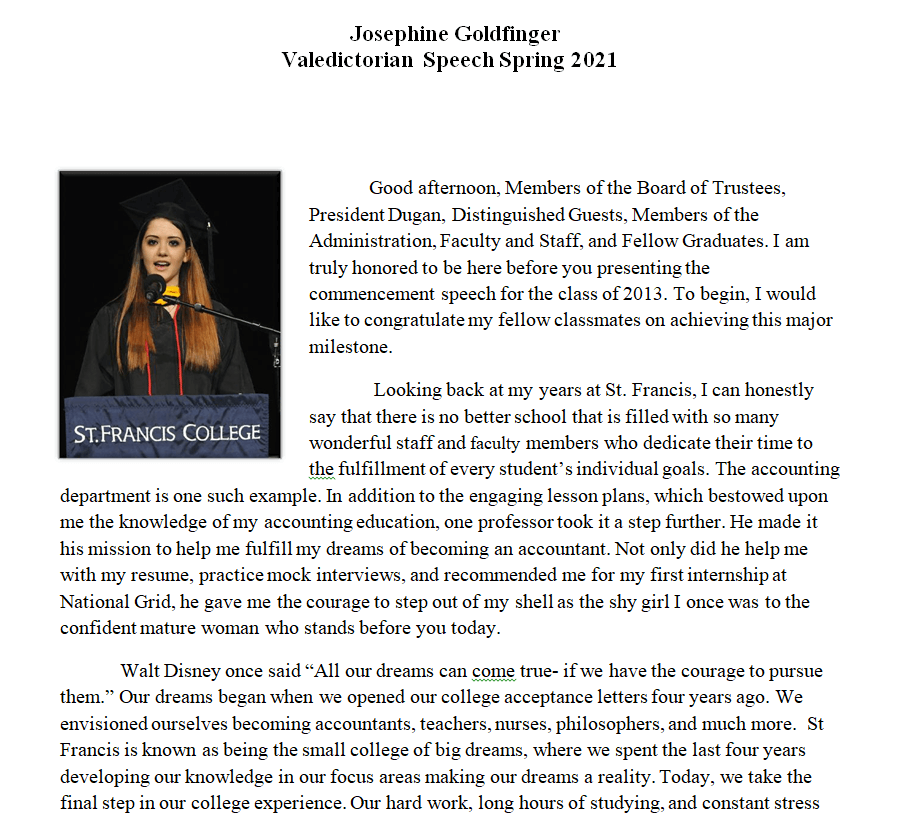
File Size: 197 KB
Valedictorian Speech Template
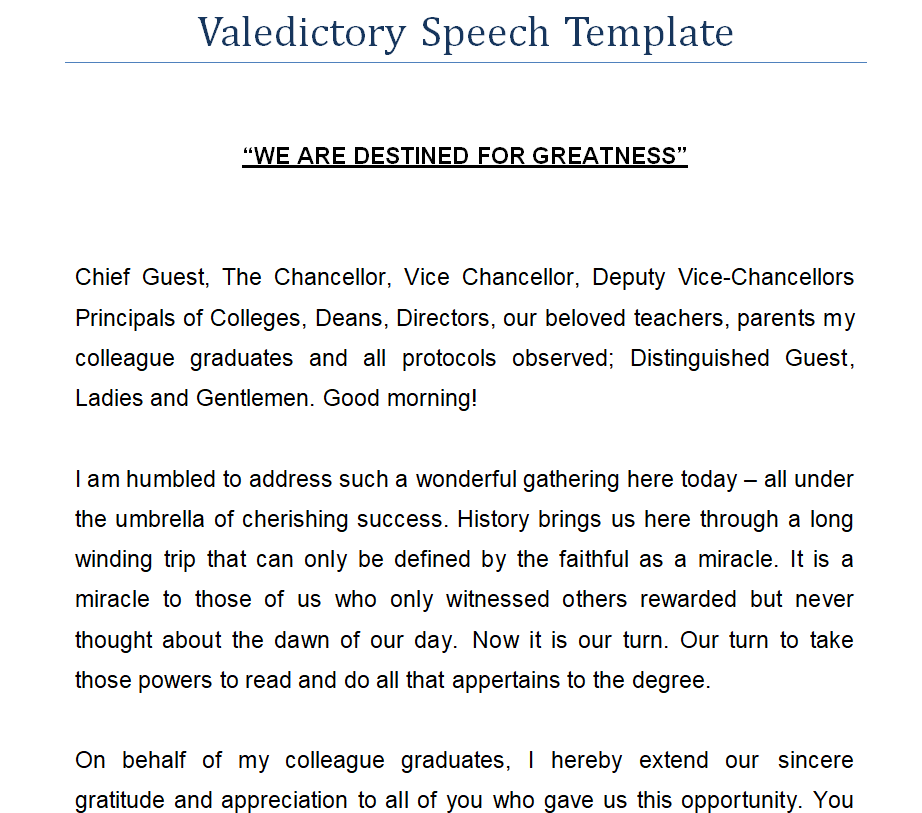
File Size: 17 KB
Valedictorian Student Speech Example
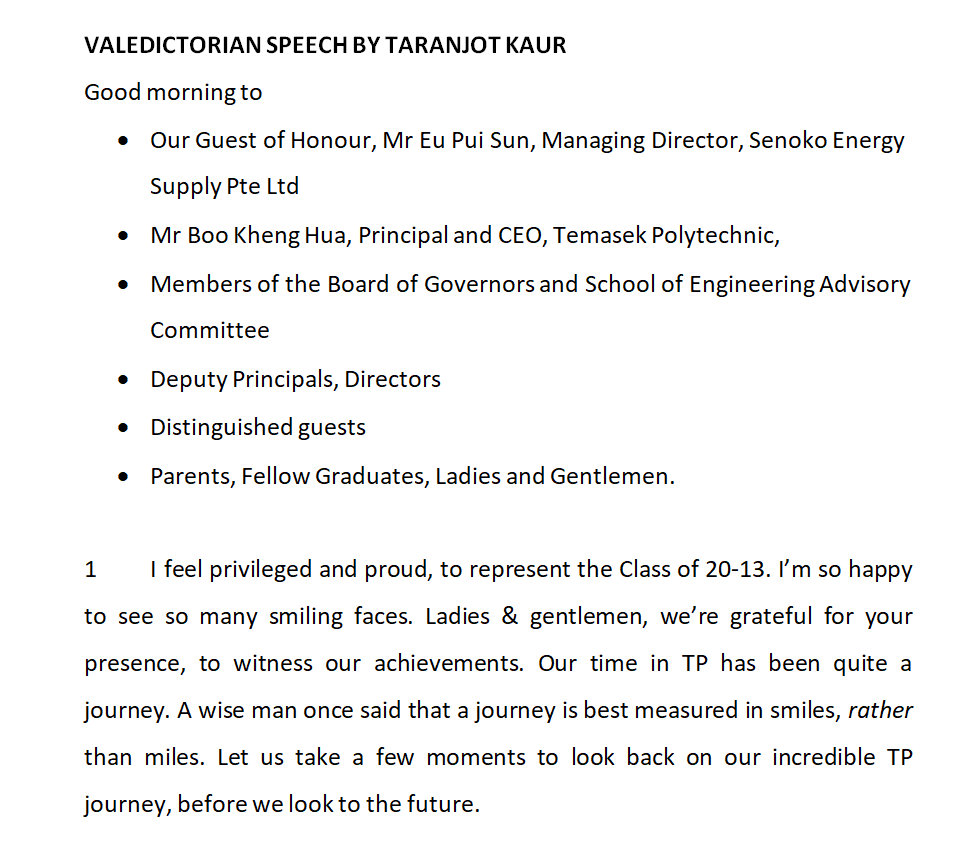
File Size: 12 KB
School Valedictorian Speech Example DOC
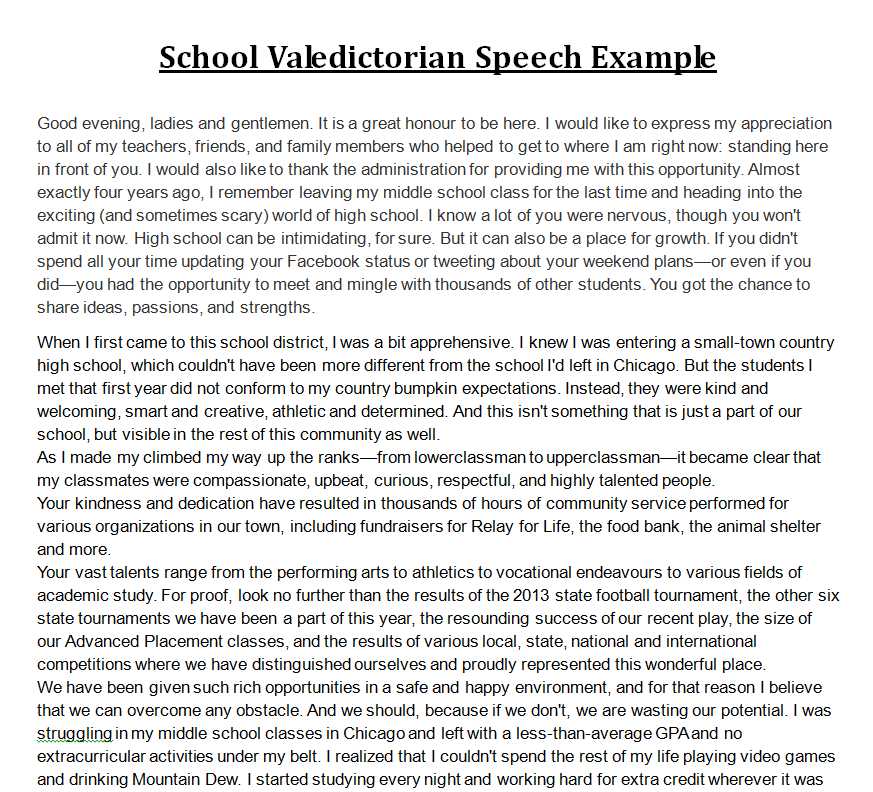
File Size: 08 KB
Special Valedictorian Speech Sample
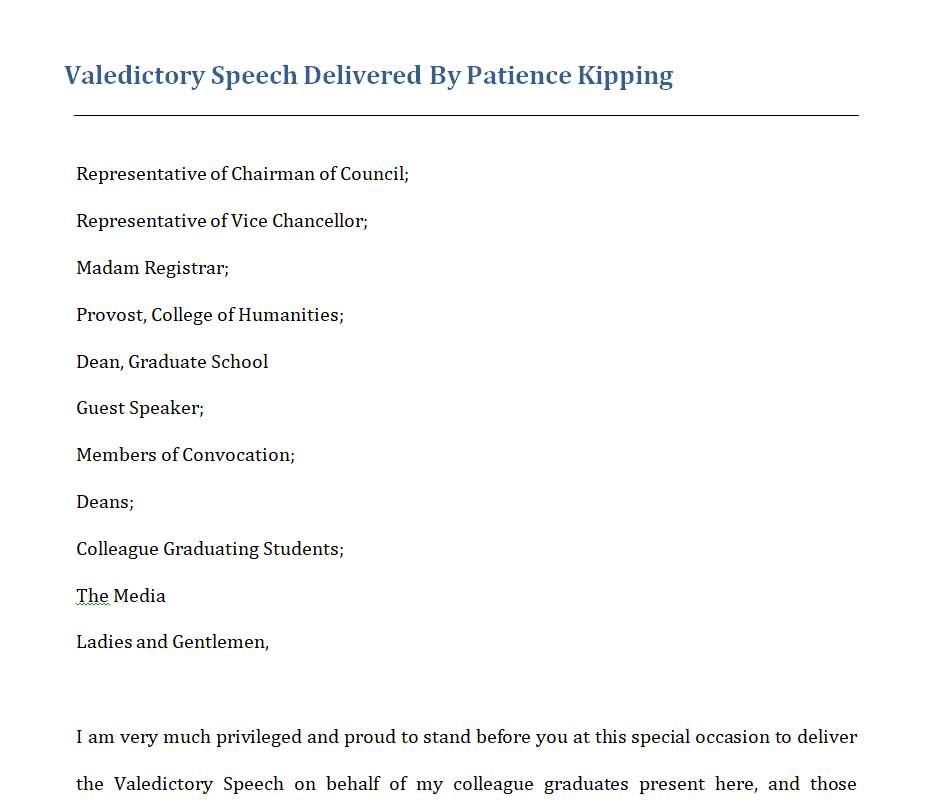
File Size: 19 KB
Valedictorian Speech Template
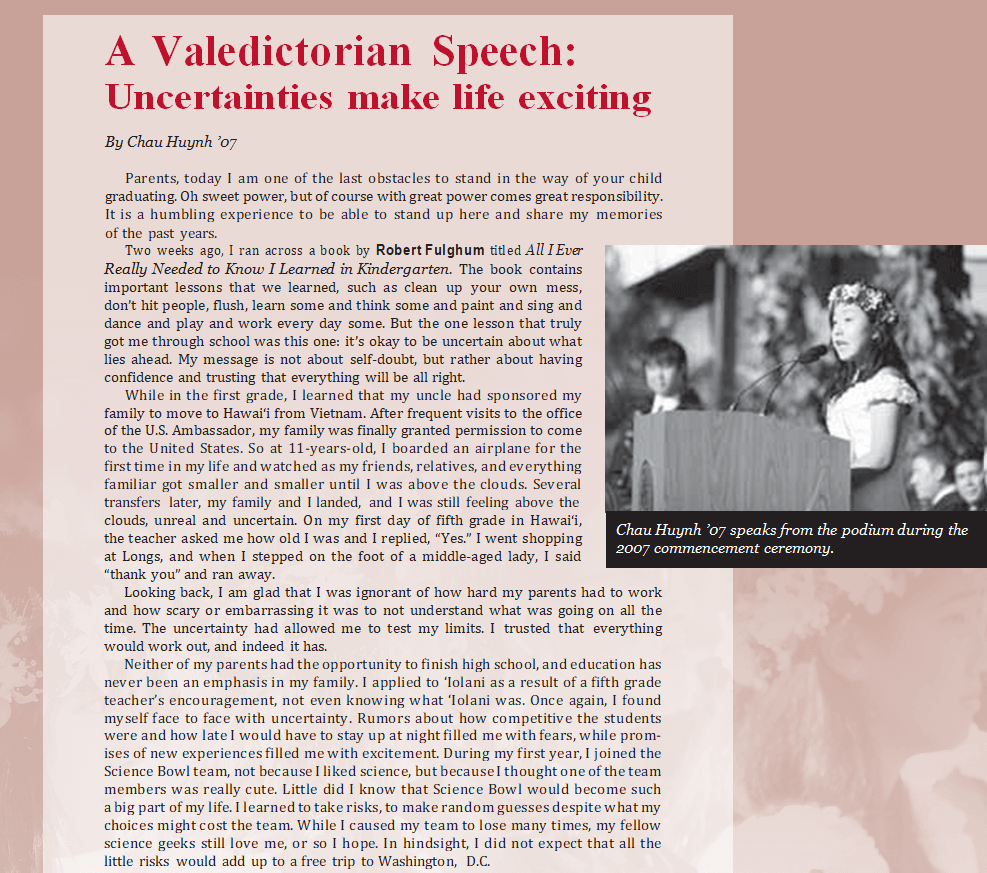
File Size: 07 MB
College Valedictorian Speech Example WORD
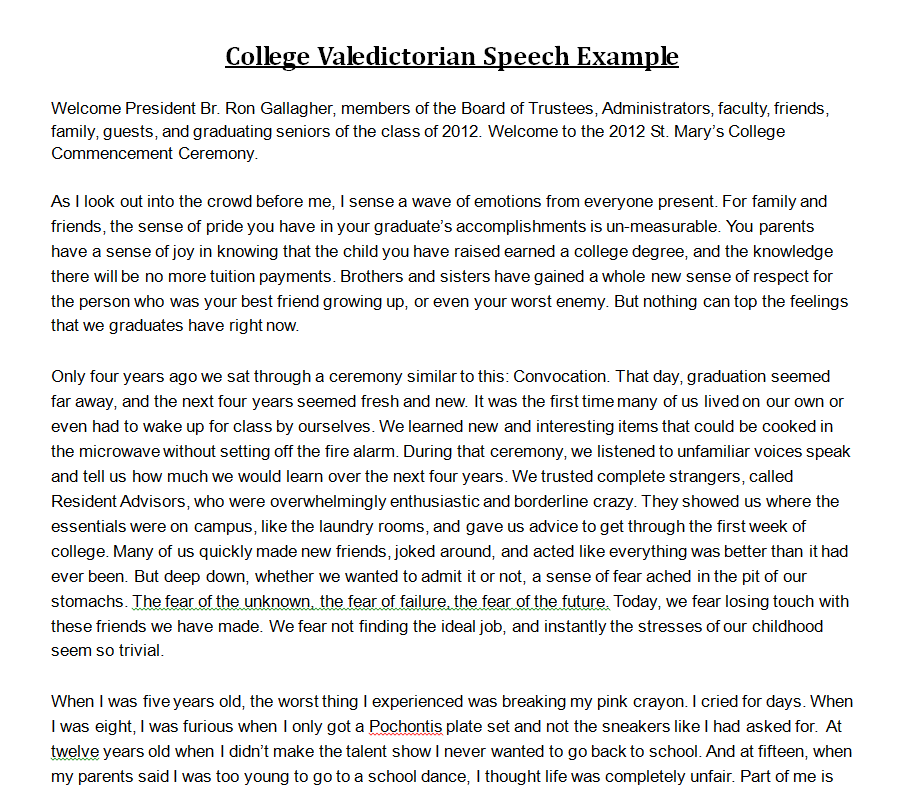
File Size: 10 KB
Class Valedictorian Speech Sample
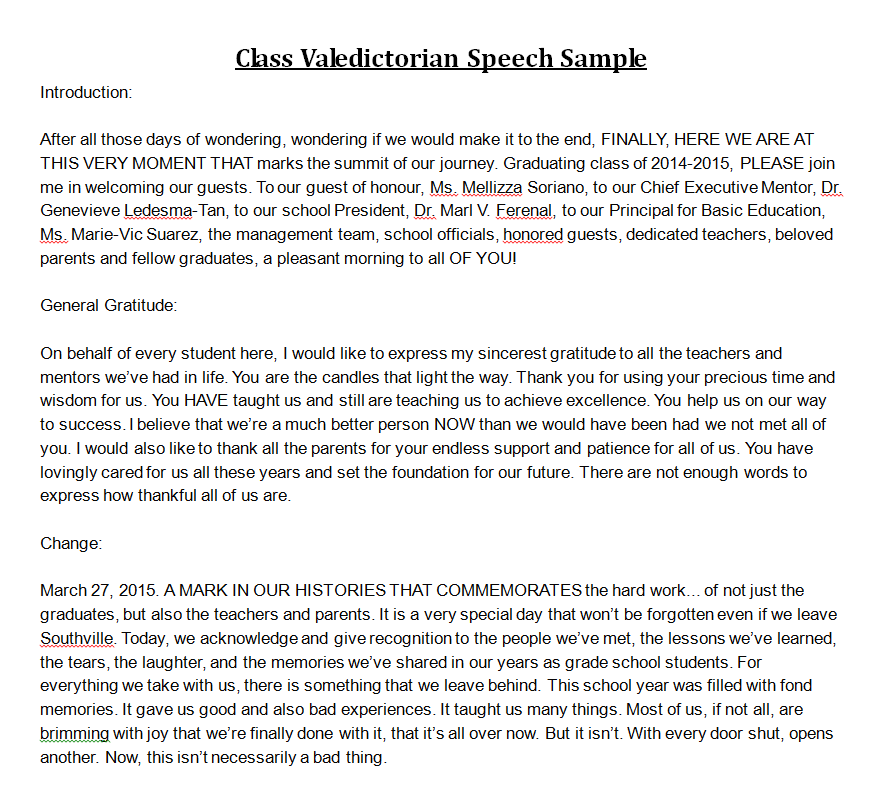
File Size: 10 KB
Short Valedictorian Speech Example
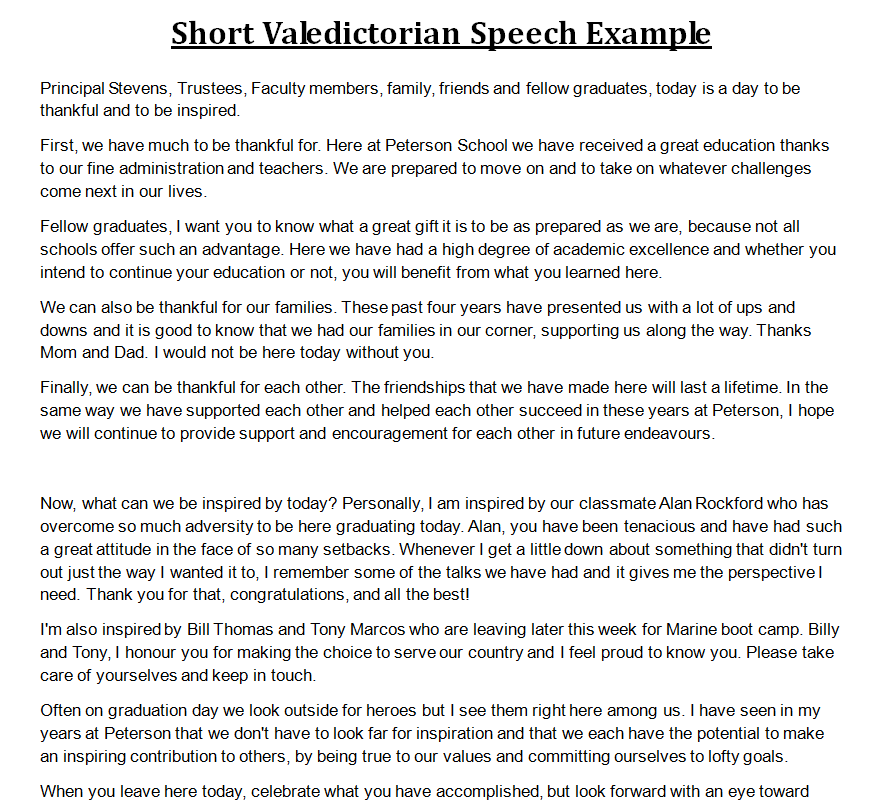
File Size: 07 KB
Sample Valedictorian Speech Printable
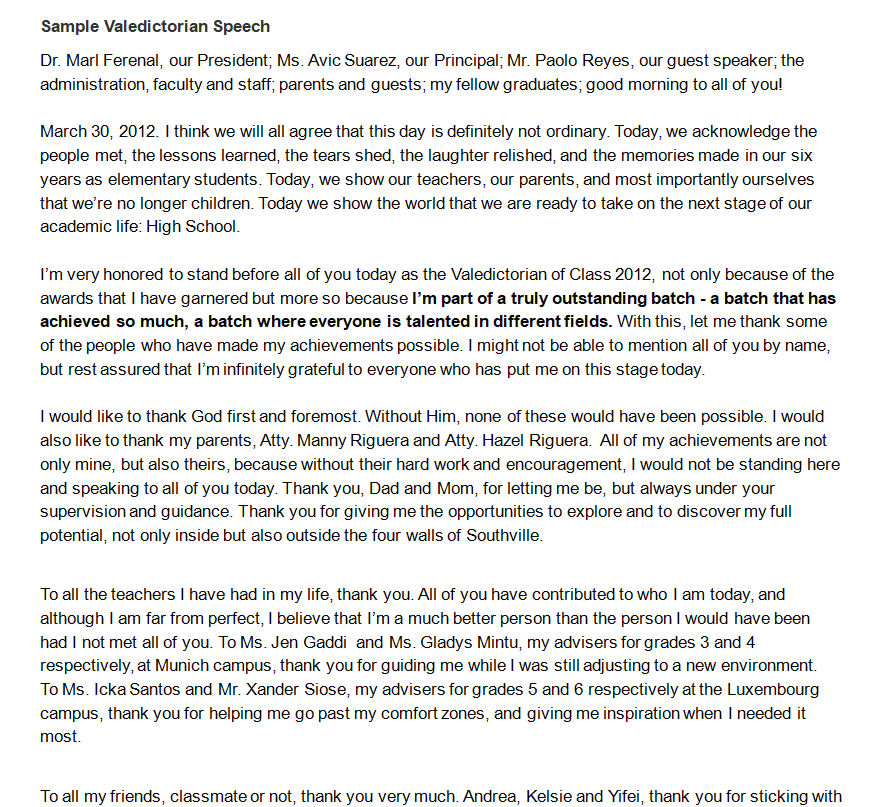
File Size: 05 KB
Practical Valedictorian Speech Template
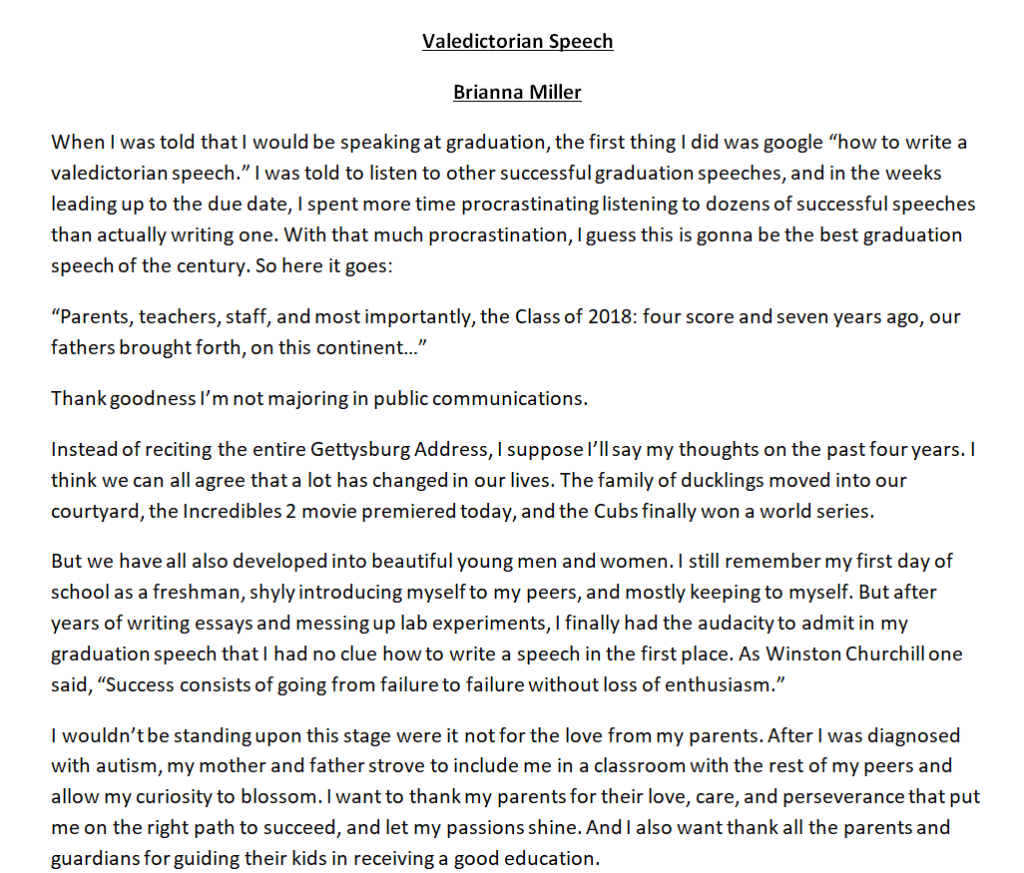
File Size: 09 KB
Handy Valedictorian Speech Example
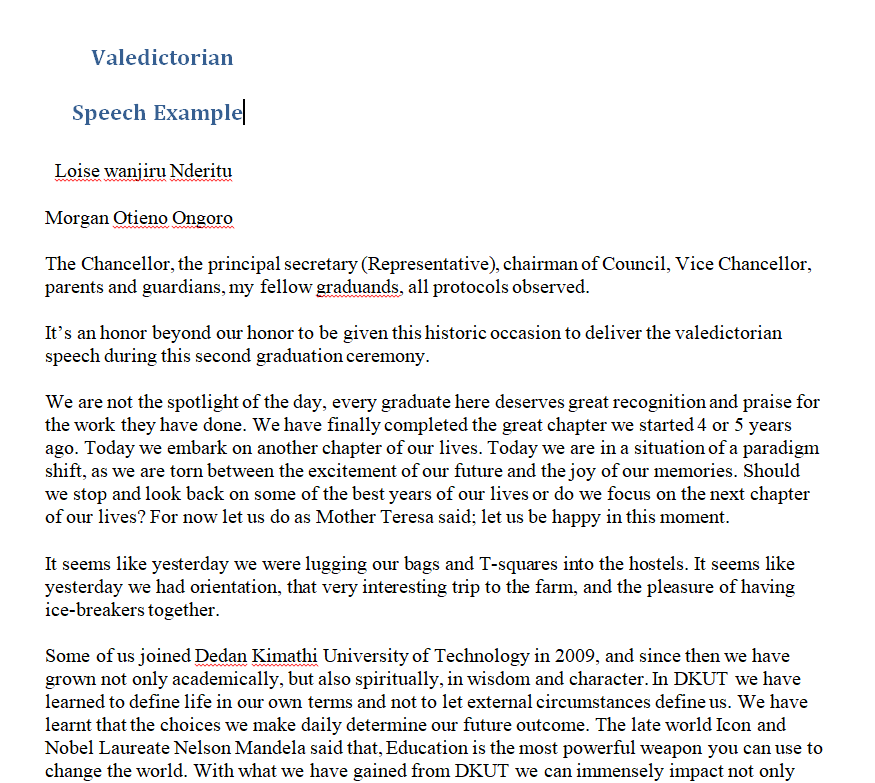
File Size: 14 KB
Student Valedictorian Speech Example in WORD
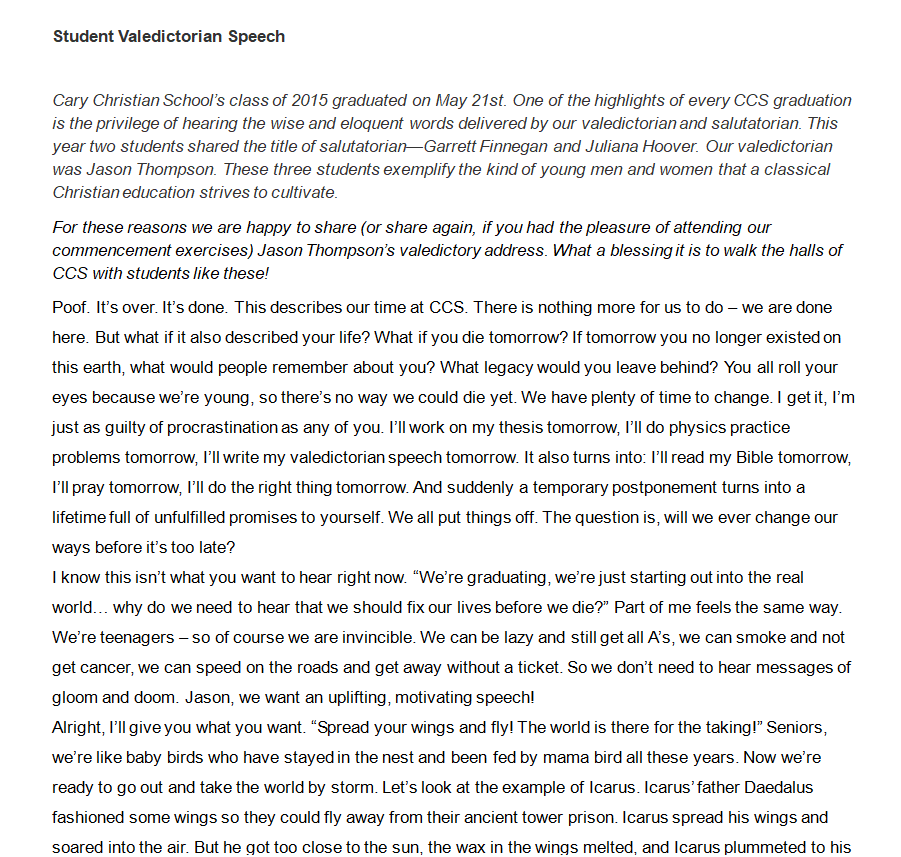
File Size: 06 KB
Graduation Valedictorian Speech Format
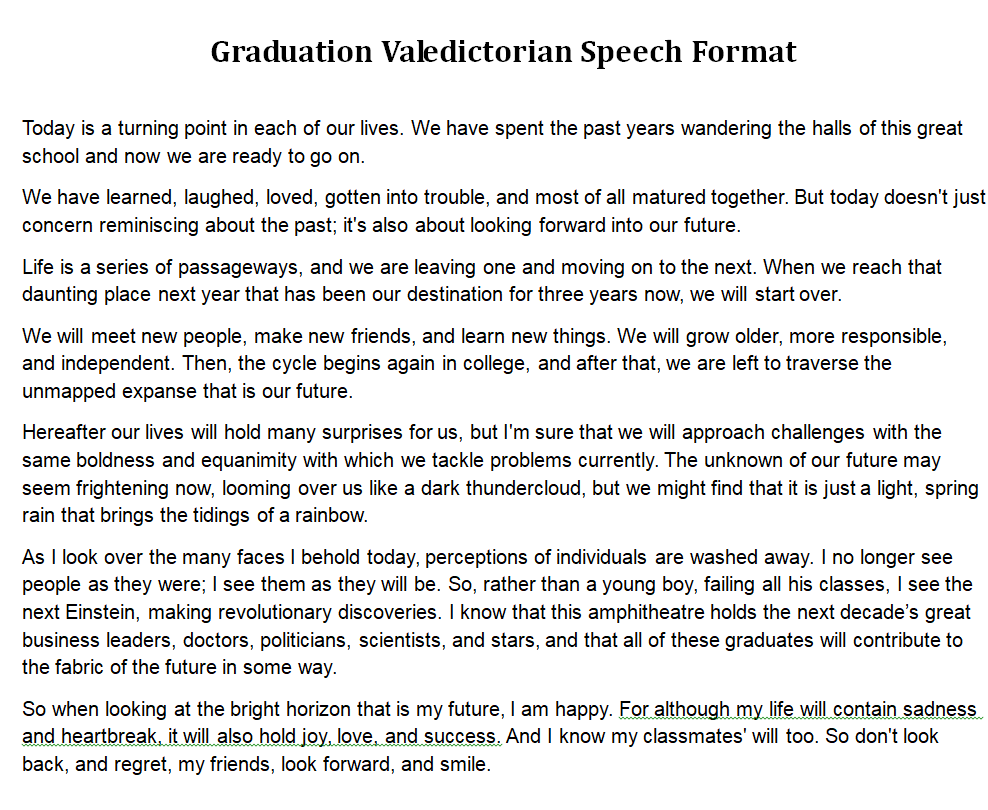
File Size: 07 KB
Valedictorian Nomination Speech Sample
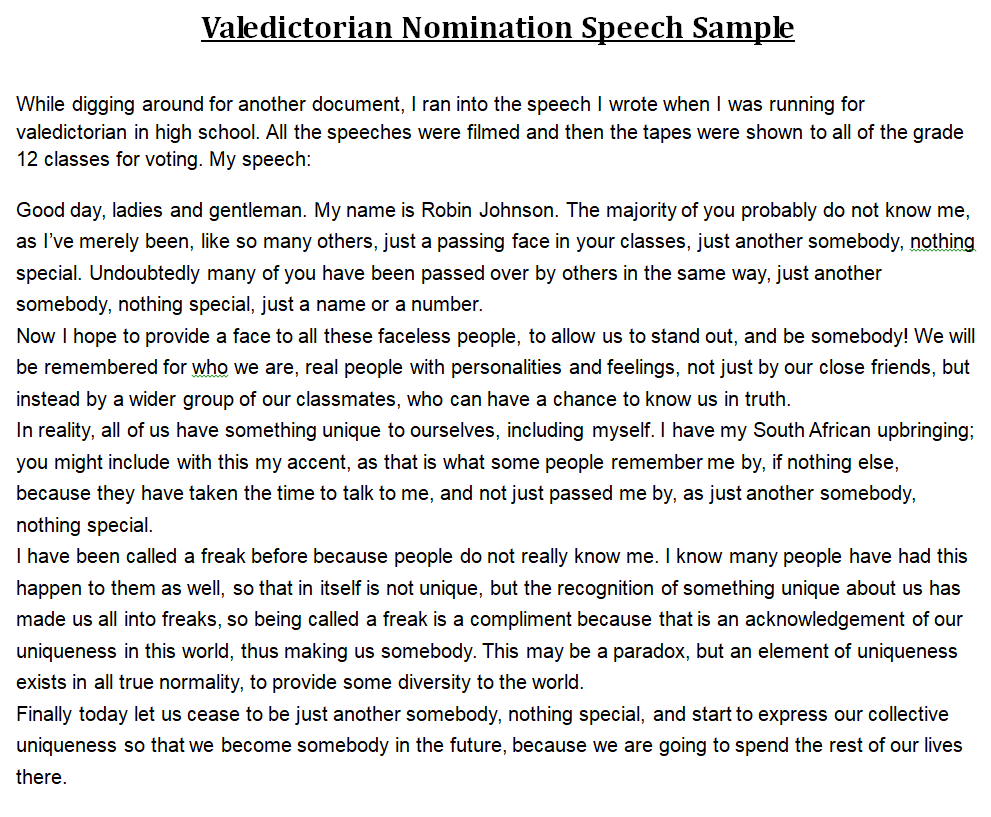
File Size: 07 KB
An illustrative opening built around an ordinary moment
Here is a fictional opening intended only to demonstrate structure: “On the first day, many of us needed directions to the right room. Over time, something changed.
We started noticing when someone else looked lost, and we became the people who could help.” The writer could then connect that observation to a genuine memory of classmates supporting one another.
The useful feature is the movement from a concrete image to a shared idea. It does not require a famous quotation or a claim that every student felt exactly the same way.
For your own speech, replace the invented situation with something you can support from your experience. If the example does not fit your class, choose another moment rather than forcing it into the draft.
The audience should hear a recognizable voice and an honest observation, not a polished anecdote that belongs to nobody in the room.
Thank people with enough detail to feel sincere
Acknowledge the people whose support made a difference, including families, teachers, staff and classmates as appropriate to the occasion. A specific observation can carry more weight than a long list of flattering adjectives.
For example, you might describe the patience involved in helping students return to a difficult idea, provided that reflects your experience. Check pronunciation and preferred names where individuals are mentioned. Keep acknowledgments proportionate so the main thread remains clear.
You do not need to name every person to recognize different kinds of contribution. Follow the school’s ceremony guidance and coordinate with other speakers where that prevents several addresses repeating the same list.
Use humor that welcomes people into the memory
A small shared observation can relax the room, but a joke should not depend on embarrassing someone. Avoid private references that most of the audience cannot understand or material that needs a lengthy explanation.
Read the passage to a trusted person who knows the setting and ask what it sounds like from the listener’s side. If a joke feels uncertain, remove it rather than relying on the ceremony atmosphere to make it work.
Warmth can come from accurate detail and a natural turn of phrase without a punchline. Keep the occasion and the range of people in the audience in mind when deciding what belongs.
Rehearse for timing and for the room
Read the full draft aloud with a timer, including the pauses you expect to use. The permitted speaking time should guide editing more than a fixed word count. Mark places where you need to breathe, slow down or look up.
If a sentence repeatedly catches you, rewrite it in simpler words instead of practicing the stumble. Confirm practical details with the organizer, such as the microphone, speaking position and how your notes will be held.
Rehearse the opening and closing especially carefully so you can begin and finish calmly. Keep a readable final copy and avoid last-minute additions that have never been spoken aloud.
Edit the written draft into a spoken script
After the main content is settled, review the draft as a script. Break up long paragraphs so your place is easy to find. Use a readable font and spacing, and keep page turns away from a sentence you need to deliver continuously.
Spell unfamiliar names phonetically in your private notes if that helps, while keeping the public text accurate. Remove phrases you would never normally say. Ask a listener which part stayed with them and which part felt difficult to follow.
Their answer can reveal whether the central idea is clear. Keep the final version focused enough that a short pause, applause or an emotional moment will not force you to rush the ending.
A final check before using the template
- Choose one clear idea for the speech.
- Use truthful, recognizable class memories.
- Check names, details and pronunciation.
- Keep acknowledgments specific and proportionate.
- Remove humor that depends on embarrassment.
- Time a full spoken rehearsal with pauses.
- Prepare a readable final script.
Related templates
For a separate graduation publication or class feature, explore Word magazine templates.
If graduates are joining an alumni group, prepare a separate membership acknowledgment with membership certificate templates.
For the ceremony timetable and practical sequence, keep a separate schedule with event itinerary templates.
Frequently asked questions
How long should a valedictorian speech be?
Follow the speaking time provided by the ceremony organizer. Rehearse the draft aloud with realistic pauses to see whether it fits. Editing to the allotted time is more dependable than choosing a word count without considering your delivery.
Can I use an example speech as my own?
Use examples to understand structure and tone, then write from your own class experience. Replace borrowed stories and wording rather than presenting them as your memories. Attribute any quotation you retain and check that it serves the speech.
Does the speech need a famous quotation?
No. A clear original observation or a genuine shared memory can make a strong opening. If you use a quotation, verify its wording and attribution, and explain its connection instead of relying on the quotation to supply the speech’s meaning.
How can I include the whole class?
Choose examples that different classmates can recognize and avoid assuming everyone had the same experience. Acknowledge different contributions and kinds of support. Read the draft from the perspective of someone outside your immediate friendship group.
What if I feel nervous during the speech?
Prepare a script that is easy to follow, rehearse the opening and allow natural pauses. Confirm the practical arrangements with the organizer. If you lose your place, pause and return to the next clear sentence rather than trying to recover every missed word.
You can also browse more options in the Other Templates category.
