
An account statement should help a customer see how a balance was reached. Statement of account templates organize the opening position, relevant transactions and closing balance for a stated account and period. Clear references make it easier to discuss a missing payment or an unfamiliar charge.
The downloads below include different Word and Excel layouts with previews. Choose a format that fits the level of detail you need, then check the actual file and any formulas. A statement summarizing a customer account is different from an invoice, a payment receipt or a bank-issued statement.
This guide follows the record from its opening balance through reconciliation and issue. It focuses on readable descriptions, consistent signs and handling unresolved items without making an uncertain figure look final.
Define the account and the statement period
Identify the organization issuing the statement and the customer account it concerns. Use a stable account reference and clear dates. State whether the document covers a period’s movements or presents an account position at a particular date.
Label the currency and avoid combining currencies into one unexplained balance. Include a practical contact route for questions. Check that the account details belong to the intended recipient before preparing the transaction list.
A statement needs enough context to remain understandable when it is reopened later or passed to the person responsible for checking the customer’s records.
Trace the opening balance to a reviewed position
The opening amount should come from the relevant prior closing record or another established account position. Identify its date and confirm that the new period does not repeat transactions already included in it.
A blank opening cell should not quietly be treated as a verified zero. If the earlier period remains unresolved, handle that uncertainty through the accounting process before presenting a final statement.
The statement’s arithmetic may be simple, but a correct calculation built on an unsupported opening figure still gives an unreliable result. Keep the reference needed to explain the amount carried forward.
List transactions with useful descriptions and references
Use dates, references and descriptions that help the recipient identify each invoice, payment, credit or other relevant adjustment. Keep the meaning of debit and credit columns or positive and negative signs consistent.
Do not rely on an internal code that the customer cannot interpret without explanation. Match payments to the appropriate records and keep unresolved allocations distinguishable through the approved process. Avoid including unrelated notes or unnecessary personal details in the issued document.
A concise transaction description can be more useful than a broad label such as “account update” when the recipient is trying to locate the same entry in their own records.
19 downloadable templates and previews
Compare the previews for layout and available fields, then use the download button for the actual file. Check the package contents before editing, because the collection includes different layouts and file types.
Extract ZIP packages first, keep a blank original and save your working copy with a clear name. A preview image is a reference for the layout rather than the editable document.
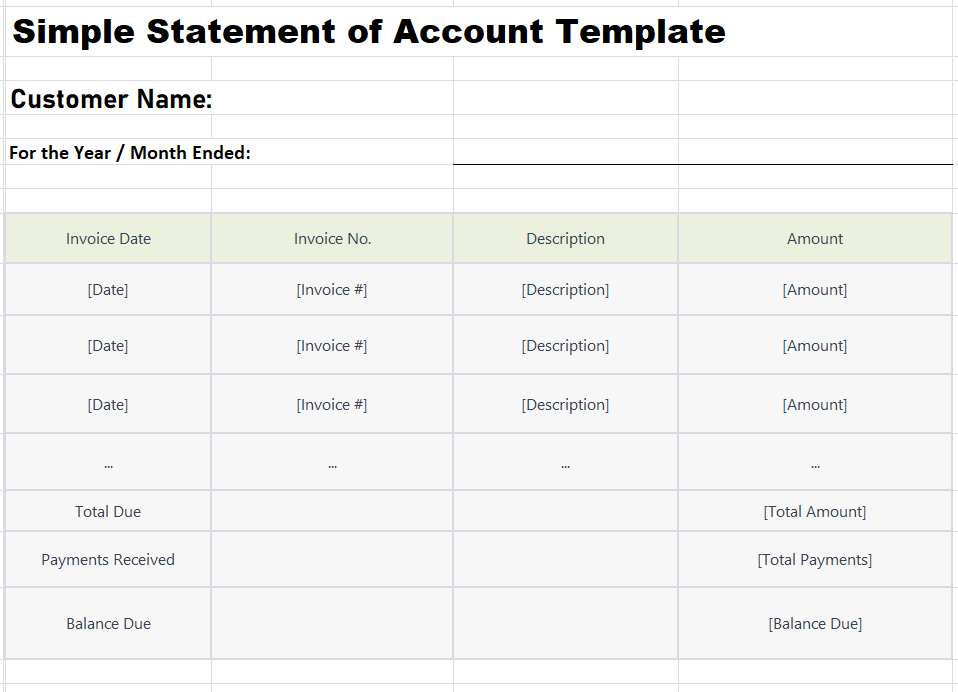
Simple Statement of Account Template

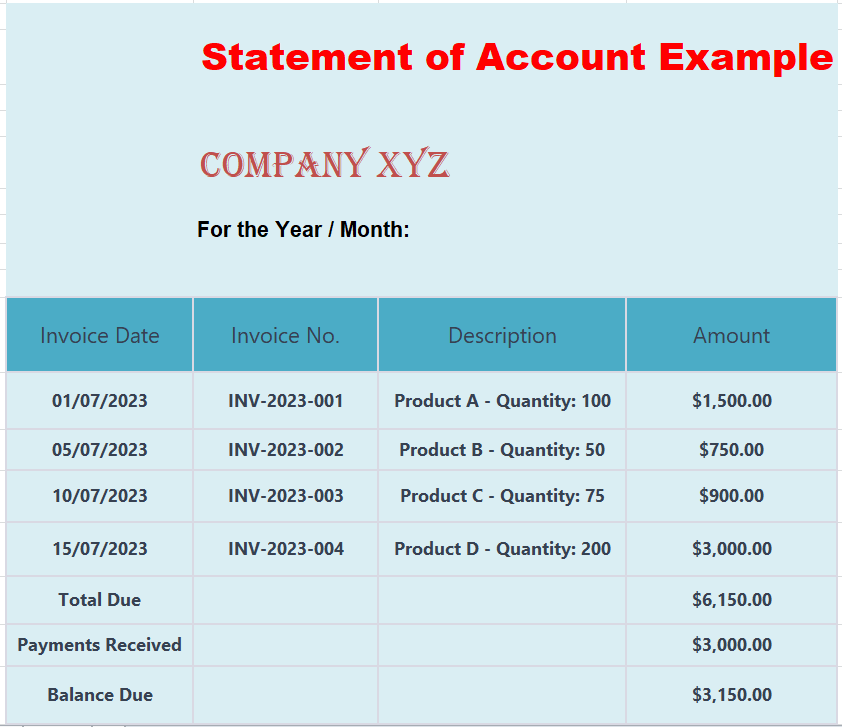
Company's Statement of Account Example
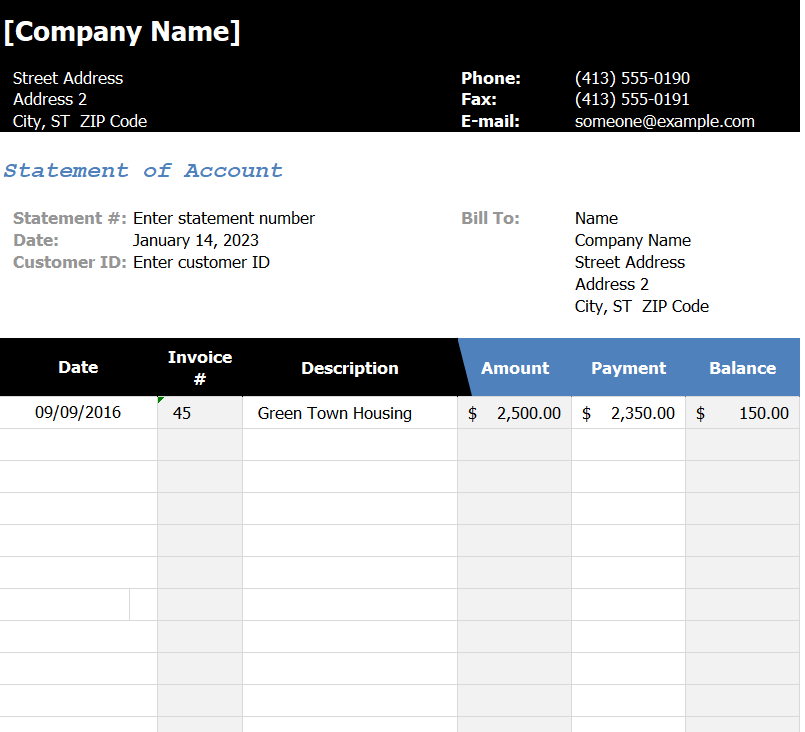
Company's Statement of Account Template
File Size: 12 KB
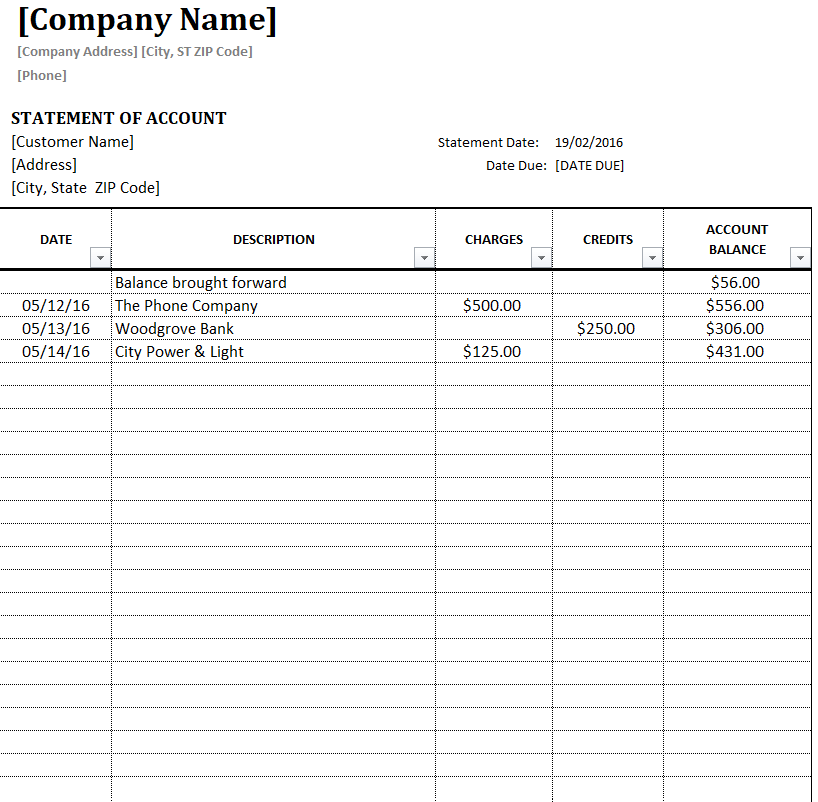
Simple Statement of Account Excel Template
File Size: 06 KB
Formal Statement of Account Template
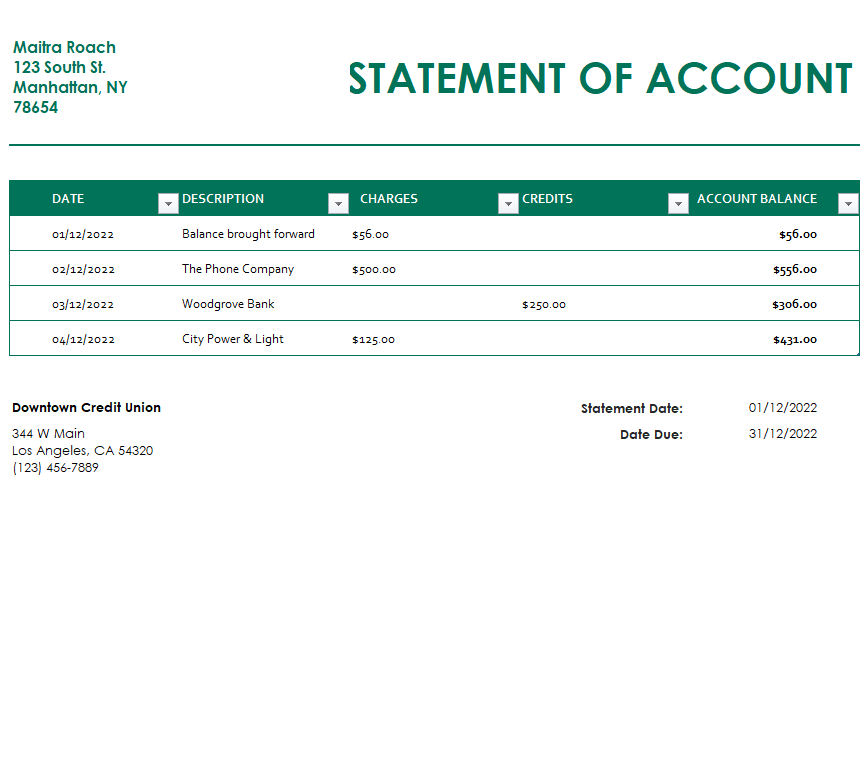
File Size: 14 KB
Corporate Statement of Account Template
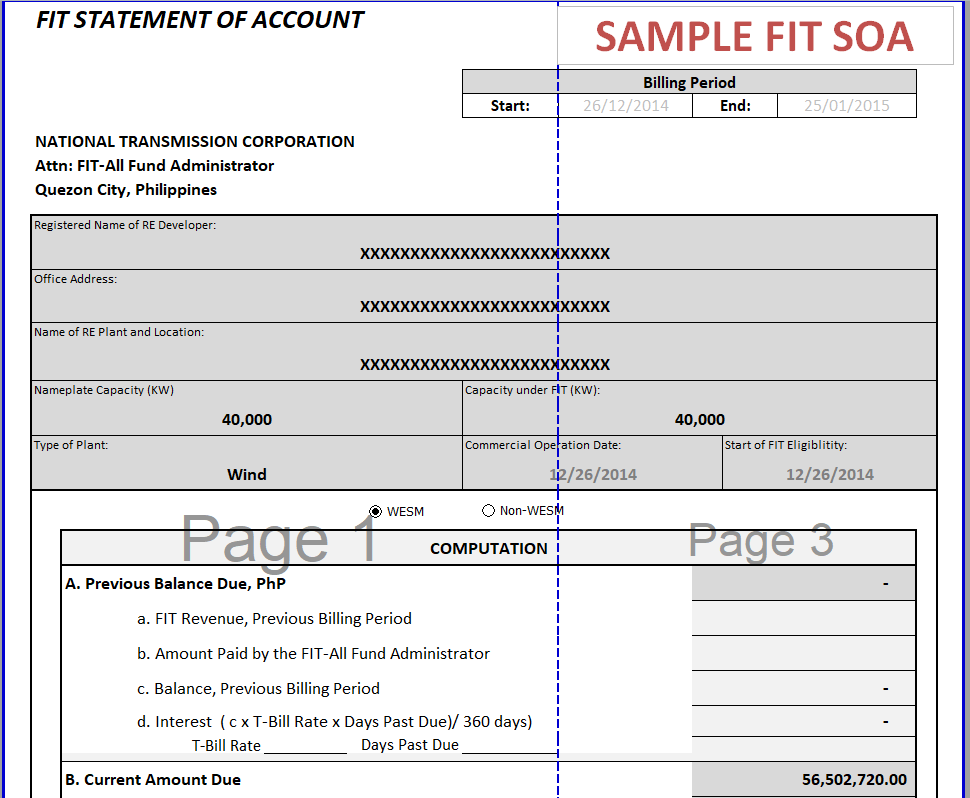
File Size: 22 KB
Monthly Statement of Account Template Excel
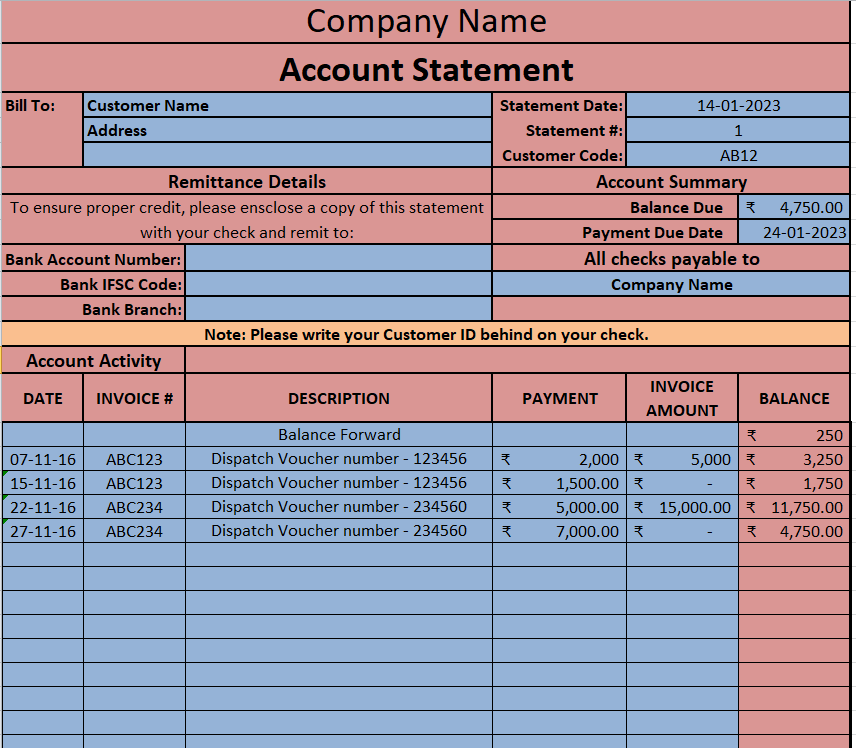
File Size: 11 KB
Blank Statement of Account Format Excel
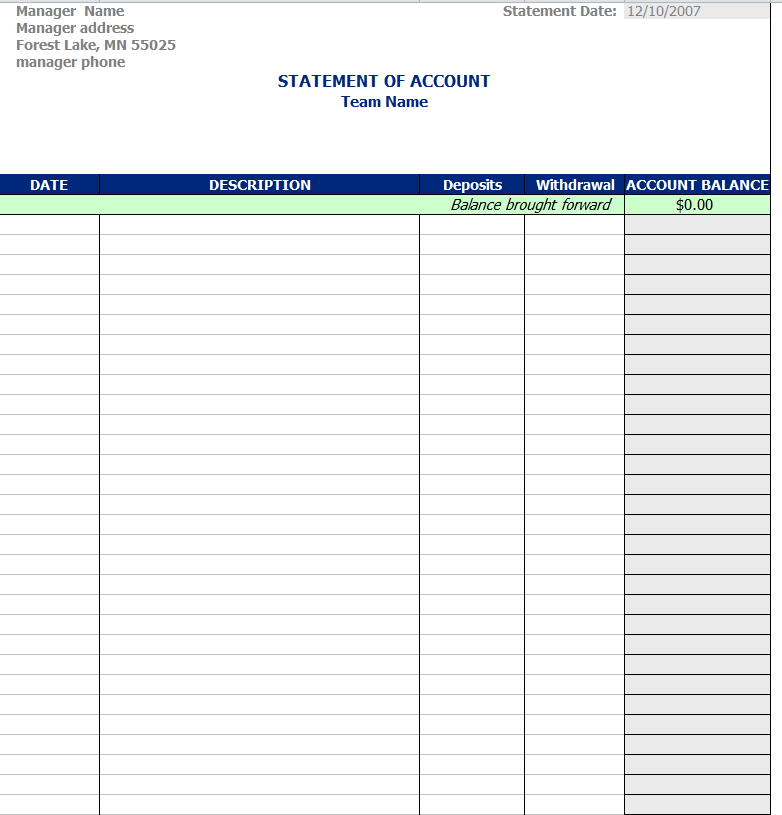
File Size: 06 KB
Elemental Statement of Account Template
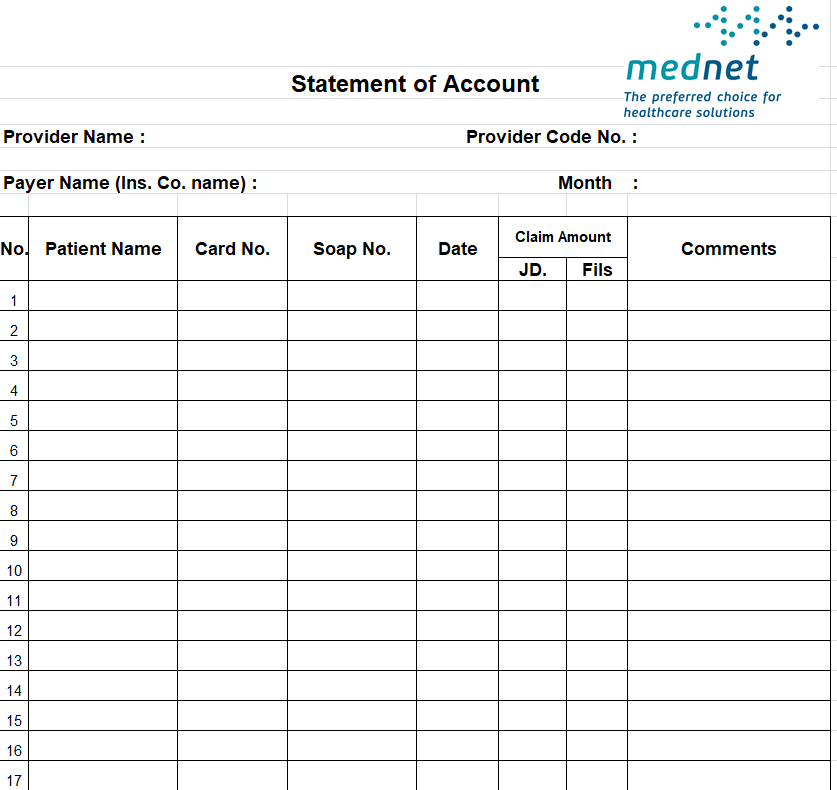
File Size: 132 KB
Business Statement of Account Template MS EXCEL
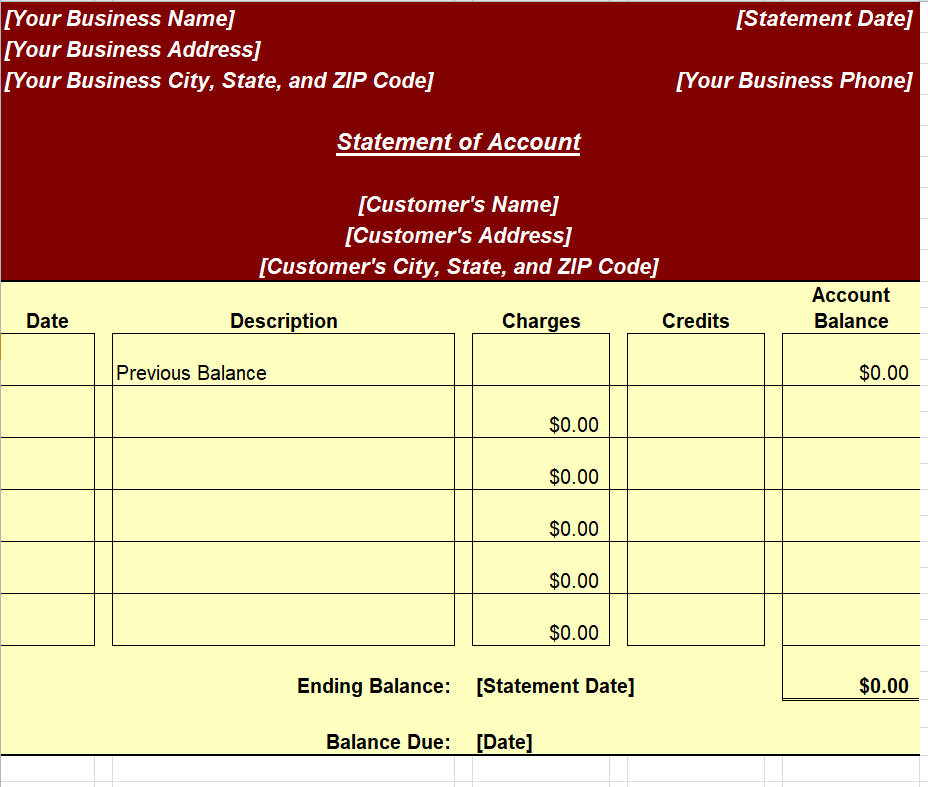
File Size: 14 KB
Company's Fillable Statement of Account Template
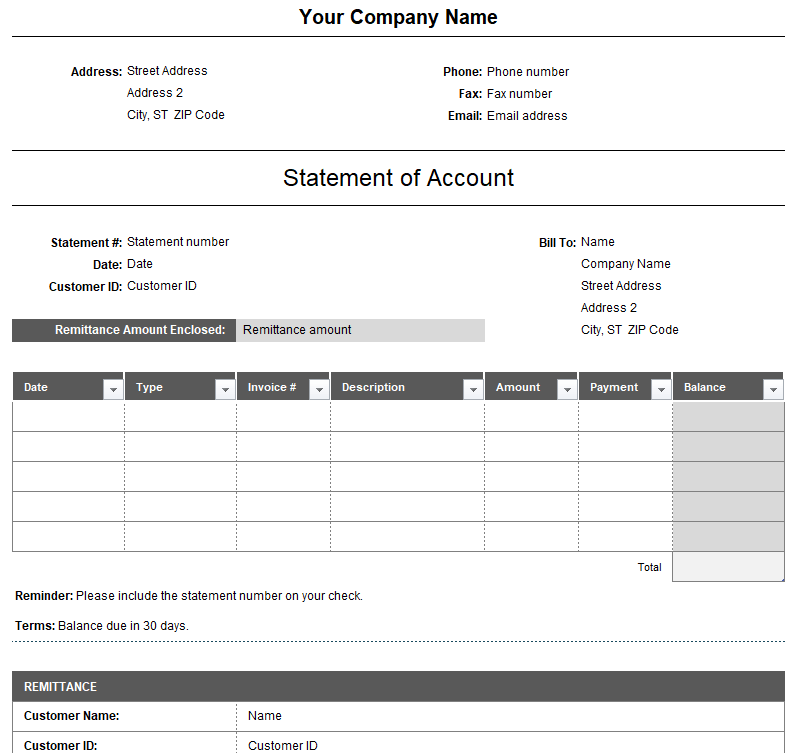
File Size: 18 KB
Statement of Account Example Worksheet
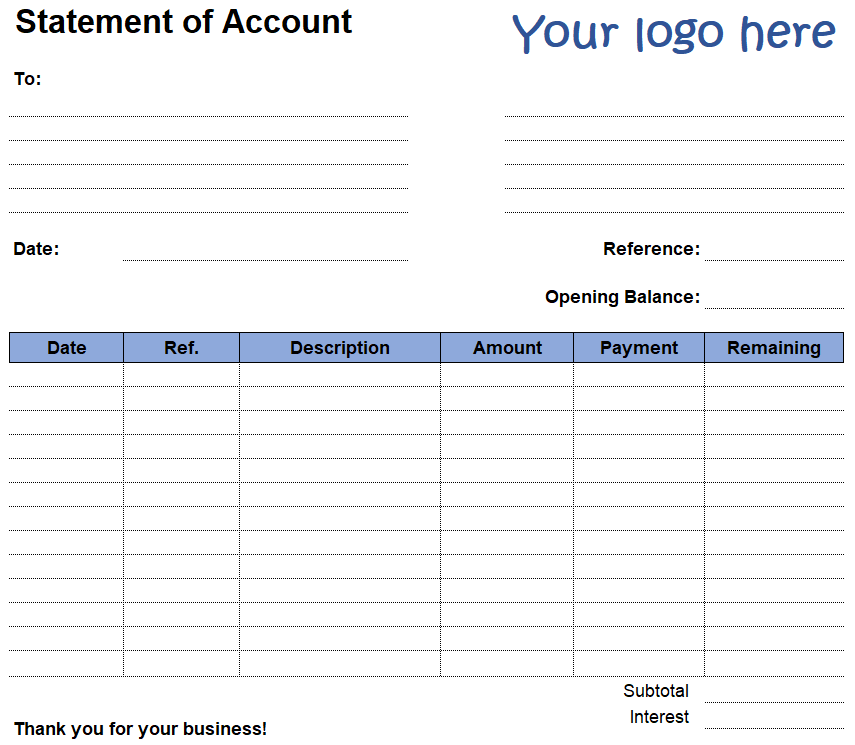
File Size: 12 KB
Customer Statement of Account Template Excel
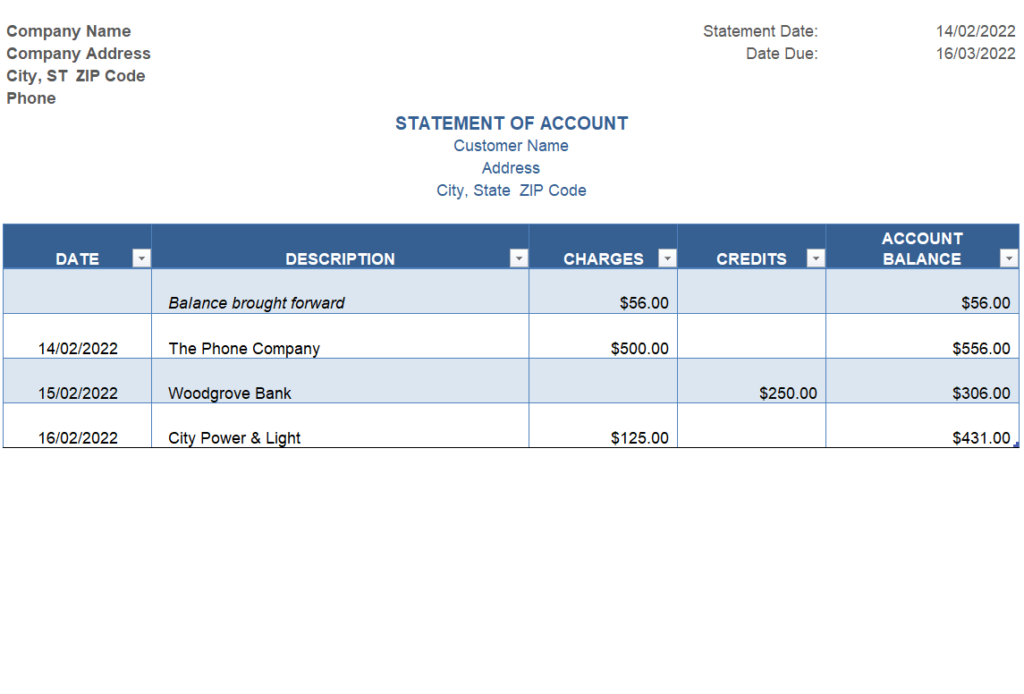
File Size: 15 KB
Statement of Account Template Word
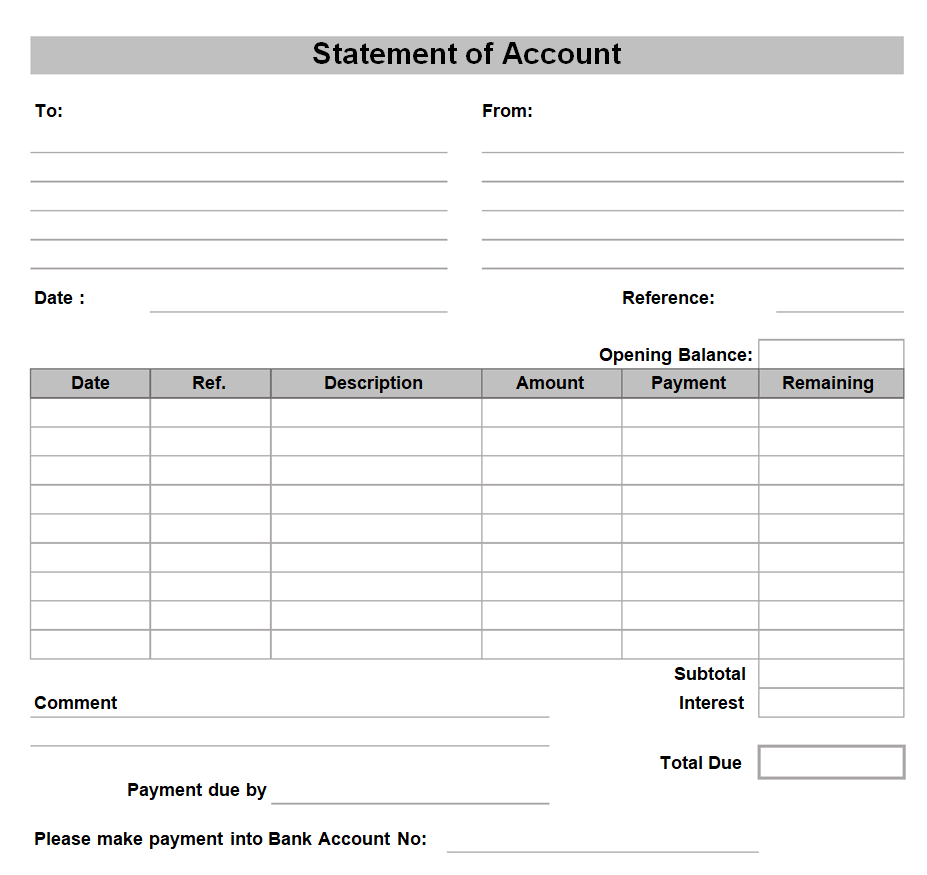
File Size: 04 KB
Rental Statement of Account Template
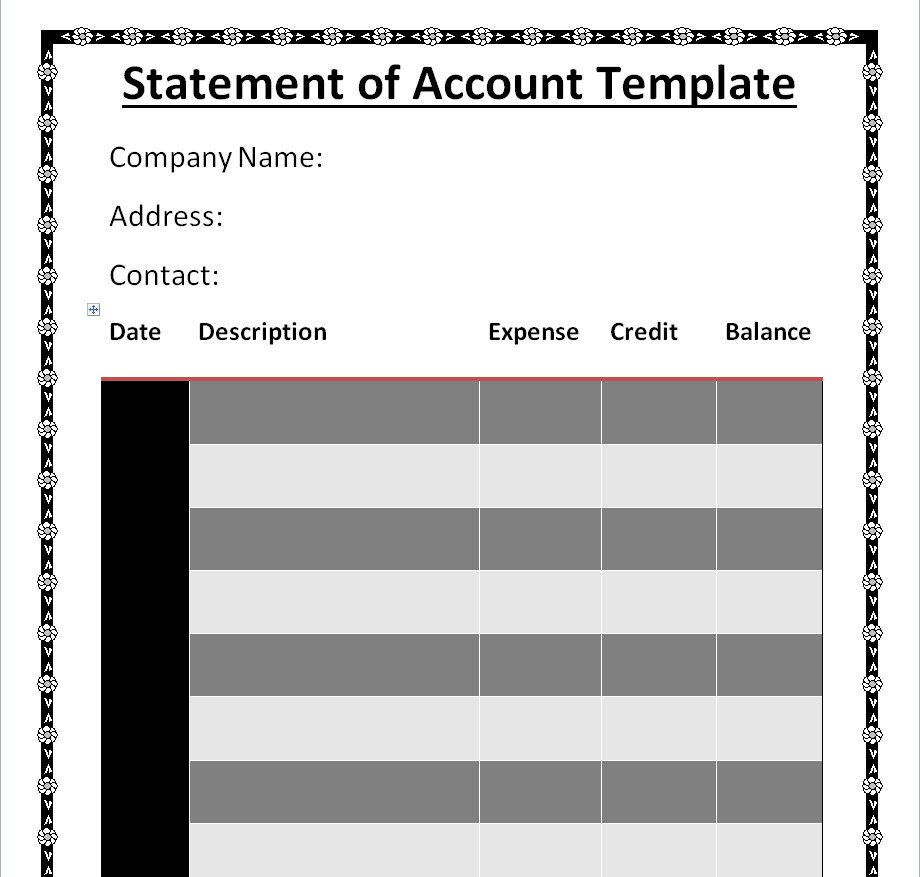
File Size: 09 KB
Sample Statement of Account Template
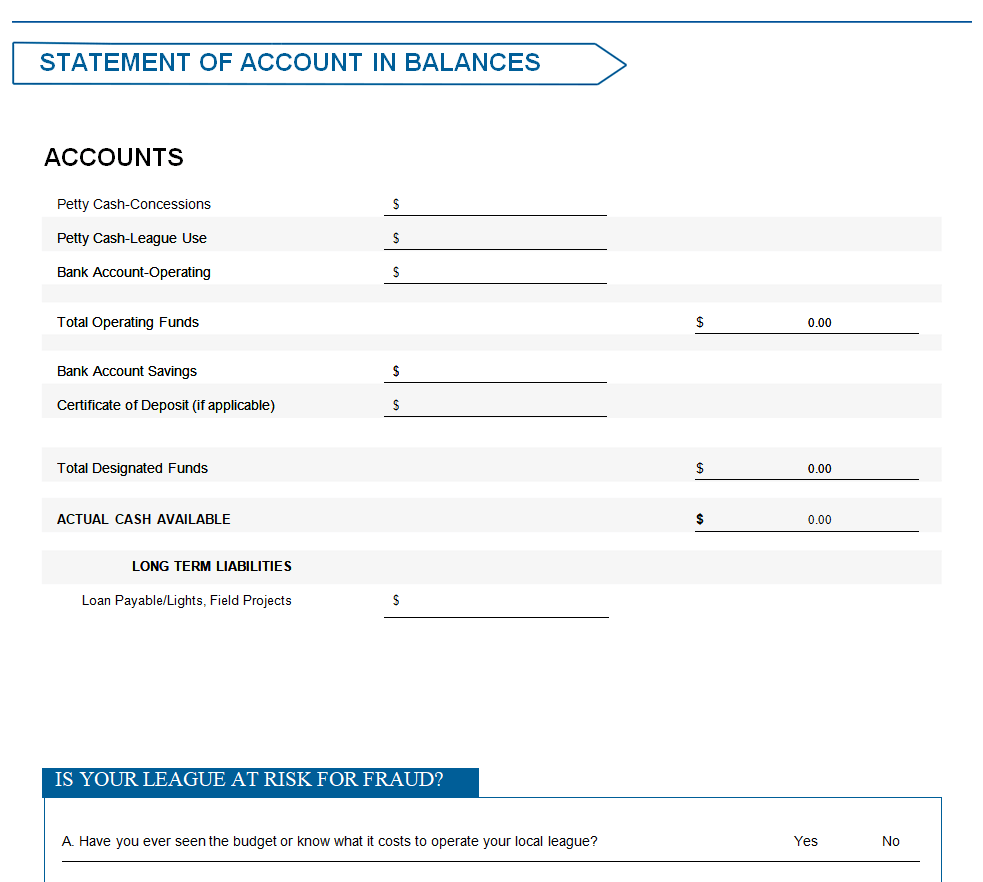
File Size: 10 KB
Printable Account Statement Sample DOC
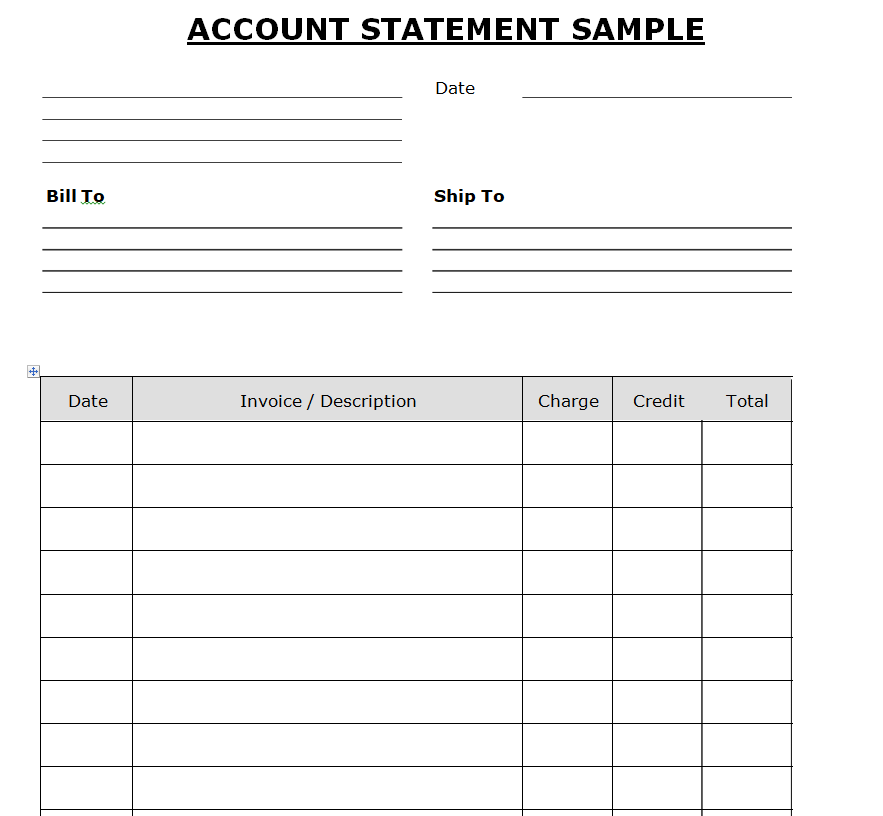
File Size: 08 KB
Statement of Account Template Singapore
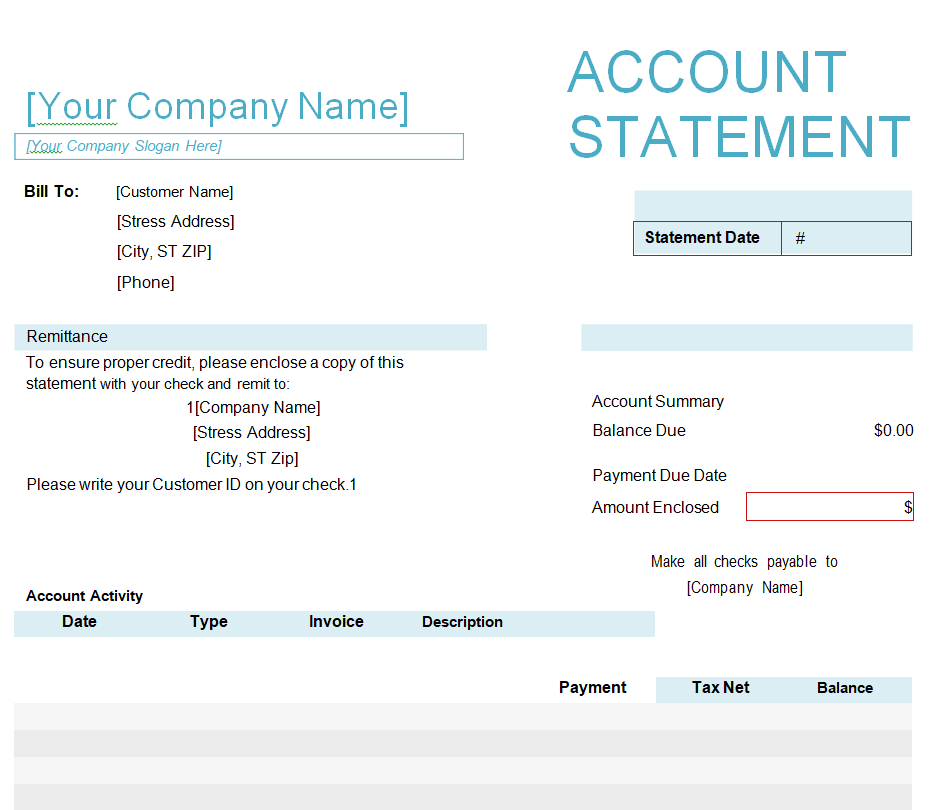
File Size: 10 KB
University's Statement of Account Template
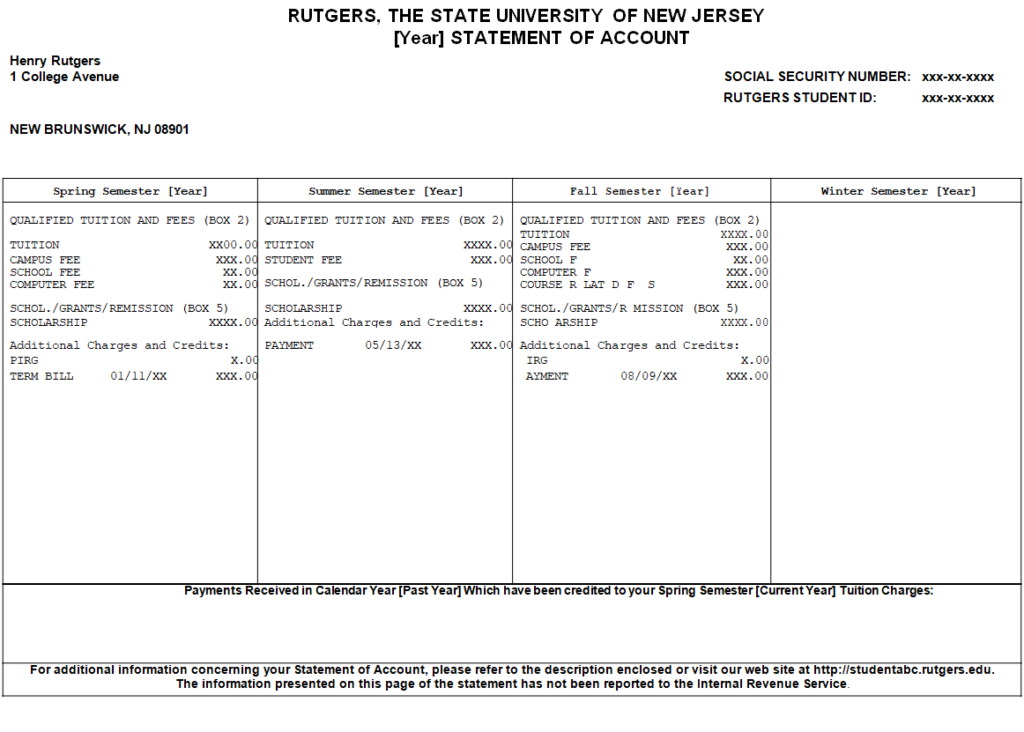
File Size: 05 KB
A small account statement checked from start to finish
In a simplified fictional example, the opening amount owed is 400 currency units. An invoice for 250 is added and a payment of 300 is recorded, leaving 350 owed under the stated sign convention.
The statement shows the references and dates for both movements and identifies the opening balance’s source. If the payment cannot yet be matched to the account, the administrator resolves the allocation through the process before presenting the result as reconciled.
The example is deliberately small enough to check manually. The same principle applies to a longer statement: every movement should have a purpose, a source and a place in the balance sequence.
| Entry | Effect in this simplified example |
|---|---|
| Opening amount owed | 400 |
| Invoice added | 250 |
| Payment deducted | 300 |
| Closing amount owed | 350 |
Check the closing balance as a connected sequence
Reconcile the opening position, charges, credits and payments with the underlying records. Check for omitted or repeated transactions and confirm that the period boundaries are correct. A formula total does not establish that every entry belongs to the account.
Review supporting references and investigate differences before sharing the statement in a final status. If an adjustment is needed, follow the approved process and preserve its basis. Do not create an unexplained balancing entry solely to make the total agree with another file.
The goal is a balance that can be traced, not merely a number that matches a preferred result.
Handle queries and corrections with a clear record
When a customer questions a transaction, identify the exact entry and compare the supporting documents. Keep the query connected to the account reference and statement date so people are discussing the same version.
If a correction is required, review its effects on the ledger and any related document through the accounting process. Give revised statements a clear relationship to the earlier issue.
Avoid silently overwriting the only retained copy when that removes the history needed to explain a change. A practical contact route and clear references help resolve a specific question more effectively than repeated copies of the same unexplained balance.
Choose a layout the recipient can read
Use a format with enough space for descriptions and references, and align amounts consistently. Check page breaks and repeated headings in a longer statement. For a spreadsheet, test the calculation ranges after inserting rows or changing the structure.
For a Word layout, confirm that the table expands without hiding the closing section. Review the final issued version and remove sample entries. Keep the blank master, working record and issued statement distinguishable.
A clean layout should support the account explanation, while the underlying records remain the source for the entries and amounts.
Keep the statement and its supporting records connected
A customer may need only the issued statement, while an authorized reviewer needs access to the invoices, receipts and adjustment references behind it. Organize those records so that a statement query can be followed without exposing unrelated accounts. Check the recipient and attachment before sharing.
If the statement is generated from another system, identify which source owns the data and avoid maintaining competing totals manually.
When changing templates, compare a small known account across the old and new layouts to confirm that the same scope and sign conventions have been preserved.
A final check before using the template
- Identify the account, currency and period.
- Trace the opening balance to its source.
- Use consistent transaction signs and references.
- Check omitted and repeated entries.
- Resolve differences through the accounting process.
- Review the issued version and contact route.
Related templates
For the individual billing documents behind a customer account, use invoice templates.
For a separate record of the prices used in quotations and orders, prepare price list templates.
Keep order confirmation separate from the later account summary using order confirmation email templates.
Frequently asked questions
Is a statement of account an invoice?
A statement summarizes an account position or movements over a defined period. An invoice identifies a particular billing request. Connect their references where useful, but keep their purposes and amounts clear.
Does a statement prove that every entry is correct?
No. Its reliability depends on the underlying records and reconciliation. Check the opening position, transaction references, period and closing calculation. A well-formatted total can still contain an omitted or duplicated entry.
Can I combine different currencies?
Keep currencies clearly distinguished and use the appropriate reviewed accounting approach where conversion is involved. Do not add unlike currency amounts into one unlabeled total. The recipient should understand what every balance represents.
How do I show an unresolved payment?
Follow the accounting process for unmatched or unallocated items and keep the status understandable. Do not invent an allocation merely to complete the statement. Resolve or appropriately identify uncertainty before presenting a balance as reconciled.
What should happen after a statement correction?
Update the affected records through the approved process and identify the revised statement’s relationship to the earlier issue. Preserve the references needed to explain what changed, and ensure the recipient knows which version applies.
You can also browse more options in the Other Templates category.
