
A statement layout can help you learn how transaction records and balances fit together. Bank statement templates on this page are examples for practice, analysis and organizing your own records. A self-edited template is not a bank-issued statement or proof of funds.
Compare the downloadable examples and previews to understand their fields and page structures. For an authentic account statement, obtain the document from the bank or credit union through its official process. Keep practice files and personal worksheets clearly distinguishable from those issued records.
The guide below explains statement periods, transaction descriptions, debits, credits and balance checks using a small fictional example. It also shows how to use a layout for reconciliation without changing the original bank record.
A final check before using the template
- Use an authentic bank record for real account evidence.
- Label practice and reconciliation files clearly.
- Check period, currency and transaction conventions.
- Match entries against supporting records.
- Keep issued documents unchanged.
- Investigate differences rather than forcing a total.
Start with the period and the account context
Identify the statement period and the account reference in the authentic record you are reviewing. Distinguish that period from the date on which you downloaded a copy. Check the currency and the way transactions are presented.
Different layouts may use separate debit and credit columns or another clear convention. Read the labels before transferring figures into a practice sheet. Avoid copying real account identifiers into an example when they are not needed for the exercise.
A useful learning file should explain the record’s structure without presenting itself as an issued banking document.
Read the transaction descriptions alongside the dates
A transaction entry commonly includes a date, description and amount, with a reference or balance where the layout provides it. Check what the date represents in the particular record instead of assuming every date is the date you made the purchase.
Match unfamiliar descriptions with your supporting records before categorizing them. Do not change a bank’s original entry to make your own label more convenient. Keep your explanation in a separate reconciliation or personal-record column.
This preserves the issued record and makes it possible to see which information came from the bank and which note you added for your own review.
A fictional running-balance exercise
For a simple practice account, begin with 1,200 currency units. Add a deposit of 600 and subtract a withdrawal of 450, giving a closing balance of 1,350. Label the entries as fictional and keep their descriptions and dates consistent with the exercise.
The arithmetic demonstrates how a running balance works; it does not create evidence that any real account holds that amount. In an actual reconciliation, the bank-issued statement remains the source and a separate worksheet records your checks and unresolved questions.
If your worksheet differs, investigate the entries rather than editing the authentic statement to make the two figures agree.
| Material | Use |
|---|---|
| Bank-issued statement | An authentic record obtained through the bank’s process. |
| Practice example | Fictional entries for learning the layout and arithmetic. |
| Reconciliation worksheet | Your separate comparison and notes about matching records. |
24 downloadable templates and previews
Compare the previews for layout and available fields, then use the download button for the actual file. Check the package contents before editing, because the collection includes different layouts and file types.
Extract ZIP packages first, keep a blank original and save your working copy with a clear name. A preview image is a reference for the layout rather than the editable document.
Bank Statement Template
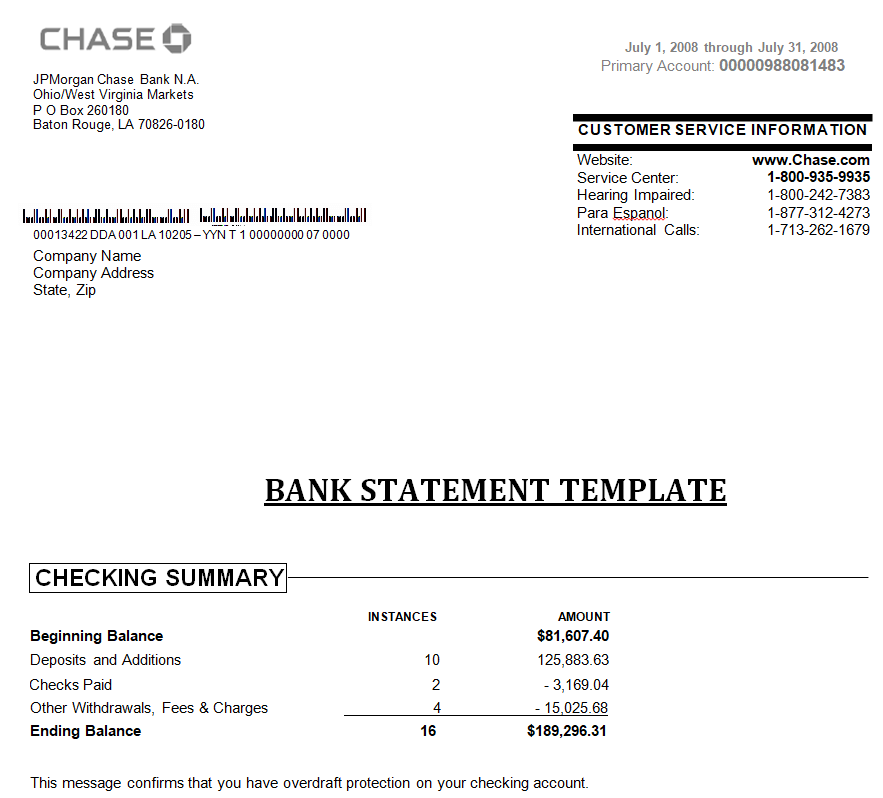
File Size: 35 KB
Formal Bank Statement Word Template
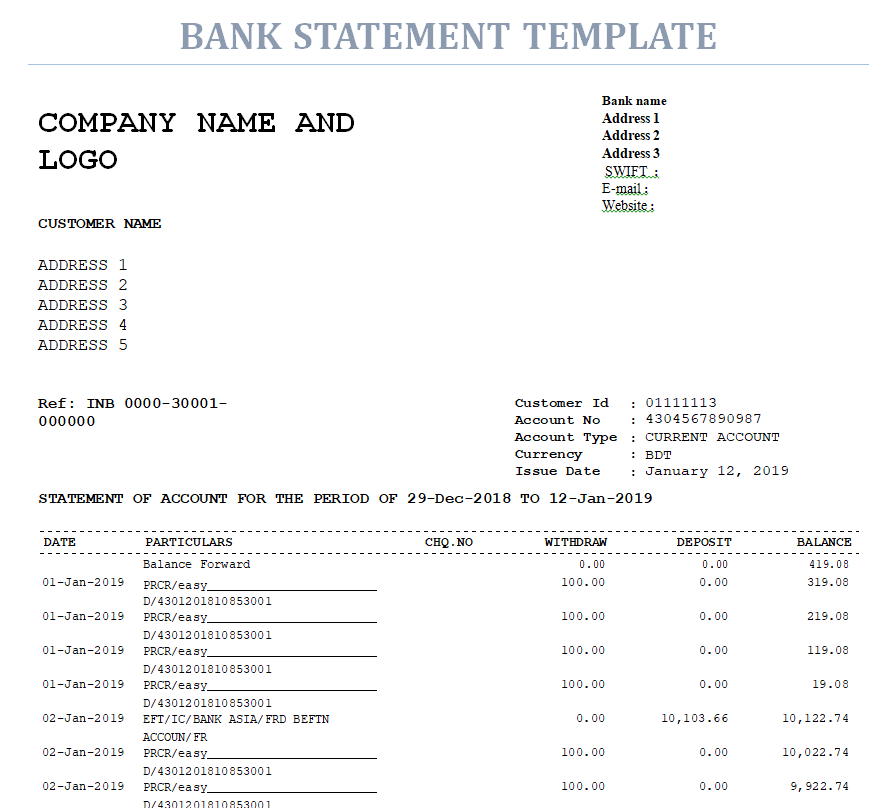
File Size: 18 KB
Bank Statement Template Download
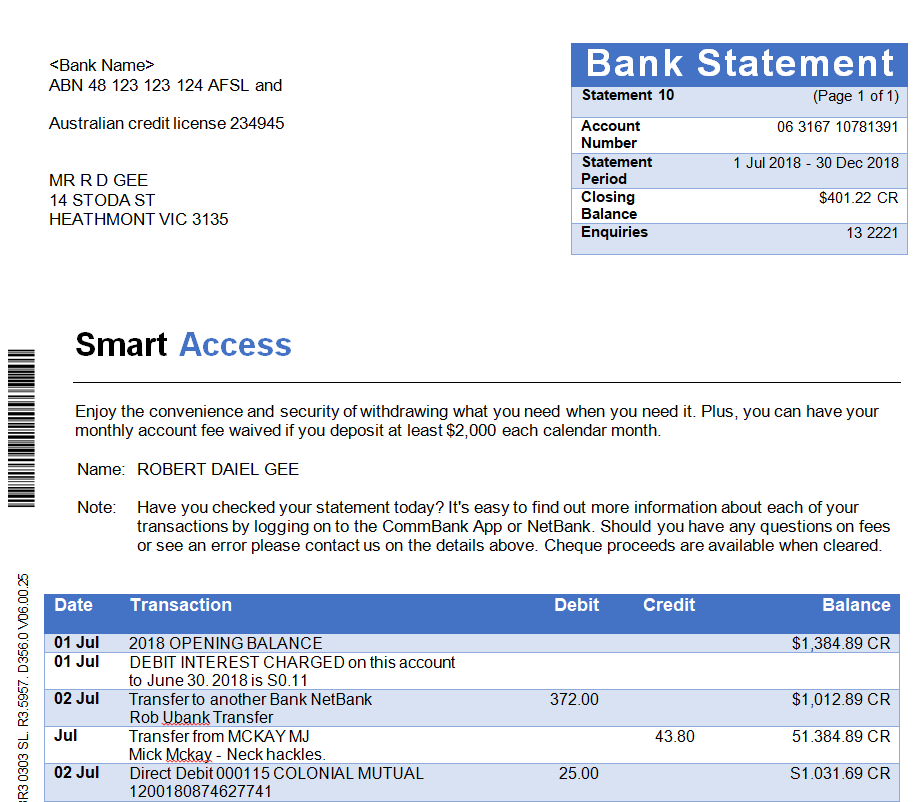
File Size: 24 KB
Monthly Bank Statement Excel Template
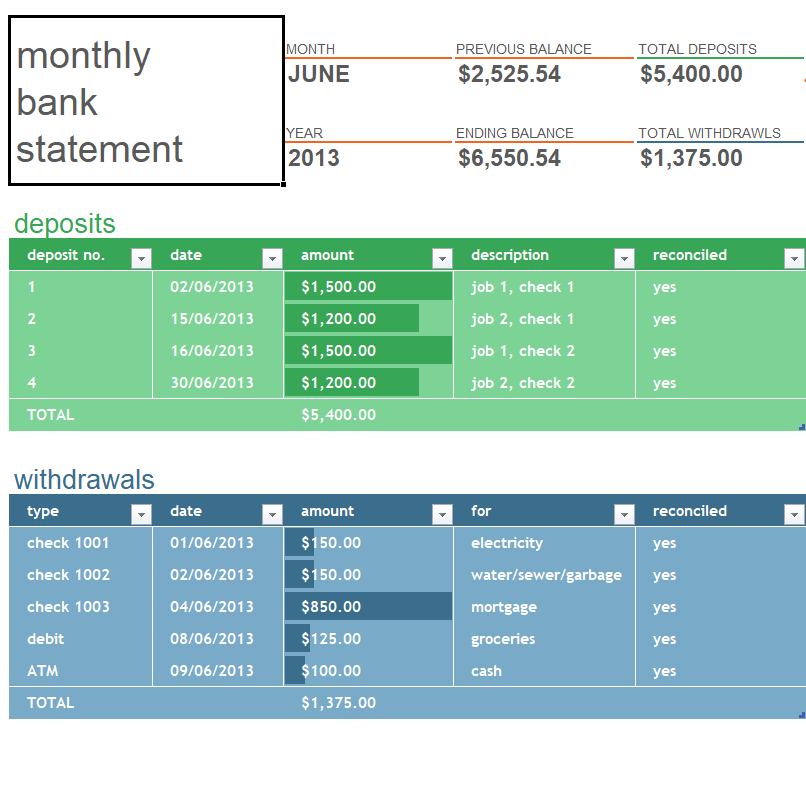
File Size: 15 KB
Blank Bank Statement Example
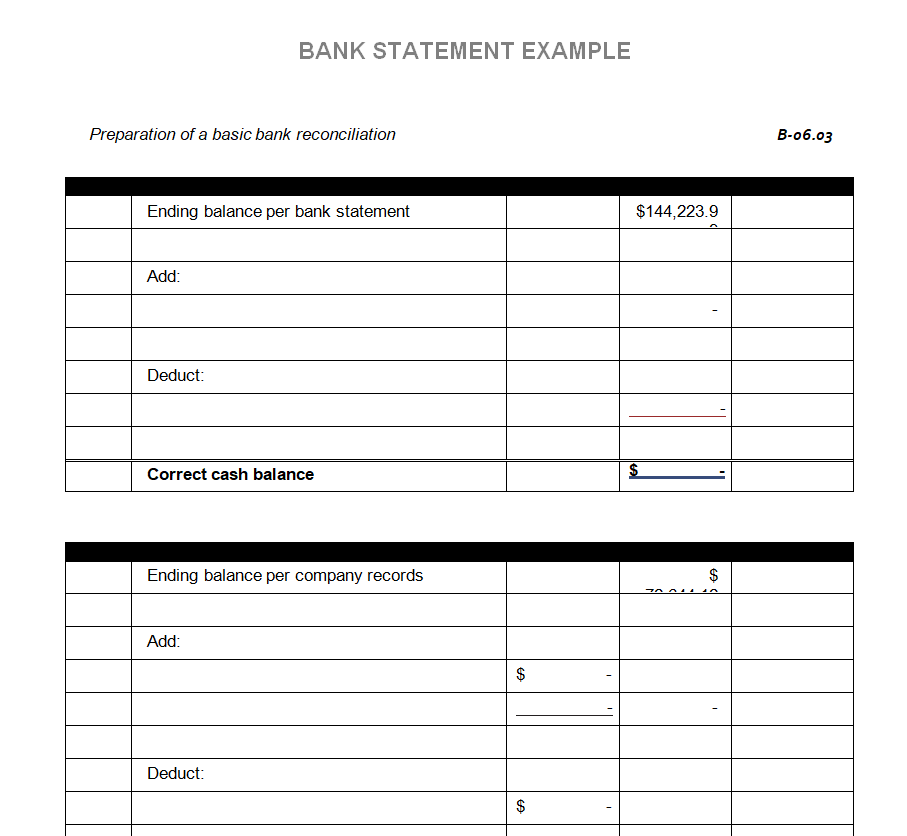
File Size: 16 KB
Sample Bank Statement Template DOC Format
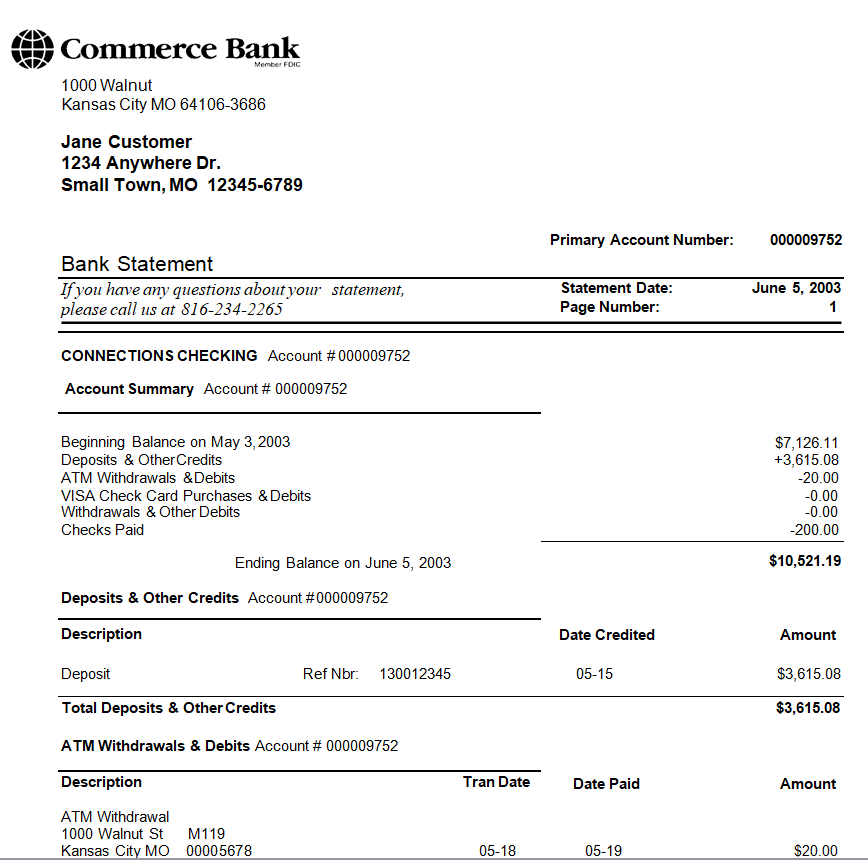
File Size: 11 KB
Professional Bank Statement Template
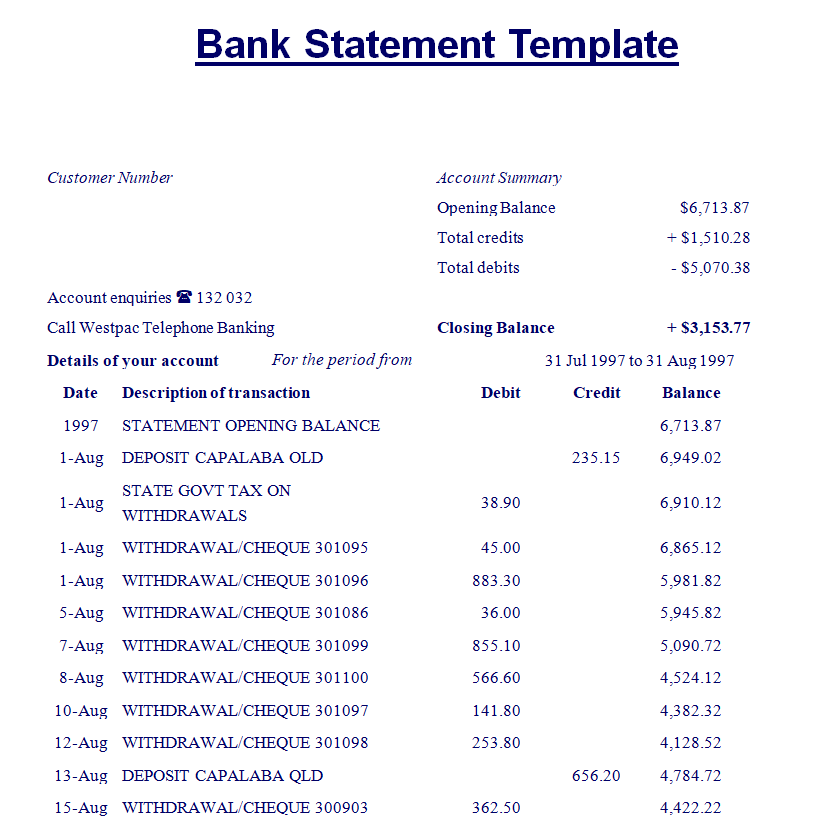
File Size: 15 KB
Detailed Bank Statement Template in XLSX Format
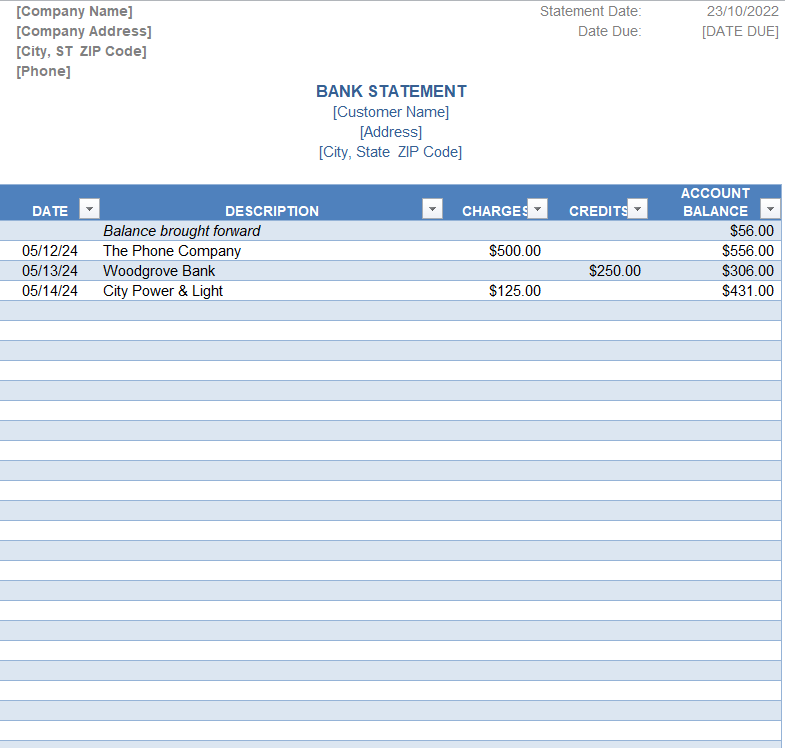
File Size: 11 KB
Bank Account Statement Template Word
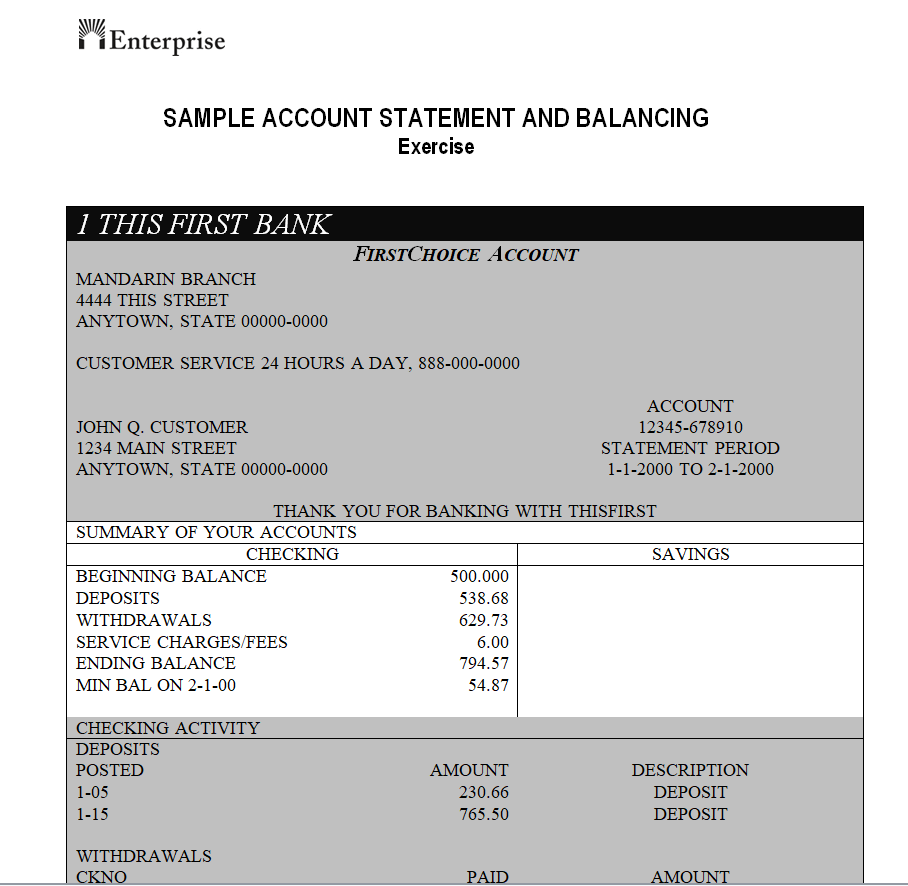
File Size: 24 KB
Standard Bank Statement Template
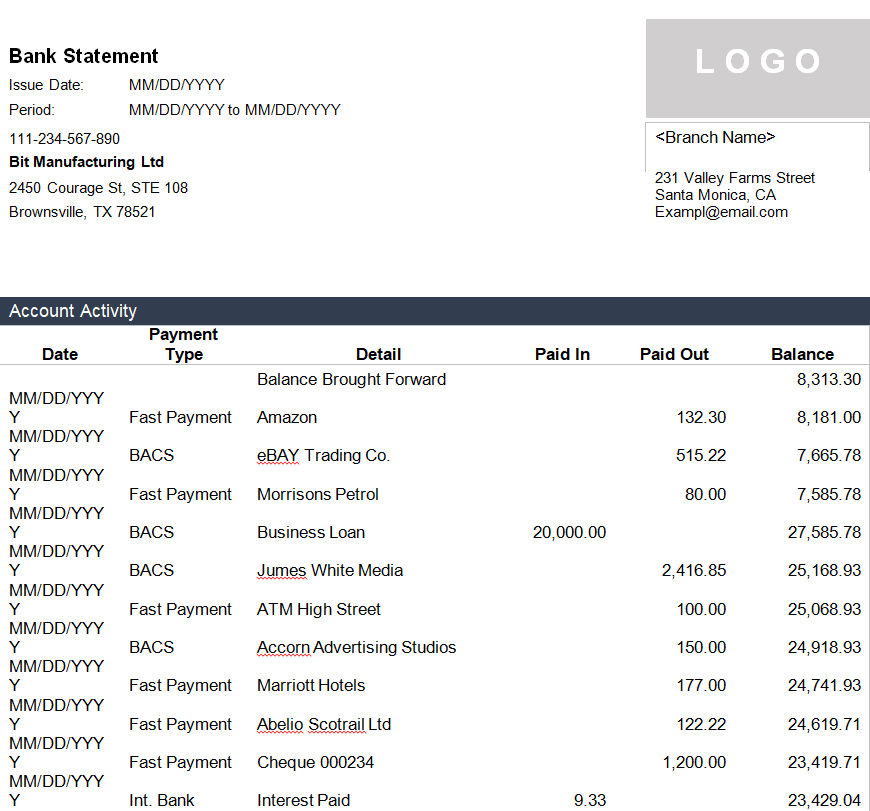
File Size: 25 KB
Practical Bank Statement Sample Doc
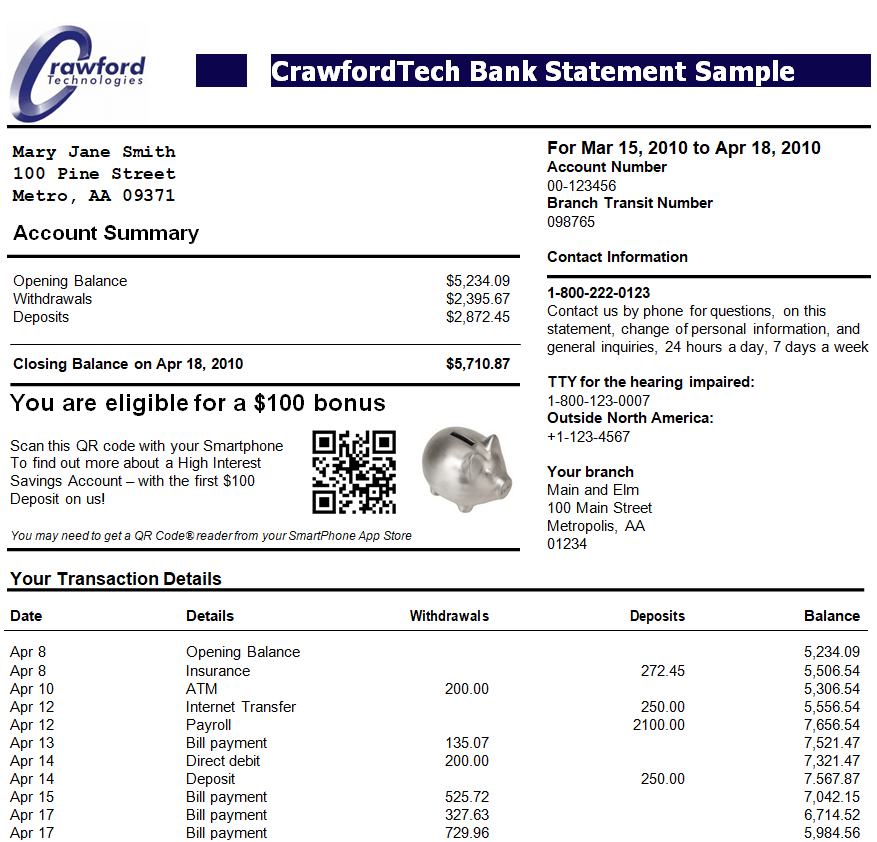
File Size: 28 KB
Printable Bank Account Statement Template
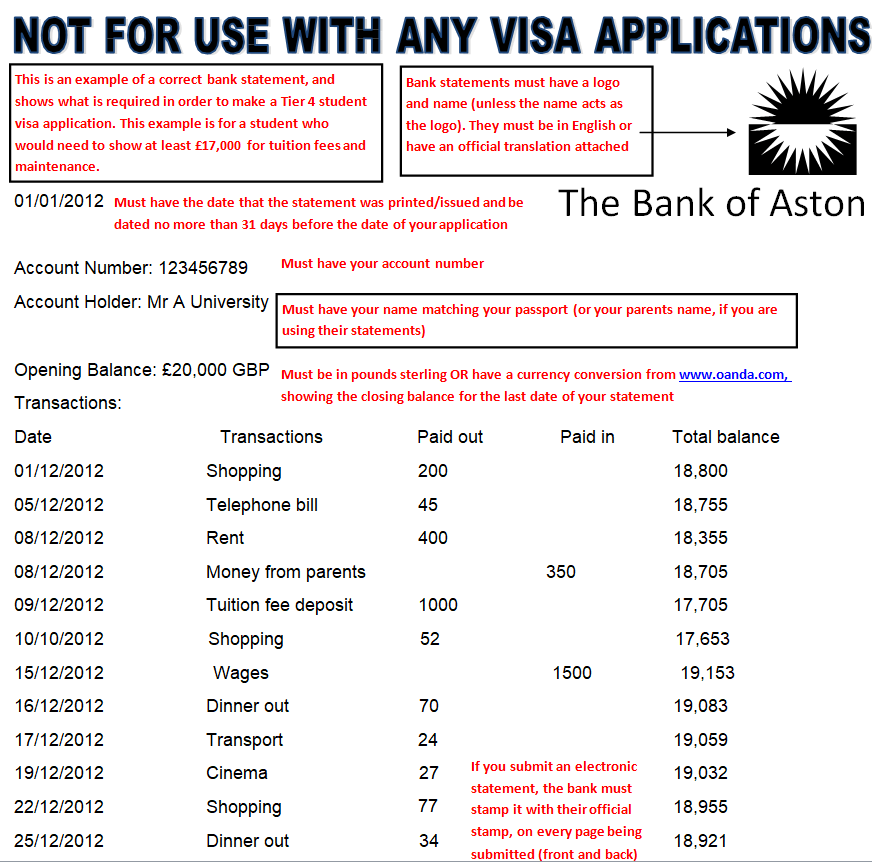
File Size: 34 KB
Customizable Bank Statement Template
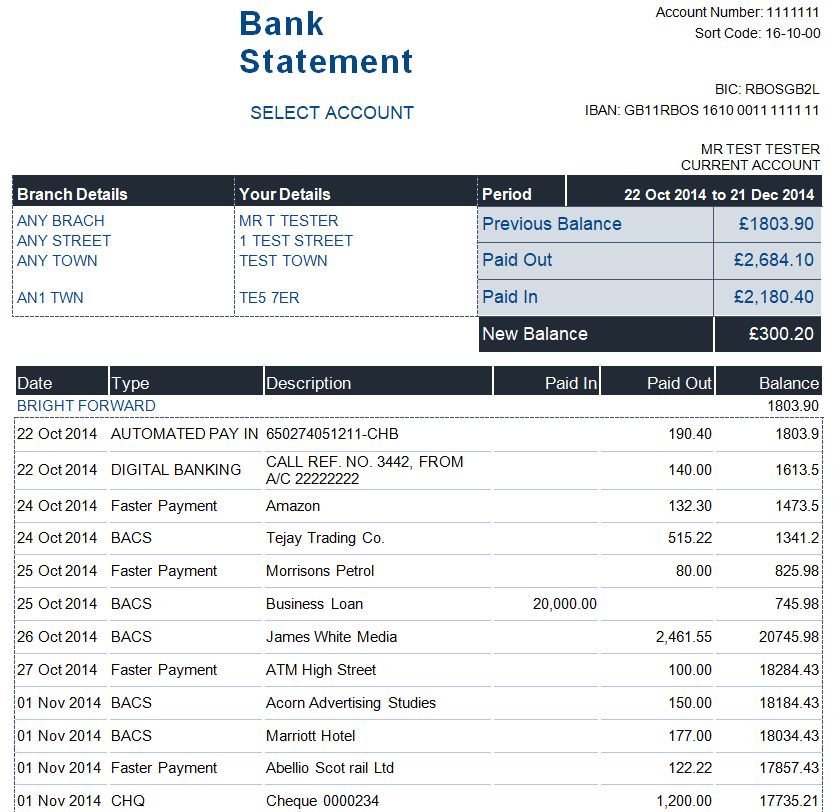
File Size: 23 KB
Trust Bank's Customer Statement Template
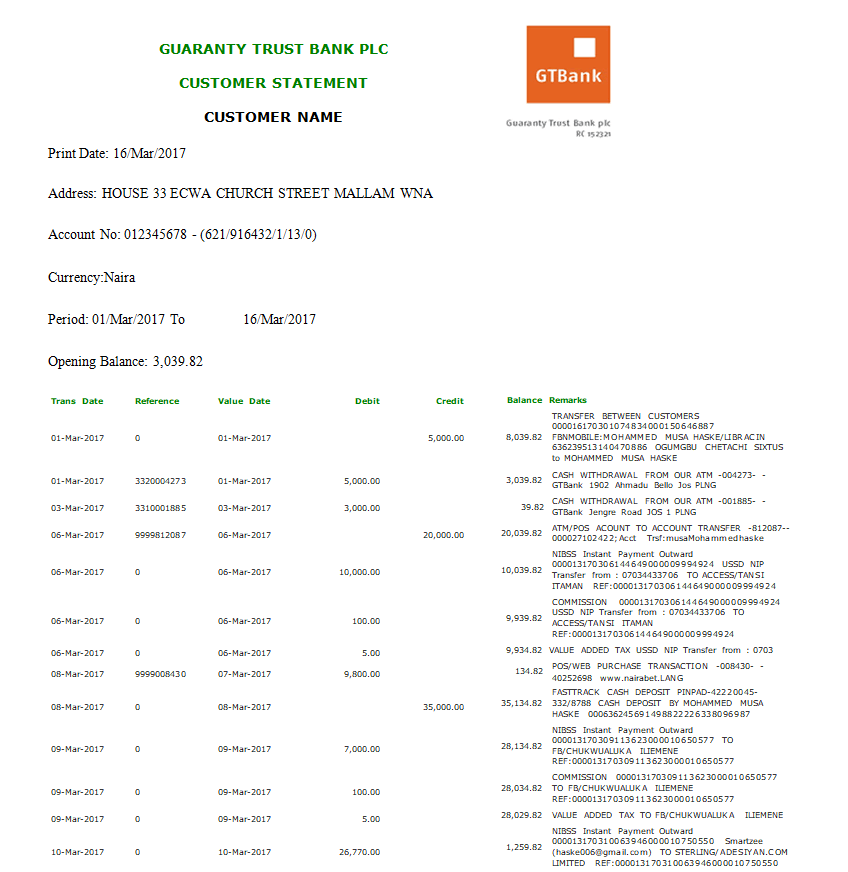
File Size: 22 KB
Elemental Bank Statement Excel Template
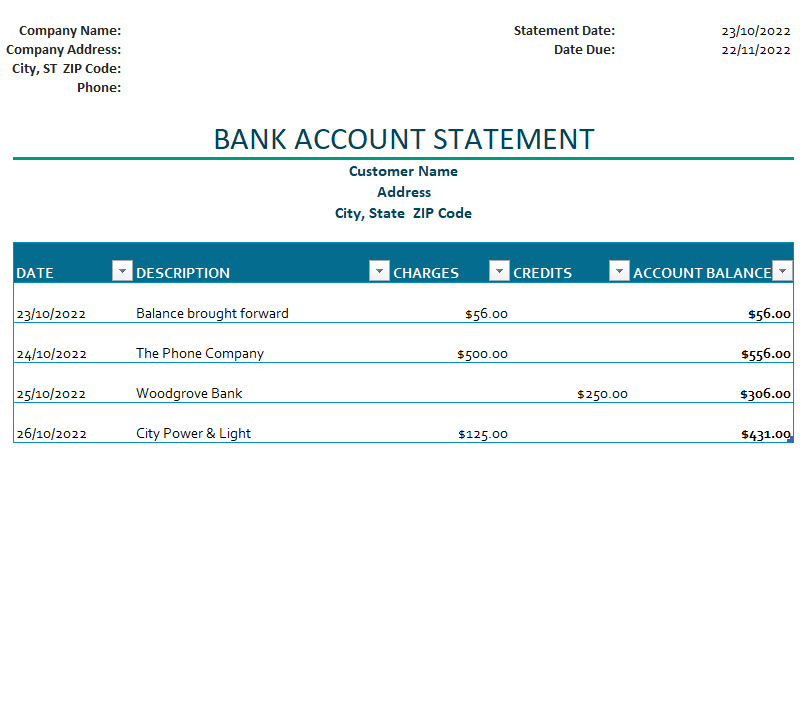
File Size: 14 KB
Bank Statement Sample Download
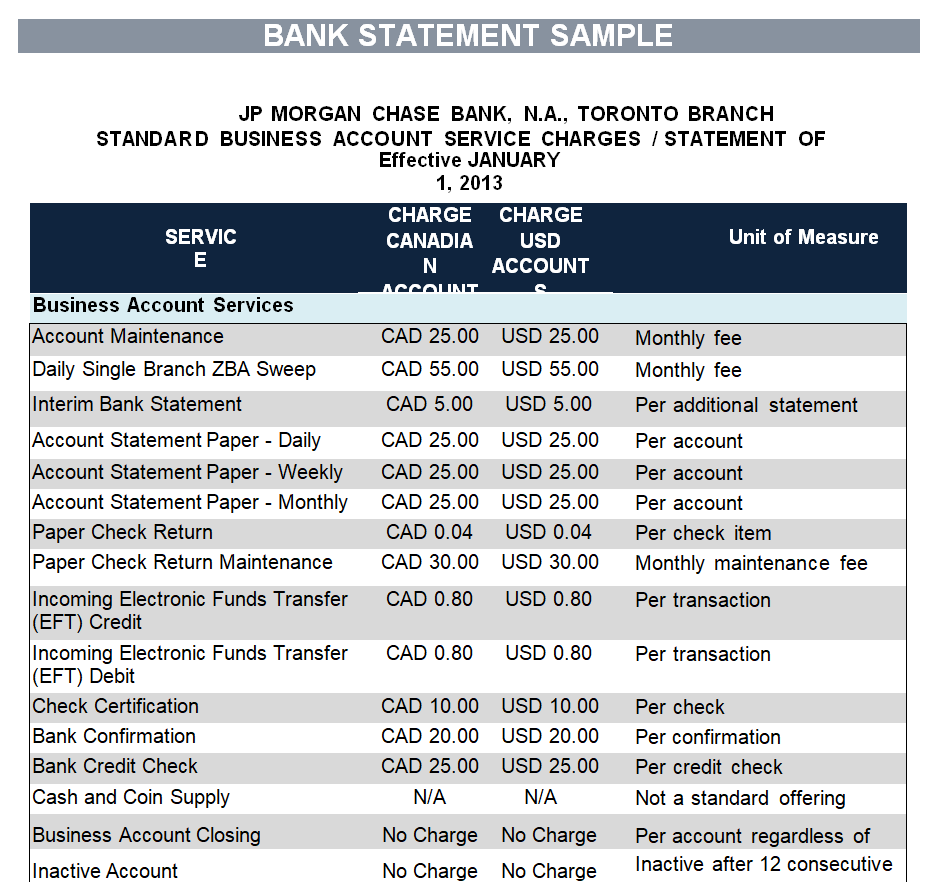
File Size: 22 KB
Special Bank Account Statement Template
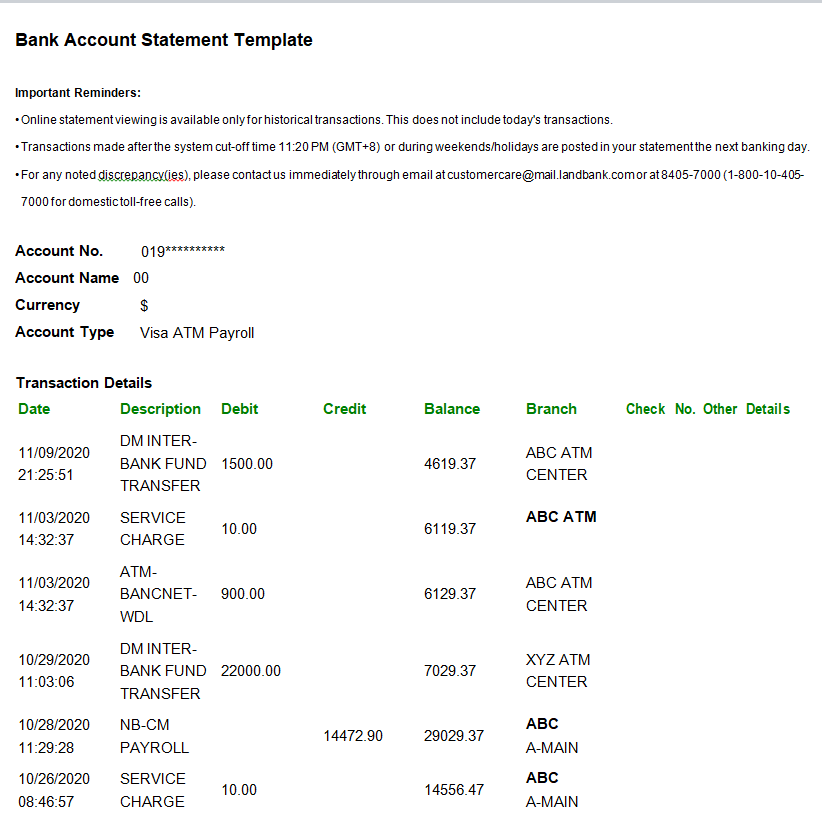
File Size: 13 KB
Simple Bank Statement Word Template
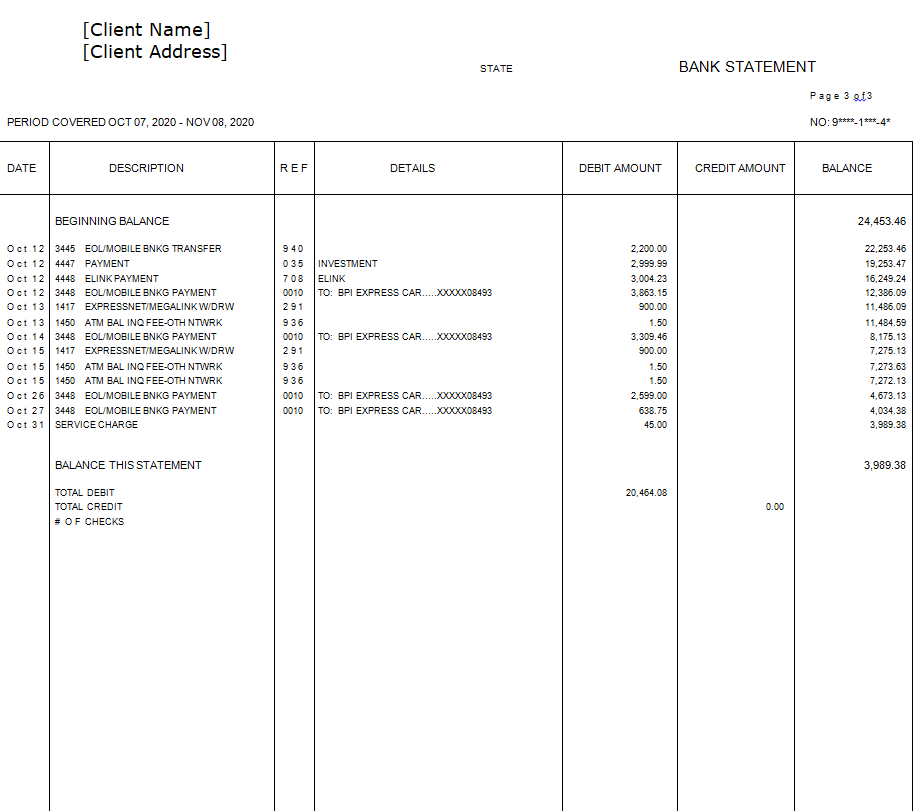
File Size: 18 KB
Descriptive Bank Statement Template
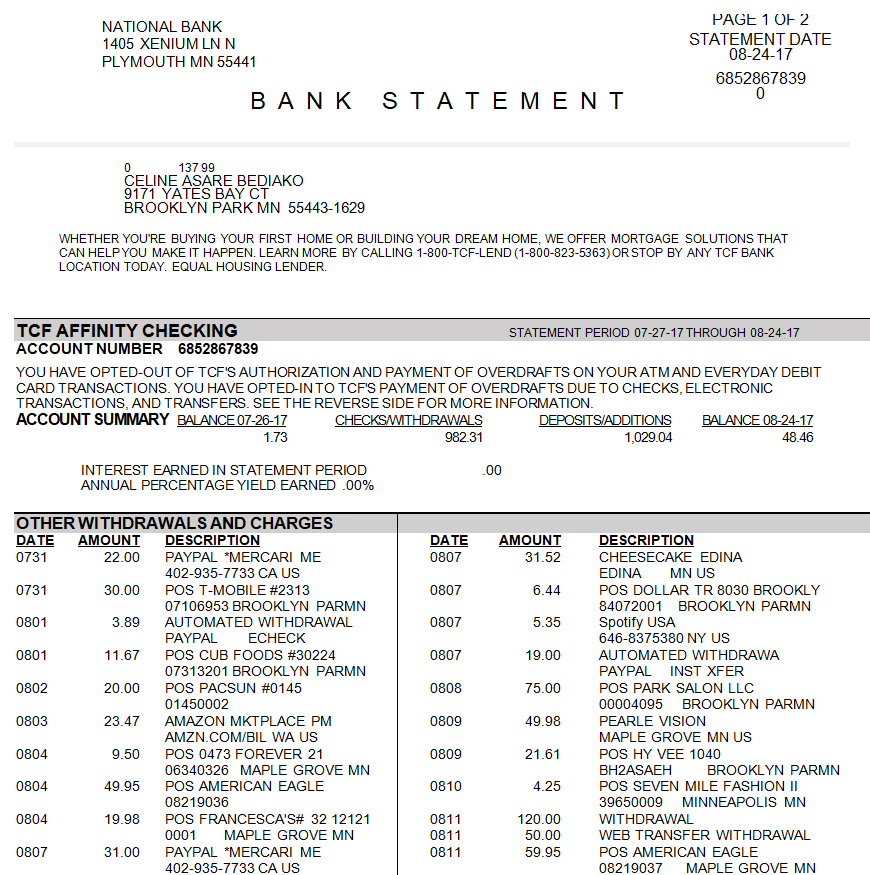
File Size: 23 KB
Bank Statement Example Format
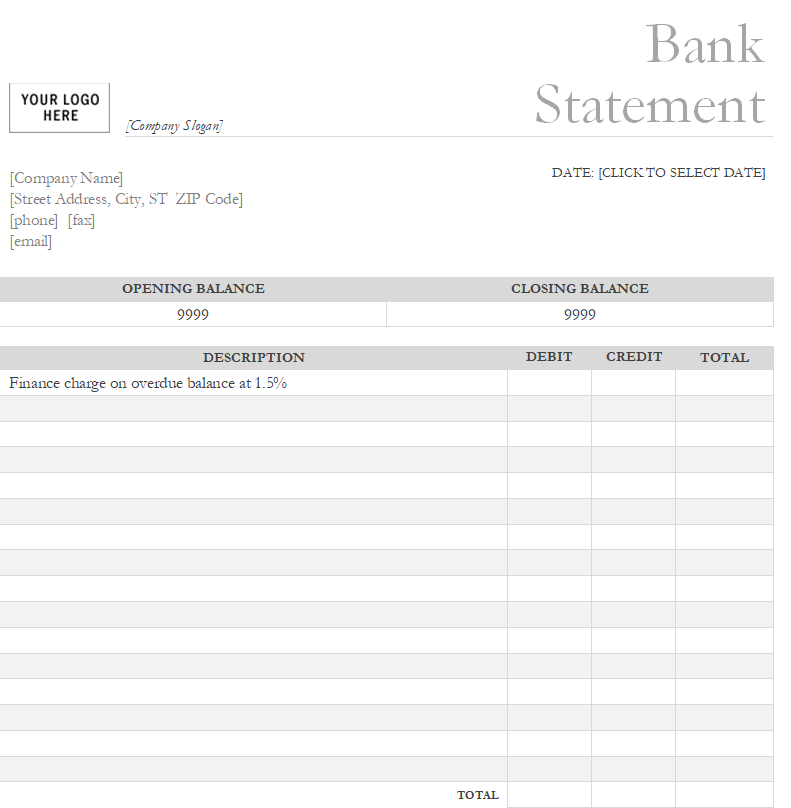
File Size: 28 KB
Editable Bank Statement Template
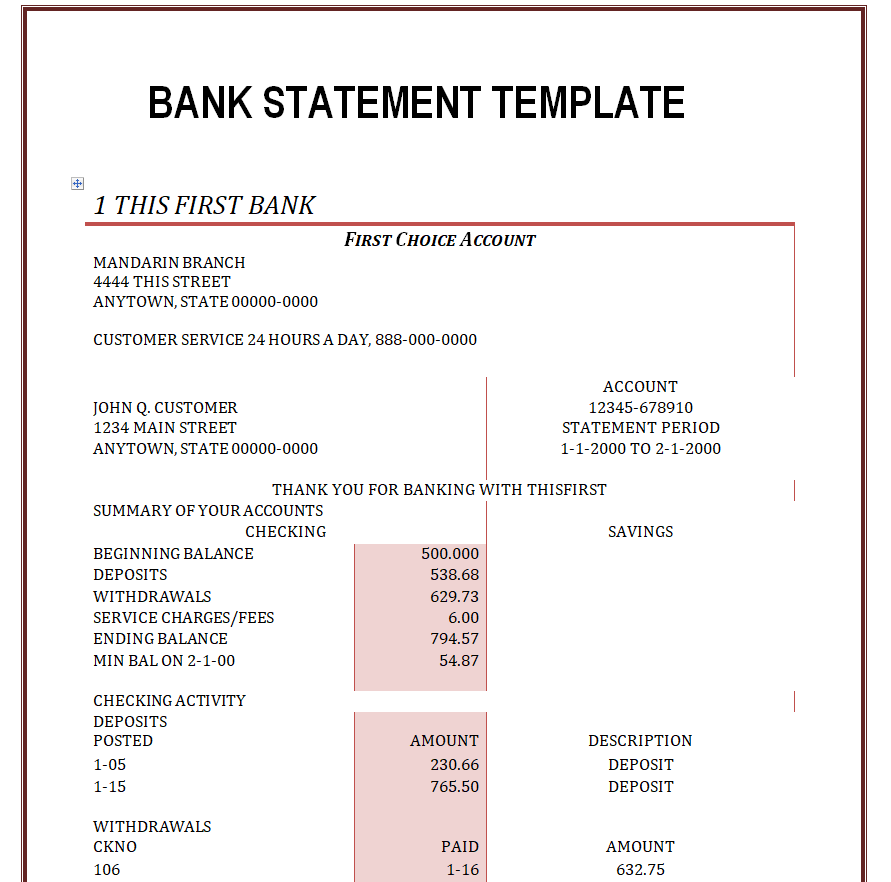
File Size: 15 KB
Proper Bank Statement Template in MS WORD
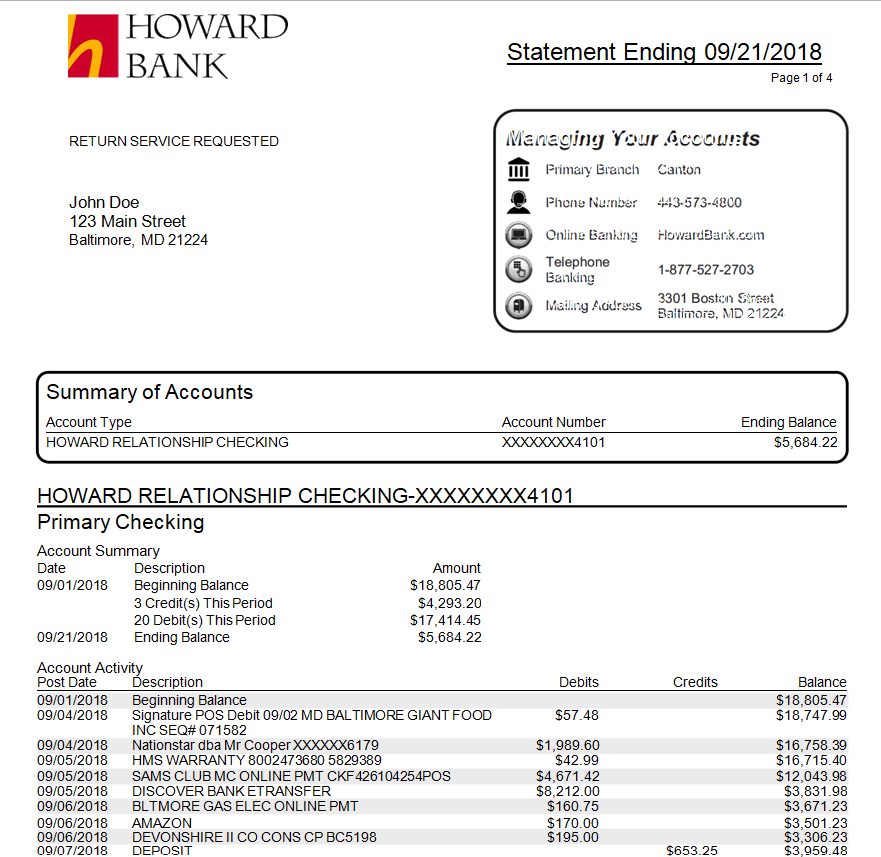
File Size: 153 KB
Excel Bank Statement Template Download
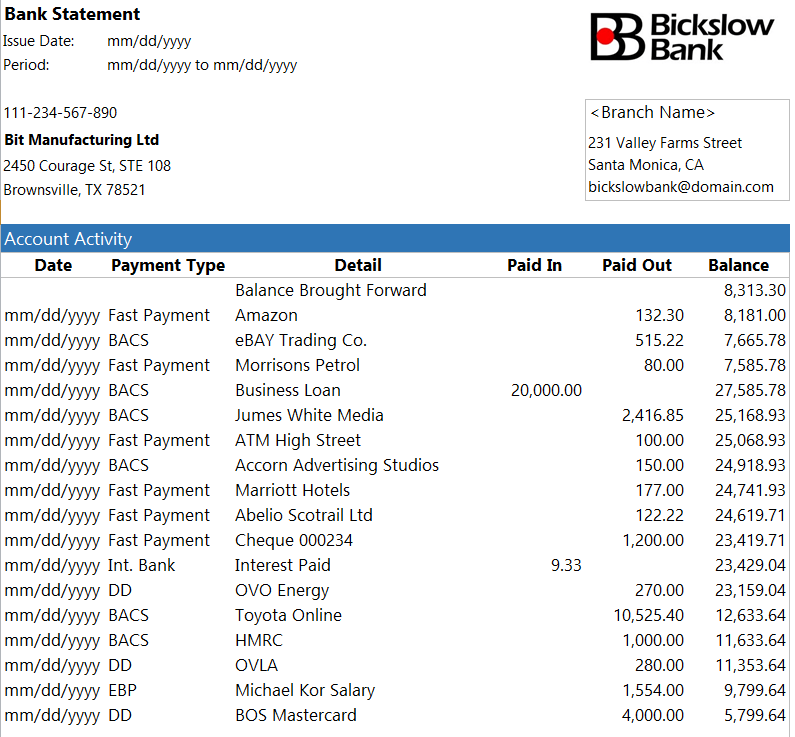
File Size: 43 KB
Editable Statement of Account Template Word
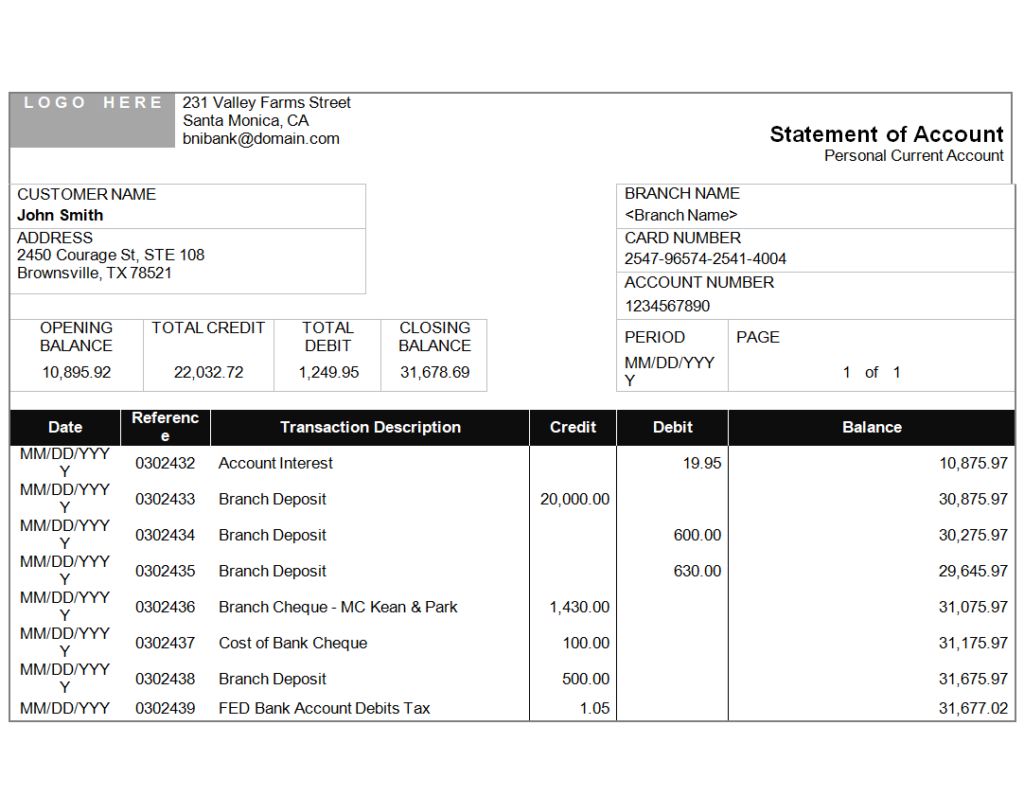
File Size: 21 KB
Use the debit and credit convention shown in the record
Read how the particular account and layout describe money entering and leaving it. Keep that convention consistent in the practice file. Avoid moving an amount into the wrong column merely because another template uses different labels.
In a simple transaction exercise, trace the opening balance through the additions and reductions to the closing figure. For a real account, compare with the authentic statement and investigate differences through the bank’s appropriate process.
A spreadsheet calculation can be correct for the numbers entered while the underlying entry is missing, duplicated or assigned the wrong sign.
Reconcile with your own records without altering the statement
Keep the authentic bank document unchanged and use a separate worksheet to compare it with your records. Identify the period and references so that a later review can repeat the comparison. Note unmatched entries and the information needed to resolve them.
Do not force agreement by replacing an issued amount with a guessed figure. Check whether your own records omit a transaction or use a different timing basis. If an entry remains unfamiliar or appears wrong, use the bank’s official contact and query process.
A practice template helps organize the questions; it does not determine the correct bank record.
Label examples so their purpose is obvious
Use fictional names and amounts in learning exercises, and give the file a clear practice or reconciliation title. Do not add branding, approval language or other features intended to make a self-created document look bank-issued.
If an organization asks for an authentic statement, use the bank’s official document or the alternative that the organization explicitly accepts. A template should not be substituted for that evidence.
Keeping the purpose visible also prevents an ordinary learning file from being forwarded later without its original explanation and mistaken for a genuine account record.
Choose a layout that supports the review you need
A short practice exercise may need only dates, descriptions, additions, reductions and a running balance. A longer reconciliation may need references and an area for unresolved items. Inspect the downloaded file and any formulas before using it, and remove irrelevant sample material.
Test a small fictional sequence first. Check the final export for readable dates, amounts and column labels. Store authentic statements and practice files through appropriate access arrangements, and share only the information needed for the task.
The useful outcome is a clearer understanding of the records, not a more convincing imitation of an official document.
Use a short checklist for an unfamiliar entry
Identify the statement period, date, description, amount and relevant reference before raising a query. Compare these with your own receipts or account records and note what remains unclear.
Use the bank’s official support route rather than contact details supplied by an unverified message about the transaction. Keep the original statement and the notes from your review distinguishable.
This gives you a clearer explanation to work from and helps avoid repeatedly investigating the same entry without a record of what has already been checked.
Related templates
For the individual billing records behind business transactions, use invoice templates.
For a separate reference when checking product or service charges, prepare price list templates.
Keep sales performance summaries separate from bank transaction records with sales report templates.
The US Consumer Financial Protection Bureau explains bank and credit-union statement information. For your own account, use the issuing institution’s official process.
Frequently asked questions
Can a template replace an official bank statement?
No. Obtain an authentic statement from the bank or credit union through its official process. A self-edited example is useful for learning or organizing a comparison, but it is not a bank-issued record or proof of funds.
What can these examples be used for?
They can illustrate page structure, transaction fields and basic balance checks. Use fictional information for practice, or maintain a separate clearly labeled worksheet for comparing your records with an authentic statement.
Should I edit an original statement during reconciliation?
Keep the authentic record unchanged. Put your explanations and unmatched items in a separate worksheet so the source and your own notes remain distinguishable. Use the bank’s process if an issued entry needs to be queried.
Why does a practice balance differ from my own records?
Check the period, omitted or repeated entries, timing and sign conventions. Do not assume the difference is a bank error or replace a figure to force agreement. Investigate the supporting records and use the appropriate query route if needed.
Should real account numbers appear in a learning file?
Use fictional identifiers when real details are unnecessary for the exercise. Keep the practice purpose clear and handle authentic records through appropriate access arrangements. Share only the information relevant to the task.
You can also browse more options in the Other Templates category.
